Overview — Four Theories Stacked as Layers
Social problems come in two kinds: those that are visible and those that are not. The invisible ones are often far more serious. But why are they invisible? Is it because they have not yet been discovered, or because they have been made invisible?
Over the past two decades, several academic disciplines have accumulated critical insights into this question. Robert N. Proctor's agnotology, philosopher Miranda Fricker's epistemic injustice theory, sociologist Linsey McGoey's theory of strategic ignorance, and Carl T. Bergstrom & Jevin D. West's work on data literacy — these have developed independently but can be read as a single intellectual lineage.
The three-section format that ISVD employs as the basic structure for its articles — "What Is Happening → Background and Context → Reading the Structure" — is a methodological translation of this lineage. This note maps its intellectual sources.
A Timeline of the Layers
The references by year, set beside the layer numbers this article assigns them.
| Year | Work | Layer in this article |
|---|---|---|
| 2007 | Fricker, Epistemic Injustice | Layer 2 — epistemic injustice |
| 2008 | Proctor & Schiebinger (eds.), Agnotology | Layer 1 — the production of ignorance |
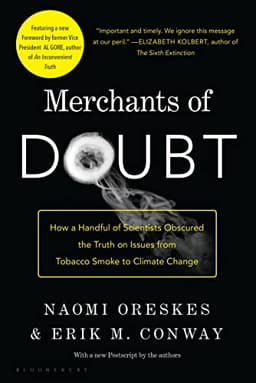
| 2010 | Oreskes & Conway, Merchants of Doubt | Evidence for layer 1 |
| 2019 | McGoey, The Unknowers | Layer 3 — strategic ignorance |
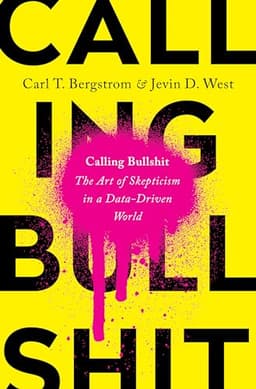
| 2020 | Bergstrom & West, Calling Bullshit | Layer 4 — a civic foundation |
The years and the layer numbers do not line up. Layer 2, Fricker in 2007, precedes layer 1, Proctor in 2008, by a year. The layers are ordered by how the theories depend on one another, not by when they were written.
And this article is what stacked them. Nothing in the text shows Proctor, Fricker, McGoey and Bergstrom & West taking up one another's work. Responsibility for the stack sits with whoever built it.
The Four Layers
Layer 1: The Production of Ignorance — Robert Proctor (2008)
In Agnotology: The Making and Unmaking of Ignorance(外部サイト、新しいタブで開きます) (co-edited with Schiebinger), Proctor established the discipline of "agnotology." Its core insight is straightforward: ignorance is not merely the absence of knowledge — it can be actively produced.
Proctor's subject was the tobacco industry. The industry had internally established the causal link between smoking and lung cancer by the 1950s, yet maintained the narrative that "the science is not yet settled" for decades. By manufacturing doubt, they socially neutralized established scientific knowledge.
What makes this research decisive for ISVD's concerns is that it reframes "not knowing" from a natural phenomenon to a social product. Social problems may be invisible not by accident but by design. Without this recognition, social analysis is structurally incomplete.
Layer 2: Epistemic Injustice — Miranda Fricker (2007)
Where Proctor asked "how is knowledge obstructed?", Fricker asked "whose knowledge is not treated as legitimate?" In Epistemic Injustice: Power and the Ethics of Knowing(外部サイト、新しいタブで開きます), Fricker classified epistemic injustice into two forms.
The first is testimonial injustice: when a speaker is not believed due to prejudice. For example, when a precarious worker's testimony about labor conditions is dismissed as "a lack of personal effort," testimonial injustice is at work.
The second is hermeneutical injustice: when society lacks the concepts to articulate a particular experience, making that experience unrecognizable. Before the concept of "sexual harassment" became established in society, the experience existed but there were no words to describe it.
The concept of hermeneutical injustice is especially important for ISVD's work. Many social problems are invisible not simply because information is being concealed, but because the conceptual framework needed to recognize them as problems does not exist. What ISVD's articles attempt in the "Reading the Structure" section is precisely the construction of such frameworks — providing readers with new ways of seeing.
Layer 3: Strategic Ignorance — Linsey McGoey (2019)
In The Unknowers: How Strategic Ignorance Rules the World(外部サイト、新しいタブで開きます), McGoey extended Proctor's agnotology into the domains of philanthropy and international development. Her central concept is "beneficial ignorance": those in power may benefit from not knowing.
For instance, when a large charitable foundation claims it "cannot adequately measure" the effectiveness of its grants, is this a lack of measurement capacity, or a reluctance to discover that effectiveness is low? McGoey systematically analyzed the latter possibility, demonstrating that structures for strategically maintaining "not knowing" are pervasive throughout society.
This insight directly informs ISVD's analytical framework. The invisibility of social problems is produced not only by active information concealment (Proctor's model) but also by the strategic maintenance of passive indifference. Problems that no one intentionally hides yet become structurally invisible — this is what ISVD calls "structural invisibility."
Layer 4: Data Literacy as Civic Infrastructure — Bergstrom & West (2020)
Bergstrom & West's Calling Bullshit: The Art of Skepticism in a Data-Driven World(外部サイト、新しいタブで開きます) connected the epistemological insights of the preceding three layers to civic practice. Through concrete examples, they demonstrated how the misuse and abuse of data reproduce social ignorance, positioning data literacy not as an individual skill but as civic infrastructure.
The significance of this work lies in connecting epistemological critique to the practical question: "What, then, should we do?" ISVD's commitment to data visualization (statistical dashboards using the e-Stat API) and fact-checking as pillars of its work is an implementation of Bergstrom & West's thesis that "data literacy is a civic foundation."
The Concept That Results — "Structural Invisibility"
From Four Layers to "Structural Invisibility"
Superimposing the four intellectual sources outlined above reveals at least four mechanisms by which social problems become invisible:
- Intentional production of ignorance (Proctor): specific actors deliberately conceal or distort information
- Epistemic exclusion (Fricker): certain people's experiences and knowledge are structurally discredited or left unconceptualized
- Maintenance of strategic ignorance (McGoey): structures that allow those in power to benefit from not knowing are left intact
- Reproduction through data misuse (Bergstrom & West): selective presentation or erroneous visualization of data renders what should be visible invisible
What ISVD calls "structural invisibility" is the totality of phenomena in which social problems are placed beyond the reach of recognition through the singular or combined operation of these mechanisms.
"Reading the Structure" — Translation into Methodology
ISVD's article structure — "What Is Happening → Background and Context → Reading the Structure" — is a translation of this intellectual lineage into methodology.
"What Is Happening" describes the visible surface of the problem. It presents statistical data, news reports, and the voices of those directly affected to establish a shared starting point: the recognition that "something is happening."
"Background and Context" revisits Proctor's question: "Why was this not known until now?" It analyzes historical trajectories, institutional factors, and the structure of interests.
"Reading the Structure" responds to Fricker's hermeneutical injustice. It articulates what invisible structures exist behind the visible problem. It provides conceptual frameworks for problems that do not yet have names, offering readers a cognitive apparatus for connecting their own experiences to social structures.
These three stages are nothing other than a translation into article format of the intellectual lineage: agnotology (detecting structurally produced ignorance) → epistemic injustice theory (recovering excluded knowledge) → civic practice (countering through data and language).
Limits — Where This Stack Stops
On the stacking. The four layers are ordered by theoretical dependency, and it is this article that asserts that dependency. The text nowhere shows Proctor, Fricker, McGoey and Bergstrom & West inheriting from one another. Stack them differently and a different concept comes out. Nothing here establishes that this ordering is the only one.
The timeline ends in 2020 and the six years since go unfollowed. Layer 1 carries two books (Proctor 2008 and Oreskes & Conway 2010) while each of the other three carries one. The layers are not of equal thickness.
On ISVD's side. "Structural invisibility" is a name given to the four layers taken together, and ISVD holds no criterion by which it could say it had detected one. Naming is not analysis. We wrote that our three-part article structure translates this lineage, and we have no way of checking whether the translation holds. The three points below sit in front of that gap.
The intellectual lineage mapped in this note demonstrates the epistemological foundations of ISVD's methodology, but several questions remain.
First, there is the matter of an operational definition for "structural invisibility." Proctor's agnotology possesses a methodology for historical case analysis, and Fricker's epistemic injustice provides a framework for philosophical analysis. If ISVD is to employ "structural invisibility" as an analytical concept, operational criteria for detecting and evaluating it are needed.
Second, there is the connection between this lineage and Japanese intellectual traditions. The reception of agnotology in the Japanese-language sphere has only just begun, but the analysis of "structures of harm" seen in Minamata disease research and the concept of "gaps between systems" in social welfare studies substantively overlap with research on structural invisibility. For this connection, see the literature map of the Agnotology Lab.
Third, there is the bridge to design practice. What principles should guide the translation from epistemological critique to concrete information design, data visualization, and article structure? This is the next challenge for this lab.
→ Related: Agnotology Lab Research Framework(このサイトの記事) | Literature Map of Agnotology in Japanese(このサイトの記事)