This note belongs to the synthesis phase of the Social Design Foundations Lab (ISVD-LAB-003). It examines the logic by which the six intellectual sources mapped in the foundations phase converge into a single methodology.
What Is Happening: The Necessity of Cross-Disciplinary Integration
Social design draws on six academic fields as intellectual sources: social policy, agnotology, epistemology, participatory design, EBPM, and civil society theory. These have been individually mapped in the foundations phase literature notes. However, merely listing six fields does not distinguish a "collection" from a "methodology." Why these six fields, and by what logic are they integrated?
The starting point for this question is the concept of "wicked problems" presented by Rittel & Webber (1973(外部サイト、新しいタブで開きます)). Social policy problems are fundamentally different from scientific and technical problems (tame problems). They lack definitive formulations, have no stopping rule, and their problems and solutions co-constitute each other. Rittel & Webber argued that for such problems, "no single discipline suffices."
The concept of wicked problems provides the justification for six-field integration. The problems that social design addresses — structural invisibility, epistemic injustice, information access gaps — are all quintessential wicked problems. A single academic discipline can only capture one facet. Social policy can describe "what is happening" but does not ask "why it remains invisible." Agnotology asks "why it remains invisible" but does not answer "how to intervene." Participatory design possesses intervention methods but requires a separate analytical framework to identify the structures warranting intervention.
Background and Context: Three Conceptual Devices for Integration
Mode 2 Knowledge Production and Organizational Principles
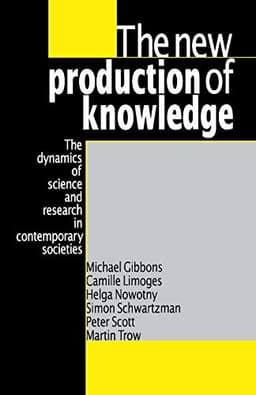
The concept of Mode 2 knowledge production, proposed by Gibbons et al. (1994(外部サイト、新しいタブで開きます)), describes the form of knowledge production to which six-field integration corresponds. In contrast to knowledge produced within traditional disciplinary boundaries (Mode 1), Mode 2 refers to knowledge produced in the context of application, by heterogeneous actors, under conditions of social accountability.
Nowotny (2003(外部サイト、新しいタブで開きます)) further refined the characteristics of Mode 2, formulating it as "context-driven" and "heterarchical" knowledge production. Rather than hierarchical disciplinary structures, it is the context of the problem that determines the participants and methods.
ISVD's organizational form — a general incorporated association that works across social policy, epistemology, and design practice — can be understood as an organizational implementation of Mode 2 knowledge production. The integration of six fields is demanded not by academic ambition but by the nature of the problems being addressed.
Boundary Objects and Concept Travel
The mechanism by which six fields actually "connect" is explained by the concept of "boundary objects" proposed by Star & Griesemer (1989(外部サイト、新しいタブで開きます)). Boundary objects are concepts or artifacts shared between actors belonging to different social worlds that carry different meanings in each context yet enable communication without requiring full mutual translation.
Within social design, concepts functioning as boundary objects can be identified. For instance, "evidence" means the basis for policy decisions in the context of social policy, the apex of a quality hierarchy in EBPM, an object of manipulation and concealment in agnotology, and a condition for justification in epistemology. The concept of "evidence" serves as a boundary object that enables cross-field dialogue while carrying different meanings in each field.
Similarly, "participation" refers to a design process principle in participatory design, a foundation of democracy in civil society theory, and a method of stakeholder engagement in EBPM. "Invisibility" refers to the mechanism of ignorance production in agnotology, the consequence of epistemic exclusion in epistemology, and data gaps in social policy.
The Practical Orientation of Transdisciplinarity
The methodological foundation for integration is provided by Nicolescu's (2002(外部サイト、新しいタブで開きます)) concept of transdisciplinarity. Nicolescu formulated that while interdisciplinarity remains a dialogue "between" fields, transdisciplinarity goes "across," "between," and "beyond" disciplines.
Klein (2004(外部サイト、新しいタブで開きます)) brought this into a practical context, arguing that transdisciplinarity is "problem-oriented" and that the need for problem-solving drives disciplinary integration. This practical orientation corresponds precisely to ISVD's positioning of "social design" not as an academic discipline but as a problem-responsive methodology.
Reading the Structure: The Integration Architecture
Combining the three conceptual devices above — wicked problems, Mode 2 knowledge production, and boundary objects — with the methodological foundation of transdisciplinarity, an architecture for six-field integration emerges.
The Functional Position of Each Field
Each of the six fields fulfills a distinct function within the integration model.
- Agnotology asks "why knowledge gaps exist." It is an analytical device for determining whether the invisibility of a problem is accidental or structurally produced
- Epistemology (politics of knowledge) asks "what counts as legitimate knowledge." It makes visible the power structures embedded in evidence selection criteria and credibility judgments of testimony
- EBPM provides the policy application layer. It is a translation device connecting insights gained from analysis and critique to the context of policy formation
- Social policy provides domain context. It supplies the institutional and historical context of specific problem areas such as welfare, labor, poverty, and inequality
- Civil society theory provides actor context. It clarifies the logic and constraints of practice actors such as NPOs, civic activities, and the voluntary sector
- Participatory design provides methods. Grounded in the principle of stakeholder participation, it serves as the methodological foundation for translating analysis into intervention
The Logic of Integration
These are integrated through the following logic.
The nature of wicked problems justifies the insufficiency of any single field (Rittel & Webber). Mode 2 knowledge production describes ISVD's organizational form — context-driven, heterarchical, socially accountable (Gibbons, Nowotny). Boundary objects explain the mechanism by which concepts such as "evidence," "participation," and "invisibility" travel across six fields without full mutual translation (Star & Griesemer). And transdisciplinarity methodologically grounds the principle that this integration is not "the sum of fields" but "problem-driven cross-disciplinary work" (Nicolescu, Klein).
Open Questions
This integration architecture remains, at present, a conceptual framework. The following verifications are needed as next steps.
First, the empirical identification of boundary objects. Beyond "evidence," "participation," and "invisibility," it is necessary to empirically determine what other concepts travel across fields through citation analysis of ISVD's existing 977 articles.
Second, the clarification of integration limits. Not all six fields need to be mobilized at all times. It is necessary to map the correspondence between problem typologies and field configurations — which combinations of fields are effective for which types of problems.
Third, the articulation of specificities within the Japanese context. Both wicked problems and Mode 2 originate from Western intellectual traditions, and whether they can be directly applied to the context of Japanese social policy and civil society requires examination.
References
Dilemmas in a General Theory of Planning — Rittel, H. W. J. & Webber, M. M. (1973). Policy Sciences, 4(2), 155-169
Democratising expertise and socially robust knowledge — Nowotny, H. (2003). Science and Public Policy, 30(3), 151-156
Institutional Ecology, 'Translations' and Boundary Objects: Amateurs and Professionals in Berkeley's Museum of Vertebrate Zoology, 1907-39 — Star, S. L. & Griesemer, J. R. (1989). Social Studies of Science, 19(3), 387-420

Prospects for transdisciplinarity — Klein, J. T. (2004). Futures, 36(4), 515-526