Overview — Four Currents Calling Themselves Design
The word "design" no longer refers solely to product styling or UI layout. At least four distinct design research traditions have emerged in parallel, each applying design thinking to social problems: Service Design, Transition Design, Speculative Design, and Social Design for Public Imagination.
Yet these four approaches differ dramatically in origin, scope, and ambition. Their only shared surface is the broad aspiration to "apply design thinking to society." What counts as data, who the audience is, and what kind of change is sought differ fundamentally. This note maps the bibliographic lineage of each tradition and clarifies where Social Design for Public Imagination diverges from the other three.
A Timeline of What Is Being Compared
The references, together with the events the text dates by decade.
| Year | Work / Event | Current |
|---|---|---|
| 2000s | IDEO and Stanford d.school codify design thinking | Service design |
| 2000s | Dunne and Raby develop speculative design at the RCA | Speculative |
| 2002 | Geels, "multi-level perspective" (MLP) | Origins of transition design |
| 2007 | Fricker, Epistemic Injustice | Origins of social vision design |
| 2008 | Proctor & Schiebinger, Agnotology | Origins of social vision design |
| 2010s | Transition design proposed at Carnegie Mellon | Transition |
| 2013 | Dunne & Raby, Speculative Everything | Speculative |
| 2015 | Irwin et al., "Transition Design" | Transition |
| 2018 | Stickdorn et al., This Is Service Design Doing | Service design |
| 2020s | ISVD takes up social vision design | Social vision design |
Two things read off the years. First, service design spread as practice through the 2000s while the book that codified its methods appeared in 2018: practice ran ahead and the codification followed. Second, the two works placed at the origin of social vision design (2007 and 2008) predate the principal works of all three other currents. What is new about ISVD is not the theory but the point where theory is joined to a design procedure.
The Four Currents
Service Design — Extending User-Centered Design
Service Design traces its origins to the design thinking methodology systematized by IDEO and Stanford d.school. Using methods such as journey maps, touchpoint analysis, and prototyping, it aims to improve the experience of service users.
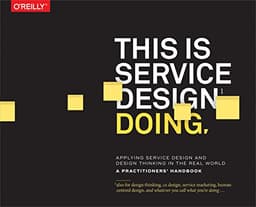
The representative theoretical foundation is Stickdorn et al.'s (2018) This Is Service Design Doing(外部サイト、新しいタブで開きます). This book systematically organized service design methods and presented them as an immediately applicable toolkit for practitioners.
Service Design's strength lies in its ability to deliver concrete improvements within short timeframes. However, its scope is fundamentally limited to "individual experience." Journey maps trace individual user paths but do not address why a service is structured the way it is as a social question. While attempts to apply Service Design to public services are increasing, its lack of frameworks for analyzing power structures and knowledge asymmetries behind institutional design marks a clear limitation.
Transition Design — System-Level Long-Term Transformation
Transition Design is a framework proposed in the 2010s by Terry Irwin and colleagues at Carnegie Mellon University. Rather than individual products or services, it takes the long-term transformation (transition) of entire socio-technical systems as the object of design.
Irwin et al.'s (2015) paper "Transition Design: A Proposal for a New Area of Design Practice, Study, and Research" introduced the perspectives of "multi-generational time horizons" and "whole-system transformation" to design research. They drew upon the Multi-Level Perspective (MLP) from Dutch sustainability transition research (Geels, 2002), analyzing social change across three layers: niche, regime, and landscape.
Transition Design's scope is broad, addressing civilization-scale challenges such as climate change, food systems, and energy transitions. However, this very grandeur leaves it weak on concrete intervention methods for the here and now. It can articulate paradigm shifts but does not provide the tools to analyze why a specific policy in a particular locality fails to reach its citizens.
Speculative Design — Critical Future Scenarios
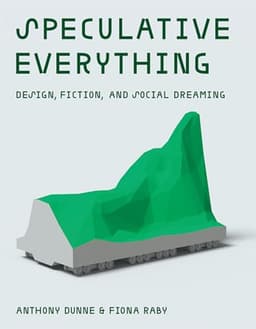
Speculative Design originates in the work of Anthony Dunne and Fiona Raby at the Royal College of Art (RCA) in London. Their Speculative Everything: Design, Fiction, and Social Dreaming(外部サイト、新しいタブで開きます) (2013) shifted design's role from "problem-solving" to "problem-posing."
Speculative Design materializes possible future scenarios as prototypes, using them to interrogate present assumptions. Design outcomes are not "things to be used" but "things to make people think," operating through exhibitions and discussions.
The value of this approach lies in making non-linear futures imaginable. However, Speculative Design often remains confined to the privileged spaces of museums and galleries, and its critical provocations are rarely connected to policy decisions or civic action. The question of "who imagines that future and who is excluded from it" — the dimension of epistemic injustice — remains insufficiently addressed.
Social Design for Public Imagination — Connecting Invisible Structures to Democratic Action
Social Design for Public Imagination (ISVD) departs from a fundamentally different starting point than the three traditions above. Its core mission is to make invisible structures visible through social science data and connect that visibility to civic and policy action.
The first distinguishing characteristic is the nature of the data. Service Design relies on user interviews and ethnography; Transition Design on system mapping; Speculative Design on fiction and prototypes. Social Design for Public Imagination starts from statistical data, institutional analysis, policy documents, and historical records — the data of the social sciences.
The second characteristic is the incorporation of agnotology. The framework proposed by Robert N. Proctor asks "why certain problems remain unknown." Social Design for Public Imagination embeds this question into its design methodology. Before solving a problem, it structurally analyzes why that problem is invisible.
The third characteristic is that the target of intervention is civic and policy action. Service Design seeks to improve customer experience; Speculative Design to provoke thought; Transition Design to transform entire systems. Social Design for Public Imagination aims to equip specific citizens and policymakers with the ability to "read structures" and translate that understanding into democratic action.
The Comparison — Five Axes
Comparing the Four Approaches
The following table compares the four design research traditions across five axes.
| Axis | Service Design | Transition Design | Speculative Design | Social Design for Public Imagination |
|---|---|---|---|---|
| Origin | IDEO / d.school (2000s) | Carnegie Mellon University (2010s) | RCA (2000s) | ISVD (2020s) |
| Primary Data | User interviews, behavioral observation | System mapping, historical analysis | Fiction, prototypes | Statistical data, institutional analysis, policy documents |
| Time Horizon | Short to medium (project-based) | Long-term (generational) | Future (speculative) | Medium to long-term (structural change) |
| Target of Change | Individual experience | Socio-technical systems | Thought and discourse | Civic and policy action |
| Outputs | Service improvements, prototypes | Visions, strategic frameworks | Exhibitions, discussions | Structural analysis, policy recommendations, information infrastructure |
This table sets out five axes drawn up here; it is not a published classification. The Origins row names where and when each approach consolidated into a named field, not where the ideas first appeared. For service design, IDEO and the d.school are where it was systematised, but writing that treats services as an object of design predates them.
Common Ground and Points of Divergence
What the four approaches share is the stance of "not taking the status quo for granted." Each refuses to treat existing conditions as given, seeking alternative possibilities instead. In this regard, all four extend beyond conventional problem-solving.
However, divergence occurs at the questions of "for whom" and "what is made visible." Service Design makes customer pain points visible. Transition Design makes system path dependencies visible. Speculative Design makes present assumptions visible. Social Design for Public Imagination makes problems that have been intentionally or structurally rendered invisible visible.
The passive voice in "rendered invisible" is significant. The reason Social Design for Public Imagination incorporates agnotology into its methodology is the recognition that problems are not invisible by accident — they are the product of structural, institutional, and sometimes intentional dynamics. The other three approaches lack systematic frameworks for addressing this epistemological dimension.
"Reading Structures" as Method
The core methodology of Social Design for Public Imagination is "reading structures." This is not merely data analysis; it includes asking what data reveals and what it conceals.
For example, unemployment rate data for a given region shows "how many people are unemployed," but not "why that unemployment is being politically neglected" or "whose voices are excluded from the policy process." Social Design for Public Imagination takes as its object of analysis the "margins" of statistical data — what is not recorded, what is excluded from aggregation, what categories do not even exist.
This methodology has strong affinities with Fricker's theory of epistemic injustice (2007) and Proctor's agnotology (2008). Social Design for Public Imagination can be understood as an attempt to translate these theoretical resources into design practice.
Limits — Where This Comparison Stops
On how the comparison is built. One of the four columns is our own, and we chose the five axes as well. The construction favours our own showing, and a reader should discount accordingly. Each of the other three currents is represented by a single work: Stickdorn et al. for service design, Irwin et al. for transition design, Dunne & Raby for speculative design. Whatever disagreement exists inside each current, this map does not pick it up. The timeline ends in 2018 and the eight years since go unfollowed. And nothing here records our having checked any of this with practitioners of the other three.
On ISVD's side. The three points below remain as what we have to learn from the other three currents.
There are also clear points where Social Design for Public Imagination must learn from the other three approaches.
From Service Design, it needs to learn the systematization of concrete, repeatable methods. The methodology of "reading structures" has not yet moved beyond the realm of individual skill. Standardization as a toolkit is a challenge.
From Transition Design, it needs to learn techniques for long-term vision building. Without a vision of what society to move toward after making invisible structures visible, structural analysis ends as mere critique.
From Speculative Design, it needs to learn the reach of imagination. Social Design for Public Imagination, given its data-centric orientation, tends to be constrained by "currently existing data," and there is room to strengthen its capacity for addressing categories that do not yet exist and problems that have no name.
→ Related: Social Design Foundations Lab Overview(このサイトの記事) | Agnotology Lab Literature Map(このサイトの記事)
References
Transition Design: A Proposal for a New Area of Design Practice, Study, and Research — Irwin, T., Kossoff, G., & Tonkinwise, C. (2015). Design and Culture, 7(2), 229–246