
Is Foreign Crime Really Rising in Japan? — The 1.36x Adjusted Rate and the Invisible Sanction System
Arrests fell ~50% from the 2005 peak but have risen since 2015. Age-gender adjustment shrinks the crime rate gap from ~2x to ~1.36x. "Lenient sentencing" is a myth: non-prosecution followed by deportation is an invisible sanction route. Data and institutional design, not emotion, explain the picture.
TL;DR
- Penal-code offences by foreign nationals peaked at 43,622 in 2005 and fell to 21,794 in 2024 — a ~50% decline from the peak, though arrests have risen ~53% since the 2015 trough. The relationship to the ~69% growth in foreign resident population requires per-capita analysis.
- The raw crime rate for foreign nationals is roughly 2x that of Japanese nationals, but adjusting for age and gender composition reduces the gap to ~1.36x in one estimate (results vary by methodology).
- The impression of "leniency" actually stems from an alternative sanction route (non-prosecution → deportation) and procedural inequities including interpreter shortages and de facto bail denial.
"For foreigners living in Japan, why not charge a 'living in Japan tax'?" — a common sentiment seen on social media
This kind of remark represents a certain sentiment: foreign crime is increasing, punishments are lenient, so some form of "payment" should be required.
But the data paints a different picture.
What Is Happening
Examining foreign crime statistics and verifying the "surge" narrative
"Foreign crime is surging." This claim appears repeatedly on social media and in news comment sections. Many may intuitively feel this is true. But what do the statistics actually show?
According to the report on arrests of foreign nationals, the peak came in 2005, with 43,622 penal code cases cleared for foreign nationals overall, of which 33,037 involved visiting foreign nationals. "Visiting foreign nationals" and "foreign nationals" are separate counts. In 2024, the figure was 21,794 cases with 15,541 persons arrested — approximately a 50% decline from the peak.
However, arrests have been trending upward since the 2015 trough of 14,267 — a roughly 53% increase over the past nine years, which is a fact that must be acknowledged. During the same period, the foreign resident population grew from approximately 2.23 million to approximately 3.76 million — an approximately 69% increase. Whether the rise in case numbers is proportionate to population growth requires examination of per-capita crime rates.
Foreign resident growth vs. crime arrest trends
Simple crime rate
After adjusting for age/gender composition, the gap narrows to ~1.36x (varies by methodology)
* Despite growth in foreign population, arrests have dropped significantly from the 2005 peak
The reality behind "1.72 times"
A simple calculation of the foreign crime rate — 15,541 arrested / 3.76 million residents — yields approximately 0.41%. For 2023 the white paper reports 183,269 people cleared for penal code offences in total, of whom 5.3% were foreign nationals. Deriving a per-capita crime rate requires aligning the definitions of resident counts and population, so this article stops at the ratio the source itself publishes. This ratio has been cited in some reports as "foreign nationals' crime rate is roughly twice that of Japanese" (ranging from 1.7x to 2.0x depending on methodology).
However, as analysis by points out, this figure requires critical adjustment. The foreign resident population has a significantly higher proportion of young males in their 20s and 30s compared to the general Japanese population. In criminology, young males constitute the highest-crime demographic — this is well-established knowledge.
The "Reading Immigrant Society Through Statistics" series conducted a verification comparing crime rates among males aged 20–39, and found that adjusting for age and gender composition reduces the gap to approximately 1.36x. However, this is one estimate, and results will vary depending on the age brackets and adjustment methodology used. Since the adjusted figure still exceeds 1.0x, one cannot claim there is "no difference," but it does suggest that the high proportion of young males in the foreign population is a major contributing factor.
Concentration by nationality and offense type
According to the , theft arrests of visiting foreign nationals in 2023 were led by Vietnam with 3,130 cases, followed by China with 1,039, Brazil with 229 and the Philippines with 203. The most common offense is theft (particularly burglary), followed by fraud and other property crimes. The rate of co-offending is 41.1% for foreign nationals versus 12.5% for Japanese — roughly a 3.3x gap.
This concentration pattern suggests two things. First, that crime is not a problem of "foreign nationals in general" but is concentrated among specific groups in particular residence statuses and working environments. Second, that the high co-offending rate also points to the existence of organized crime networks and recruitment through social media that cannot be ignored. When analyzing structural factors, it is necessary to distinguish between systemic institutional problems and organized criminal activity.
Background & Context
Structural barriers in judicial procedure and the gap between sentencing perception and reality
The interpreter barrier — over a hundred mistranslations
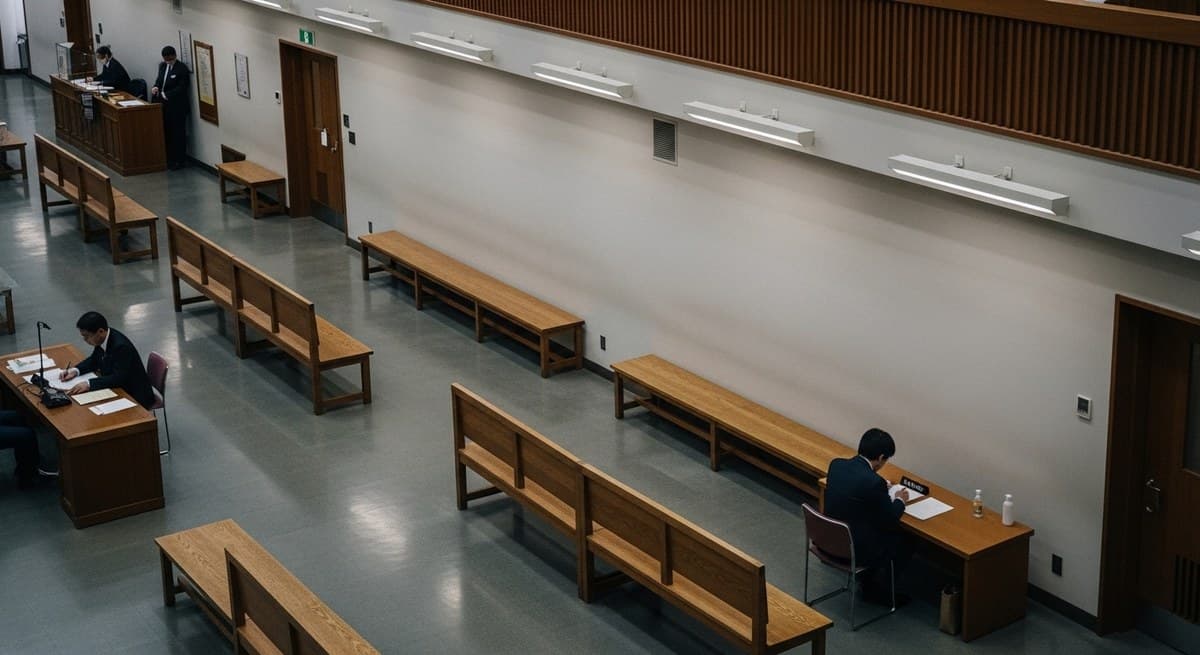
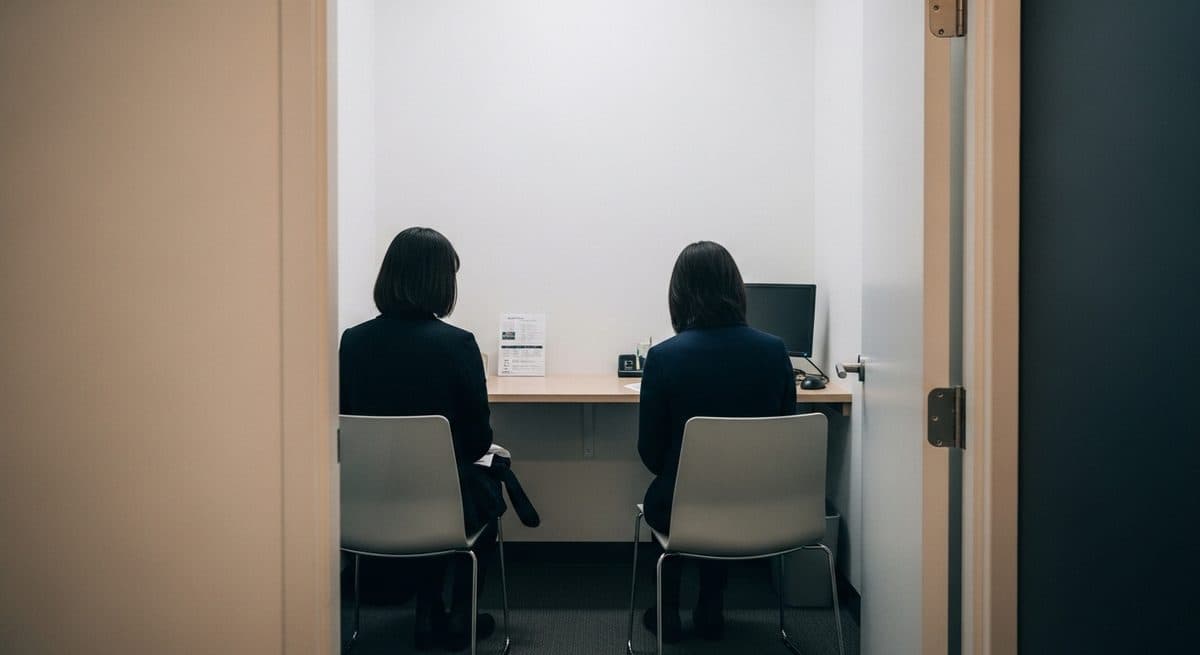
When foreign nationals enter Japan's criminal justice process, the first barrier they encounter is language.
The Supreme Court's interpreter candidate registry contains 3,823 interpreters covering 62 languages (as of 2017). But this number had declined by over 200 compared to five years earlier, as the heavy burden discourages new interpreters. In 2016, 2,624 defendants across 68 nationalities required interpretation in criminal proceedings.
The problem extends beyond numbers. In 2016, a Tokyo District Court case required ex officio expert review after over 100 instances of inaccurate court interpretation were identified. In 2017, approximately 120 interpretation errors were found in Osaka Police interrogations, and the credibility of portions of the written statements was denied ().
Interpretation quality determines procedural fairness. Notification of the right to remain silent, explanation of the right to counsel, confirmation of written statements — if these are not accurately conveyed, suspects cannot exercise their rights in the first place. Research by (2008) analyzed real instances of interpretation errors in cases requiring interpretation and highlighted the need for systemic reform.
The structure that prevents bail
For defendants without valid residence status, even when bail is granted, immigration authorities immediately detain them with a detention order. Bail deposits for criminal proceedings and provisional release deposits for immigration must be prepared separately, creating a de facto "no residence status = no bail" reality.
Detention in Japan runs to : 48 hours from arrest to referral to the prosecutor, 24 hours for the prosecutor to request detention, 10 days of detention, and up to 10 more on extension.
Without an indictment, the person is released. For a foreign national without residency status, however, that is not the end. Once the criminal process concludes, the case moves to the immigration authorities' , and detention can continue. Two systems — criminal and administrative — each detain the same body on its own logic. One can end just as the other begins.
As one example, comparative analysis by notes that Singapore's post-arrest detention is a maximum of 48 hours (with court approval required for extension). However, criminal justice systems differ significantly in their broader contexts, and simple numerical comparisons have limitations.
Structural barriers to justice access
Invisible sanction route
Non-prosecution → Immigration detention → Deportation → Re-entry ban
The Technical Intern Training Program — a structural pathway from absconding to crime
When examining the "background" of crime, the problems of the Technical Intern Training Program cannot be ignored.
In 2023, 9,753 trainees absconded (a record high). The following year saw a 33% decline to 6,510, but the level remains elevated. The top reason for absconding is "wages and overtime-related labor conditions" (2,943 cases), followed by harassment and human rights violations.
The reported pathway is as follows. Once trainees leave their supervising organization, they fall into unauthorized residence status and become unable to work legally. Economic desperation may lead to involvement in crime (theft, fraud) to cover living expenses. Reports of Vietnamese technical intern trainees involved in burglary are understood in this context. However, of the 9,753 who absconded, the proportion who actually turned to crime is unknown from published statistics, and many absconders likely live without involvement in criminal activity.
The U.S. Department of State's 2023 report evaluated Japan's Technical Intern Training Program as "not meeting minimum standards" and identified elements of forced labor (Nikkei(外部サイト、新しいタブで開きます)). The system is scheduled to transition to the Specified Skilled Worker Training system in 2027, but resolving structural problems depends on post-transition implementation.
Reading the Structure
Analyzing the structural mechanisms that create the impression of "leniency"
Where does the impression of "leniency" come from?
"Japan's justice system is lenient toward foreign nationals." The data cited to support this impression is the high suspended sentence rate.
According to the , in 2023 there were 3,560 convictions (imprisonment) at first instance in interpreted defendant cases, with a full suspended sentence rate of 86.1% across all offences and 78.0% excluding Immigration Control Act violations. Immigration violations (unauthorized overstay, etc.) are minor offenses where suspended sentences are standard, and these inflate the overall statistics.
There is a structural element often overlooked here: the existence of an alternative route of non-prosecution → deportation.
When a suspect receives a non-prosecution disposition, if they lack valid residence status, they are placed in immigration detention and subsequently deported. Re-entry is prohibited. In other words, "not being prosecuted" is not evidence of "leniency" — it means a different sanction of "deportation" is being imposed. This sanction does not appear in criminal statistics. For minor property crimes, the pathway of settlement → non-prosecution → return to home country has become effectively standard.
The official position is clear: under "equality under the law" (Article 14 of the Constitution), nationality is not a sentencing factor and works neither in favor nor against defendants. There is no legal basis for treating foreign nationals "leniently" in criminal justice.
What appears in the criminal statistics
- Fully suspended sentences in interpreted cases, all offences
- 86.1%
- Excluding immigration offences
- 78.0%
- Why
- immigration offences such as overstaying are minor and normally suspended, which lifts the overall figure
The route that does not appear
- A decision not to prosecute
- leads to immigration detention where there is no status of residence
- Then
- deportation, with re-entry barred
- For minor property offences
- settlement, no prosecution, then departure is the effective standard path
Not being prosecuted is not leniency; a separate sanction, removal from the country, is applied instead, and it does not appear in the criminal statistics. Nationality is not a sentencing factor either way.
International comparison — lessons from Germany
A similar debate is occurring in Germany. In the 2023 crime statistics, the foreign share of arrested suspects rose from 21% in 2009 to 41%. Country-specific crime rates, with Germans as the baseline of 1, show Syria at 6.4 and Afghanistan at 6.1 (Agora(外部サイト、新しいタブで開きます)).
But analysis by the Ifo Institute of Economic Research covering 2018–2023 presents an important counterpoint: "Even when the foreign population share increases in specific regions, no correlation with regional crime rates is observed" (TRT Global(外部サイト、新しいタブで開きます)). The finding that increasing foreign population does not raise crime rates is consistent with Japanese data.
What the United Nations is questioning
Special Rapporteurs and the Working Group on Arbitrary Detention of the have repeatedly expressed concerns about Japan's immigration detention system. Three main points:
- No judicial review of immigration detention (potential violation of ICCPR Article 9(4))
- No upper limit on detention period (indefinite detention)
- Indefinite detention may constitute torture and ill-treatment
The issued a presidential statement in 2023, following the UN Human Rights Council's 4th Universal Periodic Review (UPR) recommendations, calling on the government to comply with international human rights standards. The focus areas are foreign detention, interpretation rights, and the effective exercise of the right to counsel.
The Japanese government has countered that its system "gives adequate consideration to the human rights of foreign nationals" (ISA official(外部サイト、新しいタブで開きます)), but the perception gap with the international community remains unresolved (HURIGHTS Osaka(外部サイト、新しいタブで開きます)).
The full structural picture
Organizing this issue reveals the following structure:
The structure of the "leniency" narrative:
- Fact: High non-prosecution rates and high suspended sentence rates
- Misconception: Japan's justice system is lenient toward foreign nationals
- Reality: (A) Non-prosecution = deportation, an "invisible sanction"; (B) Statistical distortion from including minor immigration violations; (C) Bias from crime rate comparisons without age-gender adjustment (adjusted rate still exceeds 1.0x at ~1.36x); (D) Sentencing follows equality under the law (Article 14) regardless of nationality
Structures that facilitate crime:
- Pathway from technical intern trainee absconding to desperation to crime (systemic issue; crime involvement rate among absconders is unknown)
- Organized crime networks and social media recruitment (suggested by the 41.1% co-offending rate)
Structural problems in procedural fairness:
- Interpreter shortage and mistranslation (procedural inequity)
- Dual detention under immigration and criminal law (systemic complexity)
- Cost of foreign-language support for court-appointed defense (resource allocation)
- De facto denial of bail and prolonged detention (disproportionate disadvantage for foreign nationals without residence status)
Returning to the opening remark about a "living in Japan tax": foreign nationals are not benefiting from a "lenient justice system." Rather, they structurally bear disadvantages that do not exist for Japanese nationals — interrogations without adequate interpretation, de facto detention without bail, and invisible deportation sanctions. What should be questioned is not "the lightness of punishment" but "the fairness of procedure."
Related columns
- Reading the Structure of Immigration Policy — From Technical Internship to Specified Skilled Worker Training(このサイトの記事)
- What is Social Inclusion? — Decoding the Structure of Exclusion(このサイトの記事)
- Reading the Structure of Hostage Justice in Japan(このサイトの記事)
qualityChecks: contentValidate: '2026-08-17' factCheck: '2026-08-17' daReview: '2026-08-17'
References
2025 Police White Paper — Foreign National Crime Trends — National Police Agency (2025). National Police Agency
2024 White Paper on Crime, Part 4, Chapter 9 — Foreign Criminal Offenders — Ministry of Justice (2024). Ministry of Justice
Is Foreign Crime Surging? Has Japan's Public Safety Deteriorated? — Japan Fact Check Center (2024). Japan Fact Check Center
Is 'Foreign Crime Rate 1.72x Japanese' Really True? — Bengoshi JP News (2024). Bengo4 JP News
Reading Immigrant Society Through Statistics, Volume 4 — Hitachi Foundation (2024). Hitachi Foundation Global Society Review
Shortage of Court Interpreters — Heavy Burden Discourages New Candidates — nippon.com (2018). nippon.com
Accuracy of Judicial Interpretation in Foreign National Cases — Kahoru Mizuno (2008). Language Policy, No. 4
Flow of Deportation Procedures — Immigration Services Agency of Japan (2025). Ministry of Justice
President's Statement on 4th UPR Recommendations at the UN Human Rights Council — Japan Federation of Bar Associations (2023). JFBA
Recommended books


Statistics cited in this article
- 12024 White Paper on Crime, Part 4 Ch.9 Sec.2-1 (Penal Code offences)(2023) Open source
- 2NPA Foreign National Crime Arrest Statistics(2024) Open source
- 3Immigration Services Agency of Japan(End of 2024) Open source
- 4nippon.com — Shortage of Court Interpreters(2017) Open source
- 5MOJ/ISA Technical Intern Trainee Absconding Statistics(2023) Open source
- 62024 White Paper on Crime, Part 4 Ch.9 Sec.3-2 (Trials)(2023) Open source
Questions to Reflect On
- What data or media coverage has shaped your own impression of "foreign crime" in Japan?
- Can a "fair trial" exist when the quality of interpretation and legal defense is not guaranteed?
- In a society with a growing foreign population, how should equal access to justice be achieved?
Related Content
1,218 Retrial Applications Concluded in Five Years and 7 Orders to Reopen — 115 of the 121 Dismissed in 2023 Had No Examination of Facts at All
Kumamoto Prefecture decided on 10 August 2026 not to appeal in the state compensation case arising from the Matsubase incident. Japan's retrial system is under review by the Legislative Council's subcommittee on criminal law (retrial), which met 18 times between April 2025 and February 2026. Supreme Court statistics show 1,218 retrial applications concluded between 2019 and 2023, with 7 orders to reopen. Of the 121 dismissed in 2023 solely for falling outside Article 435, 115 had no examination of facts.

Japan's Replacement for the Technical Intern System Starts in April 2027 — In 8 of 17 Sectors, Changing Employer by Choice Takes Two Years
The amending act dissolving Japan's Technical Intern Training programme and creating the Employment for Skill Development system was promulgated on 21 June 2024 and takes effect on 1 April 2027. How long before a worker may change employer of their own accord is set sector by sector: two years in 8 of the 17 sectors, one year in 9. Beyond that come a basic skills test, a Japanese examination at A2.1, staying within the same work category, and requirements on the receiving employer.
95.9% of Japanese Care Facilities Require a Signature Other Than the Resident's — What the Law Forbids Is Refusal on the Sole Ground of Absence, Not the Asking
The ministerial standards for Japan's long-term care facilities forbid refusing service without proper cause, and having no guarantor does not count as proper cause. Even so, 95.9% of facilities require a signature other than the resident's own on admission. What is forbidden is the refusal, not the asking. This piece reads how that distinction drew private guarantor businesses in as the fallback.

93.4% of Adult Guardianship Applications Cite Managing or Closing a Bank Account — The Entrance to a System for Supporting Decisions Sits at a Bank Counter
In the Supreme Court's compilation of adult guardianship cases for 2025, the leading motive for applying was managing or closing a bank account, at 93.4%. Almost every application passes through it. Some 259,901 people use the system, yet only 2,833, or 1.1%, use the voluntary arrangement that lets a person choose their own guardian in advance. Applicants are led by the person themselves at 24.8% and municipal mayors at 23.7%. This piece reads who now moves a system built on the assumption that families would.
Previous
High School Tuition Gaps by Prefecture — Osaka ¥630K, Tokyo ¥490K, Rural Areas ¥457K
Next
Five Checkpoints for Spotting Graph Manipulation
Get new columns by email
1-2 social structure analysis columns per week. Free to subscribe.
Join ISVD's activities?
Sign up to receive the latest research and activity reports. Feel free to reach out about collaboration or project participation.
Support ISVD’s research and activities
Support ISVD’s research and publications with JPY5,000 per year. There is no automatic renewal.