
The Anatomy of Japan's 'Child Penalty' — The Triple Burden of Child Allowance, Education, and Housing
Japan's 'child penalty' (kosodate-batsu) refers to the aggregate economic and social disadvantages families face for having children. While child allowance income caps were abolished in 2024 and coverage extended to high schoolers, the underlying structure remains: households covering about half of tertiary education funding (OECD average 19%) and metropolitan housing costs consuming 25–33% of income. This article focuses on three economic burdens directly affecting household budgets — child allowance, education costs, and housing — and dissects them through data and international comparison.
TL;DR
- Japan's child poverty rate is 11.5%, and 44.5% for single-parent households — 5th highest in the OECD
- The OECD describes households as covering about half of Japan's tertiary education funding, against an OECD average of 19%
- Family-related social spending at 2.0% of GDP trails France (3.6%), Germany (3.7%), and Sweden (3.4%)
What Is Happening
The structural pressure of education and housing costs that persists behind child allowance expansion
"Even if child allowance goes up, cram school fees and rent eat it all" — via Threads
"They say the third child gets ¥30K a month, but raising three kids means rent alone exceeds ¥200K" — via Threads
In October 2024, Japan's child allowance was substantially expanded as "foundational economic support for raising all children who will bear the next generation." Income caps were abolished, coverage extended to high school age, and the monthly benefit for third and subsequent children was raised to ¥30,000 (first and second children receive ¥10,000 from age three through high school age). Payment frequency doubled to six times per year.
While there were voices welcoming the reform, reactions like those above can also be found on social media. Whether such voices reflect individual frustrations or structural problems requires examination. How much of the total cost of child-rearing does an additional ¥10,000–30,000 per month actually cover? Let us verify with data.
Answering this question requires looking beyond the single instrument of child allowance to the triple structure pressuring household budgets: the level of child allowance, the private burden of education costs, and the weight of housing expenses. The concept of the "child penalty" (kosodate-batsu), coined by Kaori Suetomi and Keita Sakurai, encompasses a broader range of disadvantages including lost employment opportunities and childcare costs, but this article focuses on three economic burdens that directly affect household budgets. Even after the 2024 reforms, this structure remains fundamentally unchanged.
Background & Context
Child allowance system evolution, international comparison of education costs, and housing burden realities
Child Allowance — A History of Expansion and Retreat
Japan's child allowance system, established in 1972, has undergone repeated expansions and contractions.
| Period | Key Change |
|---|---|
| 1972 | System created: ¥3,000/month for 3rd child onward |
| 2010 | Rebranded as "Kodomo Teate": ¥13,000 a month per child through the end of junior high school, with no income cap |
| 2012 | Reverted to Child Allowance with income cap restored |
| Oct 2022 | Special benefit abolished for households earning over ¥12M |
| Oct 2024 | Income cap fully abolished, extended to HS, 3rd child ¥30K/month |
| Nov 2025 | One-time "Child-rearing Support Benefit" (¥20K/child) budgeted |
The 2024 reform was indeed a significant step forward. However, viewed through international comparison, structural shortfalls remain. According to the OECD Family Database, Japan's family-related social spending as a share of GDP is approximately 2.0% — well below France's 3.6%, Germany's 3.7%, and Sweden's 3.4%. It does not even reach the OECD average of 2.35%.
Education Costs — The Highest Private Burden in the OECD
Triple Burden Structure
International Comparison
| Country | Family Spend/GDP | Child Allowance | Tertiary Private % |
|---|---|---|---|
| Japan | 2.0% | ¥10–30K/mo | 51% |
| France | 3.6% | ~€140+/mo | 19% |
| Sweden | 3.4% | SEK 1,250/mo | 12% |
| Germany | 3.7% | €250/mo | 15% |
* Family spending from OECD Family Database (2021). Tertiary private share from OECD Education at a Glance (2024). Child allowances reflect each country's system as of 2024.
The second pillar of the "child penalty" is education costs. According to OECD Education at a Glance 2024, Japan's total expenditure on educational institutions amounts to 3.9% of GDP, below the OECD average of 4.7%.
The problem lies in the funding mix. For primary and secondary education, public funding accounts for 92.7%, above the OECD average (90.4%). But at the tertiary level, the picture reverses dramatically. The public share plunges to 37.5%, roughly half the OECD average of 67.4%. The OECD writes that "about half of the funding for tertiary education is provided by households in Japan, a much higher proportion than the OECD average" of 19%. It does not give the Japanese share to a single decimal place.
According to MEXT's FY2023 Children's Learning Cost Survey, total education costs across the 15 years from age three in kindergarten to the final year of high school are ¥6,140,466 for all-public and ¥19,688,737 for all-private — a gap the survey itself describes as about 3.21 times. Adding four years of university (private humanities, living away from home) adds approximately ¥10.4 million.
If two children attend private school from junior high through university, total education costs can exceed ¥30 million — equivalent to about six years of take-home pay for a household earning ¥6 million. The total child allowance received (two children through high school graduation) is roughly ¥5 million, less than one-sixth of the all-private education cost total. However, for the all-public path, the 15-year total is approximately ¥6.14 million, meaning child allowance covers the vast majority. The weight of the education burden varies dramatically depending on schooling choices.
Housing Costs — Structural Pressure in the Tokyo Metropolitan Area
The third pillar of the "child penalty" is housing costs. According to analysis by the Cabinet Office, for households in private rental housing, housing costs as a share of household income reach approximately 25% nationally and approximately 33% in Tokyo for households earning ¥2–3 million.
The 3LDK apartments that families need have seen average rents in Tokyo's 23 wards rise 8.9% year-on-year in 2025, reaching an average of approximately ¥230,000 per month. According to NLI Research Institute, more than half of child-rearing households in Tokyo's 23 wards earn over ¥10 million annually, and the average price for new condominiums reached ¥110.51 million, exceeding ¥100 million for the second consecutive year.
For a child-rearing household earning ¥6 million (take-home ~¥4.5 million) renting a 3LDK in Tokyo's 23 wards, housing alone consumes over 50% of take-home pay. Add education costs, and the household structurally loses any financial cushion. As detailed in the take-home simulation in Is ¥5.9M Really Low Income?(このサイトの記事), the housing burden intensifies as the gap between gross and take-home pay widens.
However, this housing cost structure varies significantly by region. In regional cities, 3LDK rents of ¥50,000–80,000 are not uncommon, and the housing burden ratio is substantially lower than in the Tokyo metropolitan area. On the other hand, regional areas face different structural challenges: lower wage levels and fewer choices in educational institutions and childcare facilities. The "child penalty" does not manifest uniformly — in metropolitan areas housing costs are the primary pressure, while in regional areas wages and educational access exert pressure in different ways.
Child Poverty — The Consequence of the Triple Burden
The most severe consequence of the triple burden manifests as child poverty.
According to the FY2024 White Paper on Children, Japan's child relative poverty rate is 11.5%. The poverty rate for single-parent households is 44.5%, the 5th highest among OECD countries with available data.
Among single-parent households, 30.3% reported being unable to buy food they needed in the past year and 38.9% reported being unable to buy clothing — against 8.5% and 13.1% for two-parent households. Child poverty is not a future problem — it is happening now.
Reading the Structure
International comparison of the triple burden and policy directions for resolving the 'child penalty'
Why Japan's 'Child Penalty' Is Uniquely Heavy
What makes the "child penalty" particularly severe is the simultaneous operation of three structural factors.
Factor 1: Absolute shortfall in public spending. Family-related social spending at 2.0% of GDP falls below the OECD average of 2.35% and amounts to only 55% of France's 3.6%. Even with expanded child allowances, this gap remains.
Factor 2: The "privatization" of education costs. Households carrying about half of tertiary education costs ties educational opportunity directly to family wealth. In France (19%), Sweden (12%), and Germany (15%), the vast majority of tertiary education costs are publicly funded. However, a high private education burden does not automatically cause low birthrates. The United States and United Kingdom also have high private education costs, yet their total fertility rates (1.62 and 1.49 respectively) exceed Japan's (1.20). Meanwhile, South Korea, with an education cost structure similar to Japan's, has the world's lowest fertility rate at 0.72. The education cost problem stems from a fundamentally different philosophy of public funding, but the drivers of declining birthrates are complex and cannot be explained by education costs alone.
Factor 3: The absence of housing policy. France's housing allowance (APL) covers a substantial portion of rent for low-income households, calculated based on income, family composition, and geographic zone. Sweden has housing supplements specifically for families with children. While Japan has public housing supply, no dedicated housing allowance for child-rearing households exists. Housing costs are left to "individual choice."
The Motherhood Penalty in International Comparison
Research by CEPR (Centre for Economic Policy Research) measures the long-run child penalty as the average shortfall in mothers' earnings five to ten years after the first birth. It runs 21-26% in the Scandinavian countries, 31-44% in the English-speaking countries and 51-61% in the German-speaking ones. For the immediate drop at first birth the paper gives 30% in Denmark and 60% in Sweden. It reports the six countries as these language-group ranges and does not print a figure for each country.
Countries with smaller motherhood penalties share clear characteristics: substantial public childcare for children under three, parental leave of moderate length with adequate income replacement, and institutional support for returning to full-time employment. France, Belgium, and Sweden meet all three conditions.
Precise figures for Japan's motherhood penalty remain under-researched. The female non-regular employment rate of 53.2% and the persistence (albeit improving) of the "M-curve" in women's labor participation suggest that post-childbirth career recovery faces structural barriers. However, the high non-regular employment rate is also a pre-existing structural issue that predates childbirth and should be distinguished from the earnings decline caused by childbirth itself.
Policy Directions for Dismantling the Triple Burden
Resolving the "child penalty" triple burden requires more than increasing child allowances. International comparison points to three axes:
-
Expanding public education spending. Raising the public share of tertiary education funding from the current 37.5% to the OECD average (67.4%) would require roughly 1.8× current public investment. The Higher Education Tuition Support program has lifted income caps for multi-child families, but support for households with 1–2 children remains limited.
-
Creating housing policy for families. The Flat 35 mortgage rate reduction is a step forward, but offers little to renting households. Housing allowances for families and expanded priority access to public housing are needed.
-
Qualitative improvement of childcare infrastructure. As CEPR research demonstrates, investment in childcare infrastructure is more effective than cash benefits at reducing the motherhood penalty. While waiting list numbers have declined, quality (staff-to-child ratios by international standards) remains a challenge.
The two pillars that have not moved
The term "child penalty" is not an emotional accusation. It is an analytical concept for making visible the structural disadvantages that institutions create. The child allowance expansion is a welcome change, but as long as the two pillars of education and housing costs remain unmoved, the triple burden persists.
As The ¥60 Million Generational Pension Gap(このサイトの記事) demonstrates, intergenerational burden-sharing is a structural challenge running through Japan's entire social security system. For a systematic examination of how child-rearing support should be funded and designed, see also "The Truth About the 'Singles Tax'"(このサイトの記事).
Related Columns
- Is ¥5.9M Annual Income Low-Income? — Visualizing the Gap Between Perception and Policy(このサイトの記事)
- The ¥60 Million Generational Pension Gap(このサイトの記事)
- The Truth About the 'Singles Tax' — The Child-Rearing Levy and the Asymmetry of Benefits and Burdens(このサイトの記事)
- Measuring the 'Depth' of Child Poverty in Japan(このサイトの記事)
References
Child Allowance System Overview — Children and Families Agency (2024). Children and Families Agency
Education at a Glance 2024: Japan Country Note — OECD (2024). OECD
FY2023 Children's Learning Cost Survey — Ministry of Education, Culture, Sports, Science and Technology (2024). MEXT
2022 Comprehensive Survey of Living Conditions — Ministry of Health, Labour and Welfare (2023). MHLW
Child penalties across countries: evidence and explanations — Henrik Kleven, Camille Landais, Jakob Søgaard (2019). CEPR / VoxEU
Public spending on family benefits — OECD (2023). OECD Family Database
Rental market trends and household burden from rising rents — Cabinet Office (2025). Cabinet Office Weekly Indicator No. 1386
FY2024 White Paper on Children, Part 1 — Children and Families Agency (2024). Children and Families Agency
Reference Books
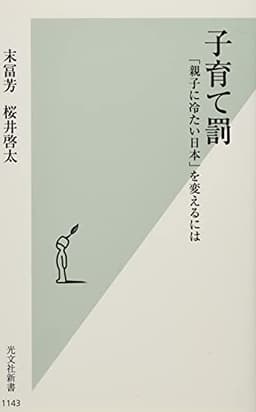

Statistics cited in this article
- 1Children and Families Agency, Outline of the Child Allowance System(Oct 2024) Open source
- 2Ministry of Health, Labour and Welfare, On the Child Allowance (17 November 2010)(2010) Open source
- 3OECD Family Database(2021) Open source
- 4OECD Family Database(2021)
- 5OECD Education at a Glance 2024(2024) Open source
- 6OECD Education at a Glance 2024(2024)
- 7OECD Education at a Glance 2024, Japan country note(2024) Open source
- 8MEXT FY2023 Children's Learning Cost Survey, Summary of Results (revised 16 Jan 2026), Table 9(revised Jan 2026) Open source
- 9MEXT Student Life Survey(FY2022)
- 10Cabinet Office Weekly Indicator No. 1386(Sep 2025) Open source
- 11LIFULL HOME'S Market Report(Apr 2025)
- 12NLI Research Institute(H1 FY2024)
- 13MHLW 2022 Comprehensive Survey of Living Conditions(2021) Open source
- 14CFA FY2024 White Paper on Children(2024) Open source
- 15Cabinet Office, 2021 Survey on Children's Living Conditions, Analysis Report (National Diet Library WARP archive)(2021) Open source
- 16CEPR Child Penalties across Countries(2019) Open source
- 17Statistics Bureau, Labour Force Survey (Detailed Tabulation)(2023)
Questions to Reflect On
- What share of your child-rearing costs is covered by public support?
- How does households carrying about half of tertiary education costs affect equality of educational opportunity?
- Is the child allowance expansion a sufficient step toward resolving the 'child penalty,' or do the structural issues lie elsewhere?
Key Terms in This Article
- Motherhood Penalty
- The phenomenon where mothers experience reduced wages, promotion prospects, and labor force participation due to childbirth and childcare. OECD studies show women's earnings drop 20–60% after the first child.
- Child Penalty
- The aggregate economic and social disadvantages incurred by having children, including wage losses (motherhood penalty), increased education and housing costs, and institutional disadvantages. Conceptualized in the Japanese context by Kaori Suetomi and Keita Sakurai.
- Relative Deprivation
- The subjective sense of injustice that one is not receiving what one deserves. Arising from comparison with others, it can form the psychological basis for hostility and aggressive behavior.
Related Content

When Private Afterschool Care Costs Exceed Take-Home Pay — The Market Mechanics of Japan's Child Penalty

Young Carers Fall to 4.1% by Year 11 and Return to 6.2% in Their Third University Year — The Person Cared For Shifts From a Sibling to a Parent With Mental Illness

Japan's 2026 Social Insurance Burden Rush — ¥4,800 More a Year at a ¥6M Income

The Emergency Revision of Long-Term Care Reimbursement Rates and Its Structural Limits: The Government's Own Confession That the Ordinary System Can No Longer Keep Up
Previous
A Country Where Politicians Win Without Elections — 26% Uncontested and 2,000+ Seat Shortfalls Question the Meaning of "Representation"
Next
Japan's ¥135.5 Trillion Social Security Breakdown — Pensions 41.6%, Healthcare 33.6%, and a ¥65M Generational Gap
Get new columns by email
1-2 social structure analysis columns per week. Free to subscribe.
Join ISVD's activities?
Sign up to receive the latest research and activity reports. Feel free to reach out about collaboration or project participation.