Do You Know the 'Conditions' for Free University Tuition? — Income Limits, Multi-Child Requirements, and International Comparison
Japan introduced tuition-free university education for multi-child households in April 2025. But only 12.7% of all households qualify. With household education burden at 51% (2nd highest in OECD) and education spending at 3.9% of GDP, the gap between the label 'tuition-free' and reality reveals a structural problem in Japanese higher education.
TL;DR
- From April 2025, multi-child households (3+ children simultaneously supported) receive tuition-free university education regardless of income, but only 12.7% of all households qualify
- Japan's household burden for higher education is approximately 51%, the 2nd highest in OECD, while education spending at 3.9% of GDP is well below the OECD average of 4.7%
- The 'simultaneous support' requirement creates a structural contradiction where eligibility is lost when the eldest child becomes independent
What Is Happening
In April 2025, Japan's higher education tuition support system was expanded. Under reforms by the Ministry of Education (MEXT), multi-child households — those simultaneously supporting three or more children — became eligible for tuition-free university education regardless of income. Annual tuition waivers run to ¥540,000 at national and public universities and ¥700,000 at private ones, with admission fees of ¥280,000 and ¥260,000 respectively, at the full support level for households exempt from resident tax.
The number of eligible students is expected to rise substantially with the multi-child expansion, but the specific counts — from 340,000 to 750,000 — appear neither on the JASSO page nor on MEXT's system page, so they have been dropped.
However, the system has two fundamental constraints.
First, eligibility is limited to "multi-child households." Households simultaneously supporting three or more children represent only 12.7% of all households. Second, the "simultaneous support" requirement means that when the eldest child enters the workforce and leaves the dependent status, the second and third children may lose eligibility even while still enrolled in university. The greater the age gap between siblings, the higher the risk of losing qualification.
The gap between what "free university tuition" implies and what it actually delivers is substantial.
12.7%
Households eligible for tuition-free
Multi-child only (2023 survey)
51%
Household burden for higher education
2nd highest in OECD (2024)
3.9%
Education spending as % of GDP
Well below OECD average of 4.7%
Background & Context
Household Burden Among the Highest in OECD
The structural problem in Japanese higher education becomes stark through international comparison.
According to OECD's "Education at a Glance 2024," Japan's household burden for higher education stands at approximately 51%, the second highest among OECD member countries after Chile (approximately 55%). Given that the OECD average is approximately 22%, Japanese households bear more than double the international norm in education costs.
GDP-based education spending tells a similar story. Japan's figure of 3.9% falls well below the OECD average of 4.7%. The structure of funding education through "household self-responsibility" has been entrenched for decades.
OECD Education at a Glance 2024. Japan's education spending at 3.9% of GDP is the lowest among 37 OECD countries. Private funding for higher education reaches 62.5%, roughly 1.9x the OECD average.
National University Tuition — End of a 20-Year Freeze
The standard tuition for national universities has been ¥535,800/year, unchanged since 2005. However, in FY2025, the University of Tokyo decided to raise its tuition to ¥642,960 — approximately 20% above the standard amount. Hitotsubashi University and Tokyo Institute of Technology (now Institute of Science Tokyo) have shown similar inclinations.
Meanwhile, average private university tuition stands at approximately ¥930,000/year — roughly 1.7 times the national university level. Since the tuition-free cap for private universities is set at ¥700,000/year, the remaining approximately ¥230,000 gap continues to fall on households.
The simultaneous progression of "tuition-free" and "tuition increases" reflects the fundamental fiscal tensions underlying the system.
International Comparison — Germany's Re-abolition and the US Student Loan Crisis
International approaches to higher education costs diverge sharply in two directions.
Germany, having introduced university tuition fees in the 2000s, abolished them again across all states by 2014. A social consensus formed that tuition fees restrict educational opportunity. The Nordic countries (Sweden, Norway, Finland, Denmark) likewise charge no tuition to domestic and EU students. In these countries, higher education is positioned not as "investment in the individual" but as "investment in society."
In stark contrast, the extreme marketization of higher education costs in the United States has pushed student loan balances to $1.773 trillion (approximately ¥270 trillion), borne by 42.8 million people. The Biden administration's student loan forgiveness initiatives were partially blocked by Supreme Court rulings, generating deep political fractures.
Japan remains at neither pole, occupying an intermediate position of "partial tuition-free" education.
| System Design | Household Burden | |
|---|---|---|
| Germany | Tuition abolished across all states (re-abolished by 2014) | Low |
| Nordic Countries | No tuition for domestic and EU students | Extremely low |
| United States | High tuition + extreme marketization of student loans | $1.773 trillion in student debt, 42.8 million borrowers |
| Japan | Partial tuition-free for multi-child households only (12.7% of all households) | Household burden 51% (2nd in OECD) |
Reading the Structure
The Question of "Free Tuition for Whom?"
Economist Yasuyuki Iida has presented a structural critique of tuition-free university policy. Japan's university enrollment rate is 59.1%, meaning that about 41% of young people do not attend university. Free university tuition benefits only those who enroll, providing no direct benefit to those who enter the workforce after high school, those who attend vocational schools, or those who forgo higher education for economic reasons.
This observation confronts us with the fact that the policy's beneficiaries represent less than half of society. When layered with the multi-child household requirement, the actual beneficiaries are limited to university-bound students among just 12.7% of all households. The universality suggested by the label "free university tuition" diverges sharply from the policy's actual reach.
Structural Contradictions in the Simultaneous Support Requirement
The "simultaneous support" requirement contains a fundamental design flaw. Given Japan's average birth interval (approximately 2.5 years), the age gap between the first and third child in a three-sibling family is approximately 5 years. When the eldest child graduates and enters the workforce — leaving dependent status — the third child may still be a first-year university student, yet the household no longer meets the "3 children simultaneously supported" criterion.
Support ends exactly when the third child's costs land
In other words, the period when the third child's education costs overlap most heavily is precisely when support may be cut off — a paradoxical structure. This requirement appears designed as a fertility incentive ("encourage having 3+ children"), but when real family compositions and timelines are considered, the number of households that can stably benefit becomes even more limited.
The Question Beyond "Free Tuition"
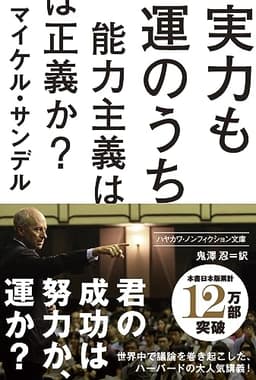
Michael Sandel argued in 『実力も運のうち 能力主義は正義か?』 (The Tyranny of Merit)(外部サイト、新しいタブで開きます) that the excessive function of university education as "proof of ability" is a societal problem. When access to higher education is determined by economic power, it undermines the very legitimacy of meritocracy.
A private investment, or a shared one
To grasp Japan's higher education cost problem structurally, the question is not merely "who pays the tuition." It is a more fundamental philosophical choice: whether higher education is "individual investment" or "shared social investment" — and this choice determines the direction of institutional design.
Education spending at 3.9% of GDP and a household burden of 51% demonstrate that Japanese society has long chosen "individual self-responsibility" as its answer. The partial tuition-free policy for multi-child households represents only a minor adjustment to this structure.
For more on the relationship between household education burden and social inequality, see "What 'Tuition-Free' Doesn't Cover — The Education Gap Hidden by Japan's High School Tuition Subsidy(このサイトの記事)."
References
Higher Education Tuition Support System — Ministry of Education, Culture, Sports, Science and Technology (MEXT) (2025)
FY2025 Multi-Child Household Support Expansion — Japan Student Services Organization (JASSO) (2025)
Education at a Glance 2024: Japan — OECD (2024)
The Blind Spots of Free University Tuition — If You Think It's Really Free, Think Again — Toyo Keizai Online (2024)
Recommended Reading
Statistics cited in this article
- 1MEXT, leaflet on the higher education tuition support system (for students)(February 2026) Open source
- 2Comprehensive Survey of Living Conditions(2023)
- 3OECD Education at a Glance 2024(September 2024) Open source
- 4MEXT(2025)
- 5University of Tokyo(FY2025)
- 6MEXT Survey on Student Fees at Private Universities FY2023(2024)
- 7Federal Reserve Bank of New York(2024)
- 8MEXT School Basic Survey(2024) Open source