
When Private Afterschool Care Costs Exceed Take-Home Pay — The Market Mechanics of Japan's Child Penalty
Japan's public afterschool clubs leave 16,330 children on waitlists nationwide, 3,360 in Tokyo alone. Nikkei reports private fees running as high as ¥100,000 a month per child — exceeding take-home pay for multi-child households. This column reads the institutional silos and market sorting that turn the so-called "child penalty" into a structural phenomenon.
TL;DR
- Public afterschool club waitlists reached 16,330 nationally as of May 2025, with Tokyo alone accounting for 3,360 (20.6% of the national total)
- Public clubs cost ¥8,000–13,000 a month while Nikkei headlines private fees "as high as 100,000 yen a month", with little public subsidy bridging the gap
- Women's labour income falls an estimated 60% after childbirth, translating childcare-access barriers directly into career barriers
What Is Happening
Nikkei reports Tokyo private afterschool fees as high as ¥100,000 per child a month, above take-home pay for multi-child households
"Work and lose money; quit and fall into poverty." A working mother in Tokyo raising three children, with take-home pay of ¥170,000 per month, faced private afterschool care costs approaching ¥200,000 during a six-week summer break, according to a report published by . The case sounds extreme, yet a reproducible structure sits underneath it.
Start with public supply. Registered children in public afterschool clubs reached a record 1,568,588, with 16,330 children left on waitlists. Even after a year-on-year decline, more than 16,000 children remained unable to enter public clubs. Tokyo alone accounted for 3,360, or 20.6% of the national total, with urban concentration entrenched.
Families turned away from public clubs are routed to the private market. Private afterschool fees vary widely — Nikkei headlined its report "plenty of enrichment classes, fees as high as 100,000 yen a month," and noted that base fees run high and that charges for extended hours and transport differ between providers. Public-club fees, including the after-snack contribution, stay within 8,000 to 13,000 yen. (The tiered price bands previously given here came from the paywalled part of that article and could not be verified, so they have been removed.) The result is a 6–10x cost gap between public and private with no public subsidy designed to close it.
Triple Burden Structure
International Comparison
| Country | Family Spend/GDP | Child Allowance | Tertiary Private % |
|---|---|---|---|
| Japan | 2.0% | ¥10–30K/mo | 51% |
| France | 3.6% | ~€140+/mo | 19% |
| Sweden | 3.4% | SEK 1,250/mo | 12% |
| Germany | 3.7% | €250/mo | 15% |
* Family spending from OECD Family Database (2021). Tertiary private share from OECD Education at a Glance (2024). Child allowances reflect each country's system as of 2024.
Apply these numbers to household models and the contour sharpens. Using contractual cash earnings for women in their thirties in Tokyo, an estimated take-home pay of about ¥250,000 implies that, taking a private fee of ¥80,000 as a working assumption, a single child absorbs roughly 32% of take-home pay, two children consume around 64%, and three children take about 96%. The FIRST-HAND Local case — a single mother in part-time work with three children — sits at the intersection of conditions that the arithmetic reliably produces. It is not a one-off; it is a structural outcome with reproducible probability by household type.
Background & Context
Afterschool care was codified as a "service" not a "facility," letting private providers fill public supply gaps on a price-rationed basis.
Afterschool Care Was Codified as a "Service," Not a "Facility"
Why did public supply and quality assurance lag this far? The legal classification is the quickest route to an answer. Afterschool care began in private nurseries in the late 1940s, accumulated demand through nuclearization and the rise of dual-earner households, and was finally codified in 1997 as the "After-School Children Healthy Development Program" under the revised Child Welfare Act. sits in the Child Welfare Act and Social Welfare Services Act as a "Type 2 Social Welfare Service," a category distinct from the "child welfare facilities" that govern licensed nurseries.
The gap between "facility" and "service" carries more weight than the words suggest. Licensed nurseries function as child welfare facilities with binding minimum standards and obligations to expand capacity, embedded within national-level planning responsibilities. Afterschool care, by contrast, operates under looser standards, treats municipalities only with a duty to make best efforts, and receives limited subsidy. The "service" classification is the legal substrate that has structurally permitted supply shortages, quality gaps, and privatization.
Private Markets Fill the Gap as Structural Complement
Unmet demand flows into the private market. According to , the user base for child-development services reached 1.27 million in 2020 and is projected to grow to 1.58 million by 2027, with the market scaling to around ¥500 billion. Standardized dual-earner households and constrained public supply together turned private afterschool care from a substitute into structural complement.
The problem is that this "complement" is carried by the price mechanism. Entry barriers are low, and pricing settles at a level that sorts users by income. can be read as administrative recognition that price and quality have stopped aligning in this market. Certification, however, addresses quality, not price, and does not directly bridge a 6–10x cost gap.
Dual-Earner Households Are Now Standard, Institutions Still Assume a Single Earner
The supply-demand mismatch also has a labor-side root. Dual-earner households with a wife aged 64 or under reached 12.06 million in 2023, against 4.04 million households of a male employee with a non-working wife. In 1985 the figures were the other way round: 7.18 million dual-earner against 9.36 million. Dual-earning is no longer an exception; it is the norm.
Yet afterschool infrastructure and working-time institutions have not caught up. Jurisdiction is split across the Ministry of Health, Labour and Welfare (nurseries), the Ministry of Education, Culture, Sports, Science and Technology (elementary schools), and the Children and Families Agency (afterschool care). When children transition from nursery to elementary school, parents' available working hours contract sharply on the institutional side. Staggered dismissal times by grade and split-decision admissions for siblings produce what families call "void hours." The design still implicitly assumes a single-earner household while pushing the operational burden entirely onto parents.
Reading the Structure
Supply constraints, private pricing, household sorting, and forced maternal exit form the market mechanics of Japan's child penalty.
The Market Mechanics of the Child Penalty
Threading the three layers together yields a tight sequence. Public afterschool care is hobbled by its "service" classification and supply constraints. The private market fills the gap, but with free entry and prices that settle at income-sorting levels. Multi-child households, single-parent households, and part-time-earning households reach the cost-equals-wage threshold and face the binary choice between continuing to work and quitting. Quitting drags household income down, which in turn compresses the investment margin for the next generation's education and health.
This is less an individual choice than a structure in which the institutional silos preserve a market sorting function and mass-produce maternal career interruption as a result. defined the "" as "political institutions, social practices, and individual attitudes that treat parenting as a punishment." This column adds one observation to their framework: in Japan's afterschool-care space, the child penalty is operating through the market mechanism.
A 67.8% Child Penalty as Labor-Economics Reinforcement
The proposition that "forced exit" is not an individual choice but a structural pressure finds backing in the labor-economics literature on the child penalty. Japanese women's labour income falls by roughly 60% after childbirth and recovers only slowly thereafter. Estimated with the same method, men's income shows no large change after childbirth. identifies post-birth exit and the transition to family-friendly workplaces as two channels that keep the child penalty persistent even where gender gaps otherwise narrow. points out that Japan's family-friendly policies appear robust on paper but fail to operate effectively in practice.
The places the ten-year child penalty at around 21% in Denmark, 26% in Sweden, and 61% in Germany. Japan's estimates sit on the higher side of the international distribution. In this frame, afterschool-care barriers are not an abstract number; they translate into the concrete moment when a mother answers, "I gave up on my career."
A "Free-Care Gap" Emerges Once You Look at International Comparisons
International comparisons point the same direction. The shows that the net cost borne by a couple with two children in full-time care is around 5% of average wages in Sweden, under 10% in Korea, and 18%+ in the US, UK, Switzerland, the Netherlands, and Czechia. With the 2019 free preschool reform, Japan's score moved into the lower range of this distribution for ages 3–5.
the 2019 reform applies only to ages 3–5; afterschool care for school-age children sits entirely outside the free-care perimeter. The OECD net-cost indicator is a pre-school-entry number, and Japan's score does not measure the "free-care gap." The FIRST-HAND Local case occurs precisely in that gap, at the transition from nursery to elementary school. A country that made preschool free until age 5 is throwing market prices of ¥50,000–100,000 per month at parents the moment a child enters first grade.
How France and Sweden designed it
France treats afterschool care as a public service rolled out nationwide and finances about 70% of it with public funds. Sweden links low-cost-share care infrastructure with paternal leave from the earliest stage, building a continuous public supply premised on dual-earner households. Reference models exist. The question for Japan is fiscal capacity and jurisdiction split, and whether to keep afterschool care classified as a "service."
Reproducible Structure Behind a Single Case
Return to the opening case of "¥170,000 take-home pay against ¥200,000 private afterschool care." It is neither bad luck nor failed household budgeting. The "service" classification with its supply constraints, the price mechanism in private afterschool care, dual-earner standardization against jurisdictional silos, labor-economics pressure from the child penalty, and the free-care gap. Where these layers overlap, a "cost-equals-wage intersection" appears with reproducible probability by household type.
Read this as "the market functioning as a sorting device by income class," and the policy contour shifts. Reclassifying afterschool care as a "facility," raising the public-funding share, opening school buildings during long vacations, extending the free-care perimeter into school years. None of these are isolated budget items; each is part of a coordinated choice about where to cut the market mechanics of the child penalty. documented the "afterschool lottery," "providers profiting from subsidies," and "working-poor instructors" from inside the sector for the same reason: to record what a marketized afterschool-care landscape actually looks like.
Changes in support and parental costs at the transition from nursery to school can make continued employment difficult. Afterschool fees, opening hours and admission requirements need consideration alongside nursery fees.
Related Columns
- Beyond Japan's 11.5% Child Poverty Rate(このサイトの記事) (single-parent poverty at 44.5% and the working-poor paradox)
- Quality Crisis Behind "Zero Waitlist" Childcare(このサイトの記事) (volume solved, quality eroded)
- Time Poverty and Unpaid Labor(このサイトの記事) (the gendered concentration of household time burden)
- The Triple Burden of the Child-Rearing Penalty(このサイトの記事) (housing, education, and child-allowance balance)
Reference Books
- Kaori Suetomi and Keita Sakurai, 子育て罰 「親子に冷たい日本」を変えるには (光文社新書) (Child Penalty: How to Change a Japan That Is Cold to Parents and Children, Kobunsha Shinsho)(外部サイト、新しいタブで開きます), Kobunsha, 2021. The foundational Japanese-language treatment of the "child penalty" concept and the framing source for this column.
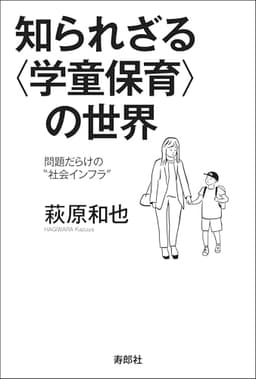
- Kazuya Hagiwara, 知られざる〈学童保育〉の世界 問題だらけの〝社会インフラ〟 (The Untold World of Afterschool Care: A "Social Infrastructure" Riddled with Problems)(外部サイト、新しいタブで開きます), Jurosha. An inside report on the "afterschool lottery," subsidy-driven business models, and working-poor instructors.
- Miki Kobayashi, ルポ 保育格差 (岩波新書) (Childcare Inequality: A Report, Iwanami Shinsho)(外部サイト、新しいタブで開きます), Iwanami Shoten, 2016. A field-reporting baseline on supply and quality gaps that precede the school-age stage.
References
FY2025 Survey of After-School Children Healthy Development Programs — Children and Families Agency (2025). Children and Families Agency
FY2024 Basic Survey on Wage Structure: Summary of Results — Ministry of Health, Labour and Welfare (2025). Ministry of Health, Labour and Welfare
FY2024 White Paper on Gender Equality — Cabinet Office, Gender Equality Bureau (2024). Cabinet Office, Gender Equality Bureau
The Child Penalty in Japan's Gender Earnings Gap — Momoka Takasu (2025). Daiwa Institute of Research Quarterly Vol.57
Chapter 3: Child Penalty and the Gender Gap — Norihiro Komura (2022). Ministry of Finance Policy Research Institute, Working Group on Work, Working Styles, and Wages
Child Penalties Across Countries: Evidence and Explanations — Kleven, H., Landais, C., Posch, J., Steinhauer, A., Zweimüller, J. (2019). AEA Papers and Proceedings, 109, 122–126
PF3.4: Childcare support (OECD Family Database) — OECD (2023). OECD Family Database
The Labor Trap Called Afterschool Care: Work and Lose, Quit and Fall into Poverty — FIRST-HAND Local Editorial Team (2026). FIRST-HAND Local
Dual-Earner Households Eye Private Afterschool Care: Diverse Programs, Up to ¥100,000 per Month — Nikkei (2025). Nikkei


Statistics cited in this article
- 1Children and Families Agency, FY2025 Survey of After-School Children Healthy Development Programs(As of May 2025) Open source
- 2Ministry of Health, Labour and Welfare, FY2024 Basic Survey on Wage Structure(2024) Open source
- 3Cabinet Office, FY2024 White Paper on Gender Equality — dual-earner and homemaker households(2023) Open source
- 4Norihiro Komura, 'Child Penalty and Gender Gap,' Ministry of Finance Policy Research Institute, Working Group on Work, Working Styles, and Wages(2021) Open source
- 5OECD Family Database PF3.4 Childcare support(Published 2023) Open source
Questions to Reflect On
- How does the legal classification of afterschool care as a "service" rather than a "facility" shape today's supply constraints?
- What does a 6–10x cost gap between public and private afterschool care signify in cities where waitlists persist?
- Why did Japan's 2019 free preschool reform stop at ages 3–5 instead of extending into the school years?
Key Terms in This Article
- Child Penalty
- The aggregate economic and social disadvantages incurred by having children, including wage losses (motherhood penalty), increased education and housing costs, and institutional disadvantages. Conceptualized in the Japanese context by Kaori Suetomi and Keita Sakurai.
Related Content

Time Asymmetry in Pediatric Care: How Japan's 71.9% Dual-Income Reality Collides with Medical Access
71.9% of Japan's married households are now dual-income: 13 million households strong. Maternal employment continuation after the first child has climbed to 69.5%. Yet pediatric care hours remain anchored to weekday daytime. Tottori at 187.3 vs. Chiba at 101.5: a 1.85x gap. Sick-child daycare is absent in 39.6% of municipalities. The 2024 physician work-style reform adds new tension. This article reads "time", the invisible third variable of medical access, through primary data.

The Gender Wage Gap in International Comparison – Three Institutional Designs and the 134-Country Child Penalty Atlas
Japan's gender wage gap is roughly 1.9× the OECD average, ranking second worst among member countries. But the central question of this article is not how far behind Japan stands. Using OECD, ILO, and WEF comparative data alongside Kleven et al.'s (2024) Child Penalty Atlas covering 134 countries, we read the differences in how countries chose to answer the same problem – mandatory certification, index disclosure, voluntary disclosure – and structure what institutional design can and cannot change.

The Emergency Revision of Long-Term Care Reimbursement Rates and Its Structural Limits: The Government's Own Confession That the Ordinary System Can No Longer Keep Up
In June 2026, the government will revise long-term care reimbursement rates one year ahead of the normal three-year cycle — at +2.03% and 51.8 billion yen in national spending. But this "mid-cycle emergency revision" is itself an admission that the ordinary system can no longer keep pace with the crisis. The backdrop is a collapsing labor market: 176 care provider bankruptcies, a +45% surge in staffing-shortage-driven insolvencies, and an effective job-offer ratio of 14 to 1 for home-care workers. Even more striking, a monthly wage increase of 13,960 yen through the FY2024 treatment improvement allowance left care workers at 338,200 yen — still below the nurses (384,620 yen) and therapists (362,800 yen) working in the same facilities. The indirect route of "regulated reimbursement → provider → wages" cannot keep pace with free-market wage competition in other sectors. A monthly add-on of 10,000 yen is symptomatic treatment, not structural reform. Germany's sector-specific minimum wage model and full-scale foreign worker mobilization both have their limits. The emergency revision is a starting point, not a destination.

Is a 14.3% Turnover Rate 'Low'? — The Triple Burden of Wages, Working Conditions, and Social Standing in Care Work
Japan's care worker turnover rate of 14.3% (FY2021) exceeded the all-industry average. While the latest data shows improvement to 13.1%, the structural constraints of wages, harsh working conditions, and low social standing remain unresolved. This article examines how the care reimbursement system—a government-set pricing mechanism—blocks market-driven wage improvements.
Previous
Japan's Bicycle Blue Ticket: One-Month Review of 2,147 Citations, 7 Zero Prefectures, and the Logic of a 'Visibility Device'
Next
Japan's April 2026 Welfare Reform: What Changed, and What Didn't
Get new columns by email
1-2 social structure analysis columns per week. Free to subscribe.
Join ISVD's activities?
Sign up to receive the latest research and activity reports. Feel free to reach out about collaboration or project participation.
Support ISVD’s research and activities
Support ISVD’s research and publications with JPY5,000 per year. There is no automatic renewal.