What 'Tuition-Free' Doesn't Cover — The Education Gap Hidden by Japan's High School Tuition Subsidy
In FY2026, Japan fully removes income restrictions on high school tuition subsidies. But only 'tuition' is covered. The 3-year cost gap between public and private schools: ¥1.74 million. Education spending at 3.9% of GDP — the lowest in OECD. Analyzing the structure behind the label of 'tuition-free.'
TL;DR
- Income restrictions on high school tuition subsidies will be fully removed in FY2026, expanding coverage to approximately 800,000 students
- Only tuition is covered — the 3-year learning cost gap of ¥1.74 million between public and private schools remains a household burden
- Education spending at 3.9% of GDP is the lowest in OECD, with 62.5% of higher education costs privately funded
What Is Happening
Japan removes income restrictions on high school tuition subsidies starting FY2026
On February 27, 2026, the Japanese government approved a cabinet decision to amend the High School Enrollment Support Fund system. Based on a tripartite agreement among the LDP, Nippon Ishin no Kai, and Komeito, the bill passed the House of Councillors on 31 March 2026 and took effect in April.
The amendment has two pillars. First, it completely eliminates income restrictions for both public and private schools. The previous threshold of approximately ¥9.1 million in annual household income disappears, making all households eligible. Second, it raises the subsidy ceiling for private full-time schools from ¥396,000 to ¥457,200 per year.
According to estimates by MEXT, approximately 350,000 households with annual incomes between ¥5.9 million and ¥9.1 million and approximately 450,000 households above ¥9.1 million — a total of approximately 800,000 people — will become newly eligible. The required budget is approximately ¥600 billion.
The elimination of income restrictions represents a significant step forward in education policy. However, the phrase "tuition-free high school" conceals a structural reality.
Background & Context
Historical development and current limitations of Japan's tuition subsidy system
The Gap Between the Label and Reality
The system's official name is the "High School Enrollment Support Fund," and it covers tuition fees only. Viewed against the total cost of education, this represents only a fraction.
| Cost Item | Public | Private | Covered? |
|---|---|---|---|
| Tuition | 0 | ~¥457K | ✓ |
| Facility Fees | - | ~¥160K | ✗ |
| Enrollment Fee | ~¥50K | ~¥170K | ✗ |
| Materials | ~¥40K | ~¥40K | ✗ |
| Club Activities | Several ¥10K | ¥10K-¥100K+ | ✗ |
| Commuting | Several ¥10K | ¥10K-¥100K+ | ✗ |
| Cram School | ¥200-400K | ¥200-400K | ✗ |
According to MEXT's "FY2023 Survey on Children's Learning Costs," the total annual learning cost for public high school is ¥596,954, while for private high school it is ¥1,179,261. Using the survey's own grade-by-grade totals, three years come to approximately ¥1.78 million for public schools versus approximately ¥3.52 million for private schools — a gap of approximately ¥1.74 million.
The survey figure is already net of the support payment
One point deserves attention: these figures are what guardians actually paid, with the tuition support subsidy already deducted. The tuition line in the survey is ¥45,272 for public and ¥279,170 for private — far below the ¥118,800 annual public tuition and the national private average. The gap is the subsidy. So even if tuition costs vanish entirely in FY2026, what disappears is that ¥45,272 and ¥279,170, leaving a three-year gap of roughly ¥1.05 million.
Even with tuition made free, facility maintenance fees (approximately ¥160,000 annual difference), enrollment fees (approximately ¥120,000 difference), textbook costs, club activity fees, commuting costs, and cram school fees (¥200,000-400,000 annually) remain entirely the responsibility of households. The word "free" generates expectations beyond reality, creating a structure that obscures the system's limitations.
Regional Disparities — Support Varies by Where You Live
Ahead of the national reform, Tokyo eliminated income restrictions in FY2024, providing up to ¥484,000 per year through its own "Tuition Reduction Grant" in addition to the national subsidy. Osaka Prefecture will implement full tuition-free education across all grade levels in FY2026, but introduces a ¥630,000 annual cap, with amounts exceeding the cap borne by schools.
Meanwhile, many rural prefectures without their own supplementary support rely solely on the national system. This structure — where the level of support received varies significantly by place of residence — will be raised by the FY2026 national reform, but the gap with Tokyo and Osaka persists.
Japan's Public Education Spending — What OECD's Lowest Means
OECD Education at a Glance 2024. Japan's education spending at 3.9% of GDP is the lowest among 37 OECD countries. Private funding for higher education reaches 62.5%, roughly 1.9x the OECD average.
According to OECD's "Education at a Glance 2025," Japan's education spending as a share of GDP is 3.9%, significantly below the OECD average of 4.7%, placing Japan at the lowest level among OECD member countries.
Particularly alarming is the share of public funding in higher education. Japan stands at 37.5%, strikingly low compared to the OECD average of 67.4%. The remaining 62.5% is privately funded — borne by households and individual students.
In Nordic countries, not only is tuition free, but textbook costs and school meals are also publicly funded. In Germany and France, free public secondary education is taken for granted. The fact that Japan charged tuition even at public high schools until 2010 demonstrates the country's latecomer status among OECD nations.
Reading the Structure
Analysis of what costs remain uncovered and systemic education funding issues
The Fault Line Between Household Income and University Enrollment
Tuition-free education equalizes "the entry point to educational access," but the disparities beyond that entry point remain intact.
According to a survey by the National Institute for Educational Policy Research, the four-year university enrollment rate for households with annual incomes below ¥4 million is 31.4%, compared to 62.4% for those above ¥10 million. A gap of approximately two-fold exists. A "threshold" appears around ¥6.5 million in annual income, below which abandonment of higher education for economic reasons surges.
This gap is generated by the accumulation of "hidden education costs" during the high school years. Cram school fees (¥200,000-400,000 annually), club activity fees, commuting costs, digital devices, and university entrance examination fees, travel costs, and accommodation. These costs escalate for those living in rural areas. Tuition-free education alone cannot close the gap in educational quality and breadth of career choices.
The Intersection of Meritocracy and Educational Inequality
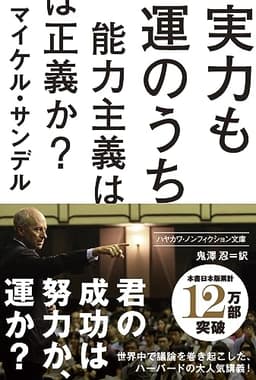
In 『実力も運のうち 能力主義は正義か?』(The Tyranny of Merit)(外部サイト、新しいタブで開きます), Michael Sandel sharply analyzed the dark side of meritocracy. The meritocratic narrative of "hard work leads to success" grants the successful a sense that they "earned it through their own ability," while imposing upon those who did not reach that point the humiliation that "their effort was insufficient."
The problem of educational inequality is deeply intertwined with this meritocratic structure. Even when tuition is made free, disparities in investment in cram schools, information environments, and cultural capital persist. Children from high-income households can say they "received a good education, entered a good university, and obtained a good job" — but whether one can access that "good education" depends heavily on the economic power of the family into which one is born. What Sandel calls the "tyranny of merit" is embedded within the education system itself.
University entry rates differ twofold by household income
In Japan's case, this problem further overlaps with the structure of a "credential society." The fact that the university enrollment gap by household income is twofold means that the accumulation of "hidden education costs" during high school becomes visible at the life-defining juncture of university enrollment. Making tuition free is a necessary condition but not a sufficient one for achieving equality of educational opportunity.
Acknowledging Progress While Questioning the Structure
The FY2026 elimination of income restrictions is undoubtedly progress. The elimination of the "support cliff" — where a single yen's difference in income around ¥9.1 million meant full self-payment — carries significant meaning.
However, treating this reform as the "completion of tuition-free high school" misreads the structure. Public education spending at 3.9% of GDP, a 62.5% private funding rate for higher education, a two-fold gap in university enrollment rates by household income — none of these structural problems can be resolved by making tuition free alone.
The question that should be asked is not "whether tuition has been made free" but the more fundamental question of "how society should share the total cost of education."
For more on the relationship between educational disparities and social vulnerability, see also "Guide to Mapping Social Vulnerability in Disaster Response(このサイトの記事)."
References
令和5年度子供の学習費調査(令和8年1月16日 数値訂正版)(FY2023 Survey on Children's Learning Costs, revised 16 January 2026) — Ministry of Education, Culture, Sports, Science and Technology (2026)
Education at a Glance 2025: Japan — OECD (2025)
高校無償化の改正法案を閣議決定 所得制限撤廃、年度内成立目指す — Nikkei (2026)
「授業料無償化」の裏で家計を蝕む『隠れ教育費』のリアル — Toyo Keizai (2025)
高校生の高等教育進学動向に関する調査研究 第二次報告書 — National Institute for Educational Policy Research (2023)
高校授業料の完全無償化 制度は私立の「公立化」? — Kansai Television (2024)
Reference Books
Statistics cited in this article
- 1Nikkei, 'Amended high school tuition law enacted; income caps removed for private schools too'(31 March 2026) Open source
- 2Amendment bill (February 2026 cabinet decision)(2026)
- 3MEXT estimate(2026)
- 4LDP-Ishin-Komeito tripartite agreement(2026)
- 5MEXT 'FY2023 Survey on Children's Learning Costs' (revised 16 January 2026)(Revised January 2026) Open source
- 6MEXT 'FY2023 Survey on Children's Learning Costs' (revised 16 January 2026), Table 2(Revised January 2026) Open source
- 7MEXT 'FY2023 Survey on Children's Learning Costs' (revised 16 January 2026)(Revised January 2026) Open source
- 8Tokyo Metropolitan Government(FY2024)
- 9Osaka Prefecture(FY2026)
- 10OECD EAG 2025(Published September 2025)
- 11National Institute for Educational Policy Research(2023)