
One Year Since Japan's Loneliness Countermeasures Act — Can We Quantify 'Connection'?
Japan's Loneliness and Isolation Countermeasures Act took effect in April 2024. One year on, 39.3% of respondents in the national survey still report feelings of loneliness — unchanged. The WHO estimated loneliness-related deaths at 100 per hour (871,000 annually) in June 2025 and called for a global Social Connection Index. The law exists. But how do we measure 'connection,' and how do we evaluate policy effectiveness? Japan — and the world — have yet to answer this fundamental question.
TL;DR
- One year after enforcement, the proportion reporting loneliness remains at 39.3%, demonstrating that legislation alone does not move the numbers
- The WHO's June 2025 report estimated 100 loneliness-related deaths per hour and identified the lack of standardized measurement tools as a major gap
- Japan's national survey leads the world in tracking subjective loneliness over time, but indicators capturing 'quality of connection' remain undeveloped
What Is Happening
One year after enforcement, loneliness rates remain flat at 39.3% and Japan's first estimate puts solitary deaths at 22,000 per year
On April 1, 2024, Japan's Loneliness and Isolation Countermeasures Promotion Act came into force. It was the world's first comprehensive law targeting loneliness and isolation across the entire population.
One year on. What has changed?
According to the national survey conducted by the Cabinet Office in 2024, the proportion of respondents reporting loneliness as "often/always," "sometimes," or "occasionally" was 39.3%. This is the same level as the previous year's survey, showing no notable change before and after the Act's enforcement.
The share who answered always
Those who answered "always" accounted for 4.3%. By age group, the 20s and 30s scored highest. Loneliness is not solely an issue for the elderly.
The first estimate of solitary deaths
In May 2025, the Cabinet Office released its first-ever estimate of "solitary deaths." In 2024, 21,856 people died alone at home and were discovered more than eight days later. Eighty percent were male, and seventy percent were aged 65 or older. Even the definition of "solitary death" had only just been established after the Act's enforcement.
Internationally, the loneliness crisis is rapidly gaining visibility. The WHO Commission on Social Connection published its first comprehensive report in June 2025. One in six people worldwide experience loneliness, and loneliness-related deaths were estimated at 100 per hour — approximately 871,000 per year (note that "loneliness-related deaths" here does not mean loneliness was the direct cause of death; the figure is derived from meta-analyses showing that social isolation statistically elevates mortality risk).
The law exists. But how do we measure its effects? How do we quantify "connection" — a concept that is inherently subjective and multidimensional? This is the central challenge Japan faces one year in.
Background & Context
Limitations of the UCLA scale, the WHO's Social Connection Index proposal, and the UK's 8-year evaluation struggle
The UCLA Loneliness Scale — Merits and Limits of the Global Standard
Japan's national survey employs two approaches: the UCLA Loneliness Scale and direct questioning.
The UCLA Loneliness Scale, developed at the University of California, Los Angeles in 1978, indirectly measures the lack of social connection without directly using the word "lonely." Questions such as "Do you feel left out?" and "Is there someone you can turn to?" are answered on a four-point scale, and a composite score quantifies the degree of loneliness.
The scale's strength lies in its international comparability. It has been translated and validated in dozens of countries, and the Japanese version shows high reliability (Cronbach's alpha = 0.92). The Cabinet Office has conducted this survey annually since 2021, building a longitudinal dataset. In this respect, Japan is at the global forefront.
Yet the limitations are becoming clear. Research commissioned by the UK's Department for Culture, Media and Sport (DCMS) identified three concerns with ONS-recommended measurement methods. First, they have limited sensitivity to change, making it difficult to detect intervention effects. Second, they may be unsuitable for certain individuals, such as those with dementia or developmental disabilities. Third, they are susceptible to external factors — season, weather, recent events.
In other words, we can ask "Do you feel lonely?" But determining whether "loneliness policy is working" with the same instrument is far more difficult.
The Measurement Gap the WHO Has Laid Bare
The WHO Commission on Social Connection presented five areas for action in its 2025 report: policy, research, interventions, improved measurement, and shifting social norms.
Among these, "improved measurement" has emerged as the most fundamental challenge. The report identified "the lack of standardised, cross-cultural, life-course-sensitive measurement tools" as a major research gap and called for the development of a "Social Connection Index."
The WHO's 2025 report identified 'the lack of standardised, cross-cultural, life-course-sensitive measurement tools' as a major gap. Japan's national survey leads the world in tracking subjective loneliness over time, but indicators capturing 'quality of connection' remain undeveloped.
This is a crucial observation. Current measurement focuses primarily on "subjective loneliness," but social connection is multidimensional — it spans contact frequency, quality of participation, depth of relationships, and the presence of social roles. Which layer is measured, and how, fundamentally shapes policy priorities.
For instance, if "conversation frequency" is the indicator, elderly monitoring services appear effective. But if "quality of relationships" is the indicator, whether a weekly welfare check call constitutes "connection" becomes questionable. Many social prescribing programmes in the UK target specific aspects such as companionship, and improvements in those aspects may not be reflected in overall loneliness scores.
The UK's Precedent — Eight Years of Struggle
The United Kingdom, which appointed a Minister for Loneliness in 2018, ahead of Japan, is confronting precisely this wall in policy evaluation.
DCMS published "A Connected Society: A Strategy for Tackling Loneliness" in 2018, setting out a national strategy. Yet eight years on, quantitative policy evaluation remains elusive. According to the Community Life Survey 2024/25, approximately 47% of adults experience loneliness occasionally or more frequently, and no clear improvement trend is visible.
What the UK experience demonstrates is a structural dilemma: if the measurement methodology to prove a policy's effectiveness is not established, the policy's sustainability cannot be guaranteed — regardless of the legislation or institutions created.
Reading the Structure
The gap between subjective and structural measures, how measurement shapes policy, and the three disconnects
At the one-year mark, it may be premature to ask what the Loneliness and Isolation Countermeasures Act has "achieved." Transforming social structures is a decade-long endeavour, not a year-long one.
However, the risk of letting ten years pass without defining what "achievement" means already exists at this very moment.
Subjective versus structural, measurement driving policy, municipal gaps
The first structural problem is the gap between the subjective and the structural. What the national survey measures is "loneliness" — a subjective experience — not "isolation," an objective condition. People can be socially isolated without feeling lonely, and people can feel profoundly lonely despite having many relationships. Of the 21,856 who died in solitary circumstances in 2024, how many had reported "feeling lonely" in a prior national survey? No one knows. A methodology bridging subjective and objective indicators is needed.
The second problem is the inverted structure where measurement defines policy. The tendency for policy to be pulled toward "what can be measured" is a risk common to all EBPM. Because loneliness scores are measurable, policy may be optimized toward "reducing loneliness scores." But a decline in loneliness scores and a substantive enrichment of social connection are not synonymous. This is precisely the gap DCMS in the UK is confronting.
The third problem is the disparity among local governments and the thinness of budget. The Loneliness and Isolation Countermeasures Act designates the establishment of regional councils as a "best effort obligation." As of FY2024, only 32 bodies (21 prefectures/designated cities, 11 municipalities) have established them — just 0.6% of Japan's 1,741 municipalities. The related budget in the FY2025 initial proposal amounts to approximately 140 million yen. Divided across 1,741 municipalities, that is roughly 80,000 yen per municipality.
The WHO resolution
The first-ever resolution on social connection, adopted at the World Health Assembly in May 2025, urges member states to develop evidence-based policies. Japan led the world in legislation. But in the methodology for measuring that legislation's effects, no country in the world has the answer.
The honest answer is that we do not yet know
Can "connection" be quantified? The honest answer to this question is "not yet." What we do know is that policy without measurement goes unevaluated, and unevaluated policy does not endure.
Related Columns
- Loneliness and Isolation Act at Two Years — What Has the World's First Comprehensive Law Changed?(このサイトの記事)
- Japan's Welfare Capture Rate — The Safety Net That Doesn't Reach(このサイトの記事)
- SNS Fatigue and Individual Wellbeing(このサイトの記事)
References
National Survey on Loneliness and Isolation (FY2024) — Cabinet Office Loneliness and Isolation Promotion Office. Cabinet Office
Overview of the Loneliness and Isolation Countermeasures Promotion Act — Cabinet Office. Cabinet Office
From loneliness to social connection: charting a path to healthier societies — WHO Commission on Social Connection. World Health Organization
Research on the measurement of loneliness — Alma Economics / DCMS. GOV.UK
Priority Plan for Loneliness and Isolation Countermeasures — Loneliness and Isolation Countermeasures Promotion Headquarters. Cabinet Office
Solitary Deaths Exceed 20,000 in 2024: Cabinet Office's First Estimate — Fukushi Shimbun Editorial Team. Fukushi Shimbun
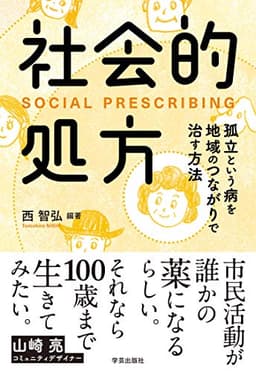
Social Prescribing as an Approach to Advance Loneliness Countermeasures — EY Japan. EY Japan
Recommended Reading
Statistics cited in this article
- 1Cabinet Office National Survey on Loneliness and Isolation(FY2024) Open source
- 2Cabinet Office solitary death estimate(May 2025) Open source
- 3WHO Commission on Social Connection(June 2025) Open source
- 4Cabinet Office Loneliness and Isolation Promotion Office(FY2024) Open source