
What Is Happening
The correlation between genetics and intelligence. The relationship between appearance and social success. Genetic factors in criminal tendencies. Scientific data on these themes continues to accumulate. However, speaking about them publicly is subject to strong taboo.
Akira Tachibana directly addressed this situation in his 2016 book 『言ってはいけない』 (Things That Must Not Be Said—Truths Too Cruel)(外部サイト、新しいタブで開きます). He introduced findings from behavioral genetics, correlations between appearance and income, and data on the heritability of intelligence, posing the question: "Why are these not discussed?" The book became a bestseller with over 600,000 copies sold, and many readers responded to this question.
However, Tachibana's approach has limitations. His focus is concentrated on the "content of taboos"—what must not be said—while the analysis of "taboo structures"—why these things become unspeakable—remains insufficient.
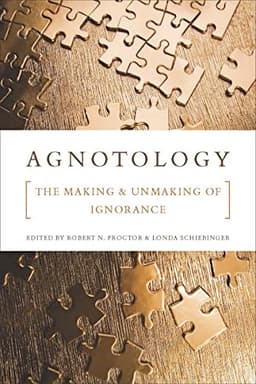
From the perspective of agnotology, taboos are not simply "topics that must not be touched." They are a form of mechanism that systematically produces and maintains "not knowing." The very existence of taboos structurally suppresses inquiry in specific domains and creates knowledge gaps.
Background and Context
Tachibana's Problem—Taboos as Content
Organizing Tachibana's work, the "unspeakable things" he identified can be classified into three major domains.
First, the relationship between genetics and ability. Twin studies in behavioral genetics have repeatedly shown that the heritability of intelligence is approximately 50–80%. This finding directly conflicts with the educational belief that "anyone can succeed with effort." Therefore, it is virtually impossible to discuss in educational settings.
Second, the relationship between appearance and social success. Economic research shows significant correlations between physical attractiveness and income/promotion. Daniel Hamermesh's (2011) Beauty Pays(外部サイト、新しいタブで開きます) represents typical research in this field, but openly discussing these findings invites criticism of "lookism."
Third, the biological basis of criminal and violent tendencies. Behavioral genetic findings such as the relationship between MAO-A gene mutations and aggression are accumulating, but this domain is directly connected to historical memories of eugenics, creating strong aversion to the research itself.
Tachibana presented these findings as "truths too cruel," but his framing itself makes taboo structures less visible in some aspects. The narrative of "brave author exposing cruel truths" trivializes taboos into a matter of individual courage.
"Stupid and Ignorant"—The Social Function of the Dunning-Kruger Effect
Tachibana further developed his argument in his 2022 work "Stupid and Ignorant—Humans, These Inconvenient Creatures." The central question of this work is why the Dunning-Kruger effect—the tendency for those with lower ability to overestimate their capabilities—is taboo.
The Dunning-Kruger effect is not commonly discussed because this finding conflicts with normative assumptions of "equality." The democratic ideal that "all people's opinions should be equally respected" is difficult to reconcile with the empirical finding that "all people's judgment abilities are not equal."
From an agnotological perspective, the tabooing of the Dunning-Kruger effect is a form of ignorance structurally produced by epistemic egalitarianism. To preserve the ideal of equality, knowledge about inequalities in ability is suppressed.
Yamamoto Shichihei's "Air"—The Japanese Mechanism of Taboos
In his 1977 work 『「空気」の研究』 (A Study of 'Air')(外部サイト、新しいタブで開きます), Yamamoto Shichihei analyzed decision-making mechanisms in Japanese society. What Yamamoto called "air" is unarticulated collective pressure that implicitly defines "what can be said" and "what must not be said."
"Air" can be understood as the Japanese implementation of taboos. While taboos in Western societies tend to be made explicit through laws or religious doctrines, taboos in Japanese society operate implicitly through "reading the air."
In the framework of agnotology, this difference is important. Explicit taboos are easier to criticize. It is possible to argue "this law is unjust," and procedures for doing so (litigation, legislative movements, etc.) exist. However, taboos existing as "air" have no foothold for criticism. If one argues "the air is unjust" and is denied with "there is no such air," rebuttal becomes difficult.
Yamamoto called this structure "presence-based comprehension." Something "present" in a specific object is perceived, and sharing this perception creates binding force beyond rational discussion. In this process, the very question "why must we not speak about this" is suppressed.
Reading the Structure
A Three-Stage Model of Taboo Production
Integrating Tachibana's "unspeakable things" with Yamamoto's analysis of "air" mechanisms through agnotology yields a three-stage model of taboo production.
Stage 1: Setting Moral Frameworks
Specific knowledge domains are framed as "morally sensitive issues." The relationship between genetics and intelligence is framed as knowledge that "could promote discrimination," while the relationship between appearance and success is framed as knowledge that "leads to lookism."
This framing itself is not necessarily malicious. Historically, the fact that discourse on genetics and ability was used for eugenic policies is undeniable, and moral vigilance has legitimate grounds. The problem is that moral framing transforms into taboos against "speaking about the topic itself."
Stage 2: Social Sanctions Against Deviants
Once framing is established, social sanctions against those who cross boundaries become active. If scholars publish research results on genetics and intelligence, they risk being labeled "discriminationists." If journalists report correlations between appearance and income, they face criticism as "inappropriate."
In the SNS era, the speed and intensity of these sanctions have increased. One statement can "go viral," attracting criticism that ignores context and can even cost jobs. The asymmetry of sanctions—low attack costs versus high defense costs—can be seen as a social sanction version of Brandolini's law.
Stage 3: Internalization of Self-Censorship
When external sanctions are repeated, individuals eventually refrain from speaking before receiving sanctions. This is the internalization of self-censorship.
Self-censorship is difficult to observe externally. Unaddressed research themes, unwritten papers, avoided interview subjects—these remain invisible as "non-existent things." If agnotology is a discipline analyzing "knowledge of absence," knowledge gaps created by self-censorship are positioned at the core of analytical subjects.
The Complex of silence-structuring and epistemic-exclusion
Analyzing through Proctor's (2008) agnotological framework, taboo production mechanisms can be described as a complex of two mechanisms.
The first mechanism is "silence-structuring." Taboos socially organize "not speaking" about specific themes. Through processes of exclusion from academic conference programs, rejection by academic journal peer review as "ethically problematic," and media avoidance, silence becomes structured.
The second mechanism is "epistemic-exclusion." In Fricker's (2007) context of testimonial injustice, specific speakers' testimony is unfairly discounted due to social prejudice. In the case of taboos, what is excluded is not the speaker but the topic itself. By sharing the assumption that "the theme itself is not a legitimate research subject," knowledge production on that theme is structurally impeded.
The complex operation of these two mechanisms is important. Silence-structuring removes opportunities to speak about specific themes, while epistemic exclusion denies the legitimacy of exploring these themes. When both operate simultaneously, taboos form self-reinforcing loops.
The Productivity of Taboos—What "Not Knowing" Produces
The core insight of agnotology is that ignorance is not merely "absence of knowledge" but "something socially produced." Taboos are also not simply states lacking knowledge, but mechanisms that actively produce states of "not knowing."
And the "not knowing" that taboos produce has social functions.
First, taboos contribute to social stability. In a society where everyone accurately knows the relationship between genetics and ability versus a society where this knowledge is tabooed, the latter might have higher motivation to invest in education. The belief that "effort pays off" is difficult to reconcile with heritability data but may be a socially useful fiction.
Second, taboos can contribute to protecting the vulnerable. Openly discussing correlations between appearance and income risks justifying discrimination against those less blessed with appearance. Tabooing functions as a social defense mechanism preventing such justification.
Third, however, taboos also contribute to preserving problems. Not directly facing the relationship between genetics and ability preserves the self-responsibility argument that "effort is insufficient." Not analyzing structures of appearance discrimination prevents countermeasures. Not knowing continues to conceal what should be known.
This ambiguity—the dual function of protection and concealment—makes agnotological analysis of taboos both difficult and necessary.
Questions for This Laboratory
Structurally understanding taboo production mechanisms leads to the following questions:
- At what point does the tabooing process transform from "legitimate moral vigilance" to "structural knowledge suppression"?
- Is there a way to retrospectively estimate the quantity and quality of knowledge lost through self-censorship?
- Is it possible to design systems that maintain taboos' protective functions while removing their knowledge suppression functions?
- How do taboo production mechanisms in digital spaces differ from the "air" analyzed by Yamamoto Shichihei?
These questions should be approached as matters of social design rather than individual courage.
References
rm candidates: self-censorship, epistemic-egalitarianism, silence-structuring, epistemic-exclusion */}
Reference Books




Statistics cited in this article
- 1Plomin & Deary, Molecular Psychiatry(2015) Open source
