
21 Million Non-Regular Workers — Has 'Equal Pay for Equal Work' Narrowed Japan's Employment Gap?
36.8% of Japan's employees—21.26 million—are non-regular workers. Monthly wage gap: ¥116,000. Five years after equal pay legislation, gaps persist.

TL;DR
- 36.8% of Japan's employees (21.26 million) are non-regular workers, with a wage gap index of just 66.9 compared to regular employees
- Five years after equal pay legislation, allowance corrections advanced but base pay and bonus gaps remain stagnant due to Supreme Court rulings
- The causal chain from non-regular employment to low wages to marriage difficulty to declining birth rates is becoming visible at the demographic level
What Is Happening
21.26 million Japanese workers are non-regular employees, comprising 36.8% of the workforce with significant wage gaps.
21.26 million. 36.8% of Japan's employees (excluding executives) work in non-regular employment (, Labour Force Survey, 2024 average). Against 36.39 million regular employees, the combined total of part-timers, arubaito (casual part-time), dispatched workers, contract employees, and shokutaku (post-retirement re-hires) exceeds 21 million. This ratio has risen almost continuously over the past two decades.
It runs straight into pay, benefits and career
The crux of the problem is that differences in employment type translate directly into disparities in wages, social insurance, and career development. According to the 2024 Wage Census, monthly scheduled earnings run to ¥348.6 thousand for regular employees against ¥233.1 thousand for non-regular workers, a gap index of 66.9 with regular pay set at 100 — non-regular wages remain roughly two-thirds of regular pay.
| Category | Monthly pay | Gap index |
|---|---|---|
| Regular employees | ¥349,000 | 100.0 |
| Non-regular employees | ¥233,000 | 66.9 |
Gender gap index (regular = 100)
A monthly gap of ¥116,000. On an annual basis, including bonus differentials, the gap exceeds ¥2 million. Larger firms show wider gaps (index: 61.2).
Source: MHLW Wage Census 2024
The dividing line of the bonus
On an annual basis, this gap widens further. Bonuses are the decisive fork. Regular employees receive over ¥950,000 in annual bonuses, while non-regular workers receive substantially less or none at all. The annual income gap comfortably exceeds ¥2 million.
Moreover, the gap expands with age. At age 19 and under, the monthly differential is approximately ¥22,000, growing to ¥53,000 in the 25–29 bracket and widening further through the 50s. The seniority-based wage structure that applies exclusively to regular employees amplifies the disparity over time.
Background & Context
Historical overview of Japan's employment structure changes and policy responses to non-regular work disparities.
Inside the 21 Million — Who Works Non-Regular, and Why
Breaking down the 21.26 million non-regular workers, the largest category is part-time (approximately 10.35 million, 48.7%), followed by arubaito/casual part-time (4.59 million), contract employees (2.84 million), dispatched workers (1.46 million), and shokutaku/post-retirement re-hires (1.12 million).
Gender composition
About 70% of 21.26 million non-regular workers are women. Part-time is the largest category, predominantly married women. Workers aged 65+ in non-regular roles reached 4.33 million (+160,000 YoY).
Source: MIC Labour Force Survey (Detailed Tabulation) 2024
A pronounced gender skew exists: 67.9% (14.44 million) of non-regular workers are women. The spousal deduction and Category 3 insurance systems have historically incentivized part-time work, shaping this structure. Among men, 6.82 million are non-regular. Particularly notable is the rising non-regular ratio among young men: 51.0% for ages 15-24 (up from 21.4% in 1991) and 14.8% for ages 25-34 (up from 2.8%). The structural shift since the 1990s has been dramatic.
The most cited reason for choosing non-regular work is "wanting to work at convenient times" (7.31 million, 2024 average). While voluntary choice constitutes the majority, "involuntary non-regular" workers — those who could not find regular positions — still number 1.70 million (8.7%). Although this rate has fallen to a record low, 1.70 million in absolute terms is far from negligible.
Equal Pay for Equal Work — Assessing Five Years of Implementation
The "Equal Pay for Equal Work" mandate (Part-Time and Fixed-Term Employment Act) took full effect for large enterprises in April 2020 and for SMEs in April 2021. After five years, both achievements and limitations have come into focus.
Where progress has been made: allowance corrections. For items with clear justification — commuting allowances, meal subsidies, year-end holiday pay — the Supreme Court's October 2020 rulings (Japan Post cases) found non-payment to non-regular workers "unreasonable." Corporate compliance accelerated in response.
Where stagnation persists: base pay and bonuses. The same court (Osaka Medical and Pharmaceutical University and Metro Commerce cases) found that non-payment of bonuses and retirement allowances was "not necessarily unreasonable." This judicial signal arguably gave employers cover to maintain the status quo on core compensation.
A potential turning point arrived in November 2025 when published a revised guideline draft. It stated that bonuses "must be paid to non-regular workers when the purpose is applicable" and that withholding retirement benefits without alternative measures "could be deemed an unreasonable treatment disparity." The policy focus is shifting from allowance correction to base pay and bonus equity.
International Context — The Peculiarity of Japan's "Non-Regular" Category
In statistics, Japan's "temporary employment" rate is 11-13%, close to the OECD average. However, Japan's "non-regular employment" at 36.8% includes a large volume of indefinite-contract part-timers, making direct international comparison problematic. The OECD has repeatedly noted that "disadvantages in wages and social protection for non-regular workers are significant" in Japan — the depth of treatment gaps by employment type stands out even among advanced economies.
Reading the Structure
Framework for analyzing employment data trends and interpreting labor market statistics in Japan.
The problem of non-regular employment cannot be reduced to individual choice or effort. A structural inequality mechanism exists here, one in which employment type cascades beyond wages into social insurance, housing, and family formation.
Non-regular employment extends beyond individual economic instability, cascading into family formation, housing security, and social insurance coverage. The notably lower marriage rate among non-regular male workers is repeatedly cited in government reports as a structural driver of declining birth rates.
Source: MHLW National Life Survey; Children & Families Agency (2025)
Non-regular work and marriage rates
The relationship between male non-regular employment and marriage rates illustrates this structure most starkly. Among men in their 30s, the tendency for lower incomes to correlate with higher unmarriage rates has been consistent since 2012; non-regular men frequently cannot afford to marry. The Children and Families Agency explicitly identifies the expansion of non-regular employment as one structural driver of declining birth rates. Marriages fell to 475,000 in 2023 — the causal chain from non-regular employment to low wages to marriage difficulty to birth rate decline is now visible at the demographic level.
1.70 million in involuntary non-regular work
The decline of involuntary non-regular employment to 1.70 million does, in one sense, indicate labor market improvement. Yet as long as those who "voluntarily choose" non-regular work continue earning two-thirds of regular wages, "freedom of choice" and "fairness of treatment" remain unreconciled. A state in which the only options available are structurally disadvantageous can hardly be called genuine freedom of choice, even if the selection is voluntary.
The 2025 guideline revision
The 2025 guideline revision's move into base pay and bonus correction carries significant weight. Whether judicial precedent and administrative guidance alone can reshape wage structures, however, remains an open question. The risk that companies achieve improved gap indices through "downward equalization" — cutting regular employee benefits rather than raising non-regular pay — has already been flagged by some analysts.
The structural analysis of unemployment rates(このサイトの記事) demonstrated the "quantity-quality gap" in employment; non-regular employment provides corroborating evidence from a different angle. The 14-day consecutive work limit and rest interval regulation(このサイトの記事) discussion on working-hour rules is equally relevant to how non-regular workers are treated. In an era where quantitative "labor shortages" are loudly proclaimed, the question of how to design conditions for 21 million non-regular workers is synonymous with interrogating the structure of Japan's labor market itself.
References
Labour Force Survey (Detailed Tabulation), 2024 Annual Average — Statistics Bureau of Japan (2024). Ministry of Internal Affairs and Communications
Basic Survey on Wage Structure, 2024 Results — Ministry of Health, Labour and Welfare (2024). MHLW
Equal Pay for Equal Work Guideline Revision (Draft) — Ministry of Health, Labour and Welfare (2025). MHLW
OECD Employment Outlook 2025: Japan Country Note — OECD (2025). OECD Publishing
Reference Books
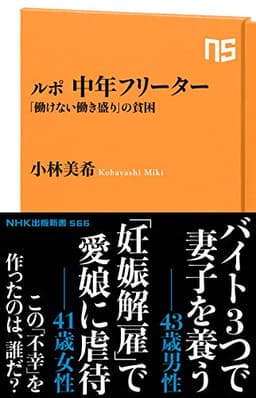
Statistics cited in this article
- 1Statistics Bureau, Labour Force Survey(2024 average) Open source
- 2Statistics Bureau, Labour Force Survey(2024 average)
- 3MHLW, Basic Survey on Wage Structure 2024, by employment type(published 2025) Open source
Questions to Reflect On
- What role does employment status play in determining wages at your workplace, and have you noticed any disparities?
- In what ways might the rise of non-regular employment impact workers' ability to plan their careers and achieve financial stability?
- Consider Japan's equal pay reforms — how might similar policies work differently in your country's employment landscape?
Related Content

The Day Income Stops — Reading Japan's Social Insurance Gap in Platform Delivery Work
Food delivery couriers in Japan lose their income the moment they are injured. Neither labor law nor workers' accident insurance applies by default to this "third category" of work. How far has the Japanese social security system responded? This article reads the institutional gap structurally, from the 2021 special enrollment expansion and the 2024 Freelance Protection Act.

Regular Employment Among Japan's Employment Ice Age Generation Rose by 110,000 in Five Years Against a Target of 300,000 — the Government Adds 200,000 Company Officers to Reach "310,000 in Total"
Japan's Basic Policy 2019 set a target of raising regular employment among the core of the employment ice age generation by 300,000 in three years. Between 2019 and 2024, regular employment rose by 110,000. The ministerial decision of 3 June 2025 adds a 200,000 rise in company officers and states that improved conditions were achieved for 310,000 in total. The figure named in the target and the figure used to claim success are not the same.

Ten Years of Japan's Hardship Support Scheme: 3.456 Million Enquiries, 26.6% Turned Into a Plan — and in FY2024 Enquiries Rose by 9,373 While Plans Fell by 3,790
In ten years since Japan's Act on Self-Reliance Support for the Needy took effect, 3,455,905 new enquiries were received and 919,459 became continuing support plans, or 26.6%. Some 327,967 people moved into work or higher earnings, 9.5% of enquiries. In FY2024 enquiries rose by 9,373 while plans drawn up fell by 3,790. This piece reads the distance between the government's benchmarks and the outturn.

Of 4,279 Dismissed From Type A Support Providers, 936 Found Re-employment and 2,073 Moved to Type B — From Work With a Contract to Work Without One
Between March and July 2024, Japan's employment offices recorded 4,884 dismissals of people with disabilities, of whom 4,279 were users of Type A continuous employment support. As at the end of August 2024, 936 had secured re-employment and 2,073 were moving to Type B. Type A involves an employment contract and the minimum wage; Type B involves neither. This piece reads where a change in how providers are assessed moved the people working in them.
Previous
Renewable Energy and the Regional Economy — New Inequalities Born of the Energy Transition
Next
The Pitfalls of 'I Asked AI' — Authority Bias and the Hollowing Out of Knowledge
Get new columns by email
1-2 social structure analysis columns per week. Free to subscribe.
Join ISVD's activities?
Sign up to receive the latest research and activity reports. Feel free to reach out about collaboration or project participation.
Support ISVD’s research and activities
Support ISVD’s research and publications with JPY5,000 per year. There is no automatic renewal.