
What Is Happening
Not knowing how to apply for public assistance (生活保護). Not knowing that vocational training programs exist. Not knowing the conditions for student loan repayment exemption. Not knowing the eligibility requirements for the Child Rearing Allowance (児童扶養手当). Not knowing that there is a free legal consultation service called Hōterasu (法テラス).
This "not knowing" is not individual negligence. The very circuits through which one might know have been structurally severed — a structure of "being unable even to know" exists.
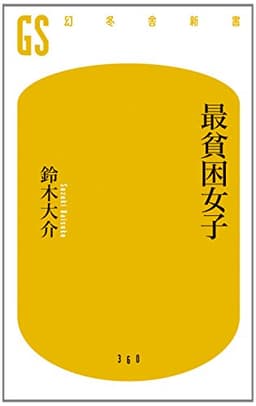
Suzuki Daisuke (2014) described in 『最貧困女子』 (Saihinkon Joshi)(外部サイト、新しいタブで開きます) (『最貧困女子』, Women in Extreme Poverty) a characteristic common to women in the most severe states of poverty: the loss of "three bonds" (san-en, 三つの縁). The bond of family, the bond of community, the bond of institutions. When all three are lost simultaneously, a person is placed in a state where they cannot even know that social safety nets exist.
From the perspective of agnotology (無知学), this is an extreme form of epistemic exclusion. Whereas the tobacco industry "manufactures" doubt as an intentional act, the information exclusion of those in poverty arises through more structural mechanisms. No one is intentionally concealing information — yet a specific stratum is systematically placed in a state of "being unable to know."
Background and Context
Suzuki Daisuke's Structure of the "Three Bonds"
The significance of Suzuki Daisuke's reportage lies in capturing the reality of poverty not only in its economic dimension — "lacking money" — but also in its relational dimension — "lacking connections."
The bond of family: Through abuse, neglect, domestic violence, or the absence of family, the circuit for obtaining information through family is severed. Basic knowledge about further education, employment, and the use of institutional resources is not transmitted through the family.
The bond of community: The loss of connection to local community means that information transmission through word of mouth and mutual aid does not function. Government newsletters do not arrive (or if they do, there is no capacity or time to read them).
The bond of institutions: The most critical and most readily severed bond. Institutions are designed on the assumption that users "already know." The cost of transportation to a service window, the ability to complete application forms, the prior information needed to know that a system exists — all constitute high barriers for those who lack the institutional bond.
The three bonds are not lost independently; they cascade. A young person who has lost the family bond is also weakly connected to the community and lacks pathways to access institutions. The loss of one bond accelerates the loss of the other two.
The Structural Divide Before the Digital Divide
When discussing information disparities, the "digital divide" is frequently cited. The presence or absence of internet access and disparities in digital literacy are said to produce the informationally disadvantaged.
Yet the information exclusion of those in poverty, as depicted by Suzuki (2014), lies before the digital divide. Even possessing a smartphone, if one does not know "what to search for," one cannot search. If one does not know the term "public assistance" (生活保護), one cannot search for it. If one does not know that a system exists, no motivation to seek information arises.
This may be termed a "structural divide." Whereas the digital divide is a "disparity in access," the structural divide is a "disparity in the cognition of what to access." Not knowing what one should access — this state is not resolved no matter how thoroughly the digital environment is developed.
Intersection with Fricker's Epistemic Injustice
Miranda Fricker's (2007) concept of hermeneutical injustice is indispensable for understanding the epistemic exclusion of those in poverty.
The language for articulating the experience of poverty is insufficiently developed in mainstream culture. In a context where the discourses of "laziness," "self-responsibility," and "insufficient effort" are dominant, it becomes difficult for people who have fallen into poverty due to structural factors to accurately narrate their own experience.
Moreover, when those in poverty do raise their voices, testimonial injustice is activated. Prejudices such as "you're on welfare and you're complaining?" and "just get a job" discount the credibility of their testimony. The same structure of testimonial injustice observed in the case of persons with disabilities exists here as well — and when disability and poverty intersect, the discount deepens further.
Reading the Structure
The Compound of Epistemic Exclusion and Complexity Weaponization
The structure of "being unable even to know" among those in poverty is formed through the compounding of two mechanisms: epistemic exclusion and complexity weaponization.
Mechanism 1: Institutional complexity impedes utilization
Japan's social security system is highly complex in both its variety and its procedures.
Even public assistance alone involves no straightforward application process. One must first visit a welfare office for consultation. There, one may encounter what is called mizugiwa sakusen (水際作戦, "shoreline operation") — responses that discourage applicants at the consultation stage. Even if the application is accepted, multiple procedures follow: asset investigations, inquiries to relatives about support capacity, verification of residence.
The Housing Security Benefit (住居確保給付金), the High-Cost Medical Care Benefit system (高額療養費制度), the Education and Training Benefit (教育訓練給付金), the Mother-Child Family Employment and Self-Reliance Support Center — systems are finely segmented, each with different service windows, different eligibility requirements, and different required documents. The "complexity weaponization" discussed in this lab's analysis of predatory business is reproduced — though not intentionally — structurally in public systems.
Mechanism 2: Physical and psychological distance of service windows
Even knowing about a system, accessing the service window itself constitutes a barrier.
Physical distance — welfare offices are open only during weekday daytime hours. For day laborers or shift workers, visiting a window during weekday hours is far from easy. There is also the matter of transportation costs.
Psychological distance — psychological resistance to "receiving welfare" remains strong in Japanese society. Stigma attached to public assistance is cited as one of the reasons that a considerable number of those who are eligible do not apply (low take-up rate). According to estimates by the Ministry of Health, Labour and Welfare, the take-up rate for public assistance may be as low as 20–30%.
Mechanism 3: Internalization of the "self-responsibility" discourse
The discourse that poverty is "self-responsibility" (自己責任) is deeply rooted in Japanese society. This discourse functions as external pressure while simultaneously being internalized by those in poverty themselves.
Those who have internalized "it's my fault" and "I didn't try hard enough" do not perceive that they have a "right" to use institutional resources. Seeking help itself is perceived as "shameful." This internalization operates at the deepest layer of epistemic exclusion — not the external blocking of information, but the internal abandonment of the search for information.
Tachibana Akira (2016) noted in 『言ってはいけない』 (Ietteha Ikenai)(外部サイト、新しいタブで開きます) (Things You Must Not Say) that the interaction of ability and environment produces structures that cannot be overcome by individual effort alone. In a society where the discourse of "effort is rewarded" is dominant, the very act of pointing out the existence of structural barriers becomes a taboo — this too is a form of the social production of ignorance.
Mechanism 4: Isolation reinforces information severance
The loss of the three bonds depicted by Suzuki (2014) accelerates the three mechanisms above. Information is severed → institutions cannot be utilized → the situation deteriorates → isolation deepens → information is further severed.
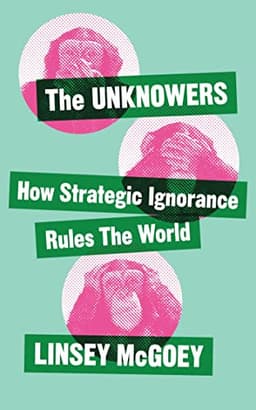
Within this spiral, those in poverty are fixed in a state of "being unable even to know." Unlike the "knowing but pretending not to know" structure that is the focus of Linsey McGoey's (2019) strategic ignorance theory, the problem here is a state in which "the very conditions for knowing have been stripped away."
The Poverty-Ignorance Spiral
The four mechanisms described above operate not linearly but in a spiral.
Poverty → no capacity to search for information → ignorance of institutions → inability to utilize institutions → deepening of poverty → even less capacity to search for information.
This spiral can begin at any point — from insufficient education, from unemployment, from illness. But once one enters the spiral, accessing the very "information" needed to escape it becomes difficult.
In Robert N. Proctor's (2008) three types of ignorance, the ignorance of those in poverty approximates the first type (native ignorance — what is not yet known). But the decisive difference is that "the conditions for knowing" have been structurally stripped away. Knowledge exists. But it does not reach people placed in particular social positions.
This suggests the need to extend Proctor's typology. Between the first and third types, there exists "ignorance in which knowing is structurally impeded" — ignorance where no clear agent of intent exists, yet a particular stratum is excluded from knowledge by the compound of institutions, norms, and economic conditions.
The "Designed for Those Who Know" Problem of Institutions
Japan's social security system is fundamentally based on the "application principle" (申請主義). Even when rights exist, benefits are not provided unless the individual applies. This design itself structurally generates disparities between those who possess information and those who do not.
By contrast, some municipalities have begun experimenting with "push-type" welfare — systems in which government proactively delivers information to eligible individuals. Using tax data and resident registry information, target recipients are identified and notifications are sent. This is technically feasible, but it stands in tension with privacy.
Here too, the framing of the question matters. Asking "why don't those in poverty know about institutions?" attributes the problem to the individual side. Reframing as "why do institutions not reach those who need them most?" brings the structural design problem into view.
Questions for This Lab
- What approaches are effective as "information delivery design" to break the spiral of poverty and epistemic exclusion?
- Under what conditions can the shift from application-based to push-type systems be justified — how should the trade-off between privacy and epistemic exclusion be designed?
- Is cognitive intervention possible to release the internalization of the "self-responsibility" discourse — and how does it differ from "enlightenment"?
- The "complexity weaponization" discussed in this lab's analysis of predatory business is unintentionally reproduced in public systems; what are the structural differences between the two?
- At the intersection of disability and poverty (connecting to the previous case analysis), how does epistemic exclusion compound?
Related Articles
- Why Predatory Business Endures — Structural Analysis of Converting Information Asymmetry into Profit(このサイトの記事)
- Why Are the Voices of Persons with Disabilities Not Heard? — The Japanese Structure of Testimonial Injustice(このサイトの記事)
- The Common Structure of 'Unreached Populations' — What a 20% Take-up Rate Reveals About Policy Design(このサイトの記事)
References
Epistemic Injustice: Power and the Ethics of Knowing — Fricker, M. (2007). Oxford University Press
Reference Books

Statistics cited in this article
- 1Ministry of Health, Labour and Welfare (厚生労働省)(2023) Open source