
What Is Happening
"Listen to the voices of those directly affected" — this phrase is uttered in every arena of Japanese welfare policy. The legislative process for the Comprehensive Support Act for Persons with Disabilities (障害者総合支援法), municipal disability planning committees, the implementation guidelines of the Act for Eliminating Discrimination against Persons with Disabilities (障害者差別解消法). Institutionally, forums for the expression of opinions by persons with disabilities exist.
Yet between "hearing" and "listening," there lies a deep chasm.
The voices of persons with disabilities, grounded in lived experience, are frequently processed as follows: "That's your subjective perception, isn't it?" "Please speak calmly, without getting emotional." "The system has already addressed this." "It's difficult to accommodate every case."
Each of these responses may not be unreasonable in isolation. But when repeated systematically, they function as a mechanism that structurally renders the voices of persons with disabilities powerless. The phenomenon Miranda Fricker (2007) termed "testimonial injustice" (証言的不正義) exists here.
The problem is not that voices are "not heard." It is that they are "treated as having been heard."
Background and Context
Fricker's Theory of Testimonial Injustice
Fricker (2007) classified injustice pertaining to knowledge into two types in Epistemic Injustice: Power and the Ethics of Knowing(外部サイト、新しいタブで開きます).
Testimonial Injustice: The phenomenon in which the credibility of a speaker's testimony is unjustly discounted due to prejudice based on the speaker's social attributes (gender, race, disability status, social standing). Cases in which a woman's testimony is discounted as "emotional" or a person with a psychiatric disability's testimony is discounted as "due to illness" fall under this category.
Hermeneutical Injustice: The state in which socially marginalized groups are unjustly deprived of the conceptual resources to understand and express their own experiences. In the era before the concept of sexual harassment existed, victims had no means to articulate their experience. Without a concept, the experience "ceases to exist."
The significance of Fricker's theory lies in making clear that injustice can be embedded in the very act of "knowing." Discrimination is inscribed not only in actions and institutions but also in the structures of cognition.
The Japanese Structure Revealed by Arai Yūki
Arai Yūki (荒井裕樹, 2020) meticulously traced the history of disability discrimination in Japan in 『障害者差別を問いなおす』 (Shōgaisha Sabetsu o Toinaosu)(外部サイト、新しいタブで開きます) (『障害者差別を問いなおす』, Reexamining Disability Discrimination). Arai placed particular emphasis on the process by which the "voices" of persons with disabilities come not to be heard.
Japan's disability rights movement has a turning point in the "Aoi Shiba no Kai" (青い芝の会) movement of the 1970s. The self-assertion of persons with severe cerebral palsy delivered a major shock to society at the time. They rejected "the goodwill of the non-disabled" and asserted "the right to live as persons with disabilities." Yet their voices were frequently marginalized as "radical" or "unrealistic."
This structure persists in altered form today. The voices of persons with disabilities have been institutionally incorporated as "things that should be heard," but the manner of "hearing" reproduces testimonial injustice.
What the Sagamihara Incident (2016) Exposed
In July 2016, nineteen people were murdered at the disability facility Tsukui Yamayuri-en in Sagamihara. The perpetrator stated, "People with disabilities can only create unhappiness."
This incident was a direct denial of the right to life of persons with disabilities, and it simultaneously exposed the cognitive structure lying beneath the surface of society. In the media coverage and social reaction following the incident, the victims were reported anonymously. This was justified as protecting the privacy of victims, yet it simultaneously symbolized the difficulty of persons with disabilities existing as "named individuals" in society.
As Arai (2020) noted, while the ideal of an "inclusive society" (共生社会) was articulated after the incident, virtually no structural change occurred to ensure that the voices of disabled people themselves were reflected in policy. The rhetoric of "this must never happen again" substituted for the work of structurally asking "why did this happen?"
Reading the Structure
The Three-Layer Structure of Testimonial Injustice
Testimonial injustice within Japan's welfare system operates through three overlapping layers.
Layer 1: Credibility Discount Based on Attributes
This is the basic form of testimonial injustice theorized by Fricker. When persons with disabilities speak of their experiences, their testimony is discounted "because they have a disability."
The testimony of persons with intellectual disabilities is discounted as "insufficient comprehension." The testimony of persons with psychiatric disabilities is discounted as "influenced by symptoms." Even the testimony of persons with physical disabilities may be discounted as "exaggerating their difficulties."
Critically, this discounting occurs not within a framework of explicit discriminatory consciousness but within one of "goodwill." "For your own good," "based on professional judgment," "objectively speaking" — these phrases legitimize the discounting of testimony.
Layer 2: Dependency on Proxy Speakers
The voices of persons with disabilities often reach society only through "proxy speakers." Welfare professionals, family members, support organizations — these proxy speakers play the role of "translating" the voices of persons with disabilities.
Proxy speaking is necessary in some situations. However, when proxy speaking becomes structurally entrenched, the voices of persons with disabilities can no longer reach society without passing through the filter of a proxy speaker. In the process of "translation," the nuances and particularities of the disabled person's experience are stripped away and converted into language the system can comprehend.
This structure deprives persons with disabilities of the agency to "speak for themselves." Even when they do speak directly, an implicit premise operates that "their credibility is lower without a proxy speaker present."
Layer 3: Formal Participation as "Having Heard"
Institutionally, the participation of persons with disabilities is guaranteed. Disability planning committees include disability representatives. Opportunities for public comment are provided. Forums for hearing opinions exist.
But "the form of participation" and "the substance of influence" are separate matters. When participation in a committee functions as an "alibi" — that is, when participation is utilized to create the fact that "we also heard the opinions of persons with disabilities" — formal participation actually reinforces testimonial injustice. The fact of "having heard" legitimizes the judgment of "not having heeded."
The Compounding of Hermeneutical Injustice
Testimonial injustice alone does not capture the full picture of the epistemic exclusion of persons with disabilities. Fricker's other concept — hermeneutical injustice — compounds it here.
Many of the difficulties experienced by persons with disabilities are treated as "things that do not exist" because society lacks appropriate concepts.
For example, before the concept of "reasonable accommodation" (合理的配慮) became widely known, even when persons with disabilities complained that "this environment constitutes a barrier for me," it was processed as "selfishness" or "oversensitivity." It was not that the language to speak of barriers was absent — society lacked the conceptual framework to recognize barriers.
The Act for Eliminating Discrimination against Persons with Disabilities (enacted 2016), which defined "the failure to provide reasonable accommodation" as discrimination, was an institutional advance that partially remedied hermeneutical injustice and represented the institutional embodiment of the principle of social inclusion. The 2024 white paper puts the number of people with disabilities in Japan at roughly 11.6 million, so the scale on which epistemic exclusion operates is not small. However, the authority to interpret "what constitutes reasonable accommodation" remains primarily with the institutional side.
Connection to Mills' "Racial Contract"
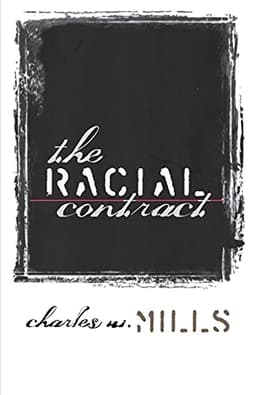
Charles W. Mills (1997) analyzed the "epistemological contract" structurally maintained by white-supremacist society in The Racial Contract(外部サイト、新しいタブで開きます). This contract is an implicit agreement about "what is to be treated as unknown."
Mills' concept of "white ignorance" is applicable to the epistemic exclusion of persons with disabilities as well. Society enters into an implicit contract to "treat the experiences of persons with disabilities as unknown." Inadequate street accessibility, understaffing of facilities, restricted employment opportunities — these problems are not "unknown" but "treated as unknown."
In (Proctor, 2008) three types of ignorance, this constitutes a variant of the third type — strategically produced ignorance. However, unlike the tobacco industry, no single actor is manufacturing the ignorance. It is produced and maintained distributively through the compound action of institutions, media, and social norms.
The Particularities of the Japanese Structure
Testimonial injustice within Japan's welfare system possesses several cultural and institutional particularities.
The culture of "meiwaku" (迷惑, causing trouble): Persons with disabilities themselves internalize the belief that "I must not cause trouble," which suppresses the act of raising one's voice. This is not external suppression but internalized epistemic exclusion.
The "osei ni natte iru" (お世話になっている) relationship: Between users and providers of welfare services, a relationship of "gratitude" rather than an equal rights relationship tends to form. Within this asymmetric relationship, a user's expression of dissatisfaction is socially coded as "ungrateful."
Strong professionalism: A structure exists in which the judgments of medical and welfare professionals take priority over the voices of affected persons. "Professional opinion" overwriting "the experience of the person concerned" — this is the institutional expression of testimonial injustice.
Questions for This Lab
- Can the testimonial injustice experienced by persons with disabilities be empirically described — in what settings, through what mechanisms does it occur?
- Under what conditions does "formal participation" translate into substantive influence — which elements of institutional design are key?
- In remedying hermeneutical injustice — that is, in creating new concepts for articulating the experiences of persons with disabilities — what role can participatory research and peer support play?
- To what degree do Japan-specific cultural contexts ("meiwaku," "osei ni natte iru") reinforce testimonial injustice?
- Has the discourse of an "inclusive society" following the Sagamihara incident contributed to the structural resolution of testimonial injustice, or has it reproduced it in a new form?
These questions are directly connected to the next case analysis, "Poverty and Epistemic Exclusion." Disability and poverty intersect with high frequency, forming a compounded structure of epistemic exclusion.
References
Epistemic Injustice: Power and the Ethics of Knowing — Fricker, M. (2007). Oxford University Press
Agnotology: The Making and Unmaking of Ignorance — Proctor, R. N. & Schiebinger, L. (2008). Stanford University Press
Reference Books

Statistics cited in this article
- 1Cabinet Office, White Paper on Persons with Disabilities(2024) Open source
