
What Is Happening
"If the teacher says so." "I'll just do what the doctor says." "It's what the authorities have decided."
These phrases, commonly uttered in daily life, express trust in authority while simultaneously expressing the notion that "I don't need to know." People delegate the authority to judge certain matters to others and make no effort to understand the basis for judgment themselves. This attitude is often dismissed as individual laziness, but it is actually the product of a mechanism that structurally connects authority and ignorance.
Psychiatrist and author Nadainada provided a brilliant analysis of this structure in his 1974 work 『権威と権力――いうことをきかせる原理・きく原理』 (Authority and Power: The Principles of Making Others Obey and of Obeying)(外部サイト、新しいタブで開きます). While power extracts obedience through force, authority elicits "voluntary" submission. In the face of authority, people comply without being commanded. And as a prerequisite to compliance, they voluntarily abandon the attempt to know.
From an agnotological perspective, authority is one of the most efficient reproductive mechanisms of ignorance. By systematically instilling the notion that there is "no need to know," authority maintains and expands knowledge asymmetries. Moreover, this process is often legitimized as "trust" or "respect for expertise," making it difficult to criticize.
Background and Context
Nadainada's Analysis of Authority — Through a Psychiatrist's Eyes
Nadainada (real name: Hori Shu, 1929–2013) analyzed the mechanisms by which humans "obey" based on his clinical experience as a psychiatrist. 『権威と権力――いうことをきかせる原理・きく原理』 (Authority and Power)(外部サイト、新しいタブで開きます) was written as a dialogue with high school students, unraveling complex academic concepts in plain language.
The core of Nada's analysis lies in the distinction between power and authority. Power extracts obedience backed by physical coercion or institutional punishment. Point a gun at someone, and they will comply. But authority operates through a different mechanism. When a doctor says "take this medicine," most patients comply without question. When a teacher says "memorize this formula," most students don't ask about the derivation process.
This mechanism of "voluntary submission" is not necessarily something intentionally designed by those in authority. Rather, it emerges structurally within social relationships. Patients delegate final judgment about their bodies to doctors, and students delegate the choice of what to learn to teachers. In this process of delegation, the act of "knowing" itself becomes concentrated among authority figures, while those subject to authority internalize the notion that there is "no need to know."
Nada faced this structure daily as a psychiatrist. In psychiatric care, when patients say "I'll do whatever you say, doctor," it is not necessarily the most therapeutic attitude. Often, knowing about one's own symptoms, understanding treatment options, and making autonomous decisions contribute to recovery. However, the authority structure of medicine frequently suppresses this autonomy.
The Milgram Experiment — Experimental Proof of Obedience to Authority
The problem of obedience to authority was made visible in shocking form through Stanley Milgram's experiments in the 1960s. Sixty-five percent of experimental participants complied with the authority figure's (experimenter's) instructions and continued to administer what they believed were lethal levels of electric shock to a learner (actually a confederate).
What the Milgram experiments demonstrated was that obedience to authority is not a matter of "weak character" or "lack of morality." The participants showed distress and resistance, yet ultimately complied with authority. The problem lies not in individual morality but in the structure of authority and submission.
From an agnotological perspective, what deserves attention is the structure of "knowledge distribution" in the Milgram experiments. Participants perceived that "the experimenter knows the scientific significance of this experiment, and I don't need to know." When the experimenter stated that "continuation of the experiment is necessary," participants believed the experimenter knew better about "what is right" and complied.
Here the structure of authority and ignorance reproduction becomes apparent. When authority figures are perceived as "knowing," those subject to authority perceive they "don't need to know." This asymmetry of perception enables the suspension of moral judgment.
Fricker's Testimonial Injustice — The Reverse Side of Authority
Miranda Fricker's (2007) theory of epistemic injustice provides more precise analytical tools for understanding the relationship between authority and ignorance.
Fricker's concept of "testimonial injustice" refers to the phenomenon where the credibility of a speaker's testimony is unfairly discounted due to prejudices based on their social identity. In the context of authority, this can be understood as an inverse structure — authority figures' testimonies are "excessively" trusted while non-authority figures' testimonies are "unfairly" discounted.
This dual distortion structurally skews the distribution of knowledge. Even when authority figures are wrong, they are unlikely to be corrected; even when non-authority figures possess correct insights, these are unlikely to be accepted. This structure is repeatedly observed across education, healthcare, and judiciary.
Reading the Structure
Education — Curriculum Decides What "Not to Teach"
The education system is a mechanism that systematically manages the distribution of knowledge. Curricula specify "what to teach," but simultaneously specify "what not to teach."
Japan's Ministry of Education, Culture, Sports, Science and Technology's Course of Study details what content should be taught at each grade level. However, content not included in the Course of Study — such as basics of labor law, tax system mechanisms, methods for filing administrative appeals — is not systematically taught. Despite being essential knowledge for exercising rights as citizens, these topics are institutionally deemed "unnecessary to teach."
This decision of "what not to teach" differs from intentional concealment. Curriculum designers are not conspiring to "prevent citizens from learning labor law." However, the resulting knowledge gaps function to make it difficult for workers to assert their rights and maintain information asymmetries favorable to employers.
In Robert N. Proctor's (2008) framework, this is a typical example of "structurally produced ignorance." Regardless of individual actors' intentions, institutional design systematically reproduces ignorance. Teachers follow given curricula, students learn within given parameters, and no one questions "why isn't this being taught?"
Furthermore, education's authority structure prescribes the very "way of questioning." The assumption that "what's written in textbooks is correct" contributes to educational efficiency but simultaneously narrows scope for critical examination. The question "why isn't this written in the textbook?" is rarely encouraged in educational settings.
Healthcare — The Formalization of Informed Consent
Healthcare is the domain where the relationship between authority and ignorance most directly affects life.
The principle of informed consent was introduced to correct the monopoly of authority in medicine. The ideal is that patients understand their condition and treatment options and make autonomous decisions based on adequate information.
However, informed consent in Japanese medical practice is often formalized. Doctors provide explanations using specialized terminology, and patients sign consent forms without fully understanding the content. While this process satisfies legal requirements, it can hardly be said to substantially guarantee patients' "right to know."
From an agnotological perspective, the formalization of informed consent is a case where ignorance reproduction by authority structures overwhelms institutional attempts at correction. Even when institutions mandate "must inform," if authority asymmetries remain intact, the substance of "knowing" is not guaranteed.
The problem lies not in the quantity of information but in the asymmetry of capacity and motivation to "understand information as one's own and utilize it for decision-making." For patients who have internalized the attitude of "do as the doctor says" over many years, suddenly being asked "please make the decision yourself" is problematic when the foundation for judgment has not been formed.
This "lack of foundation for judgment" is the essence of ignorance reproduced by authority. Not only is knowledge lacking, but "epistemic agency" — the capacity to acquire and utilize knowledge — itself is suppressed.
Judiciary — Legal Ignorance Is Not Excused
In the judicial domain, the relationship between authority and ignorance takes another interesting form. "Ignorantia juris non excusat" — ignorance of the law does not excuse illegal acts — is a legal principle.
This principle appears rational at first glance. If "I didn't know" were accepted as grounds for exemption, the legal system would cease to function. However, from an agnotological perspective, the premise of this principle itself should be questioned.
The legal system is vast and complex; even legal specialists cannot grasp all areas. It is practically impossible for ordinary citizens to understand all laws relevant to them. Nevertheless, law assigns responsibility to individuals on the premise that they "know."
Here emerges the structure of "individualization of the responsibility to know." While the education system does not systematically teach legal basics and the judicial system does not provide law in easily understandable forms, responsibility for not knowing the law is assigned to individuals. Institutions structurally produce ignorance while imposing the consequences of that ignorance on individuals — this is one of the most sophisticated forms of ignorance reproduction.
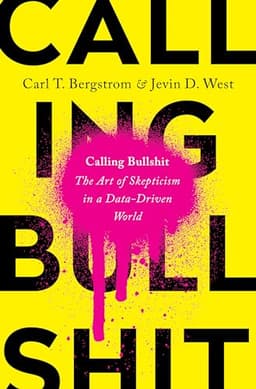
As Carl T. Bergstrom & Jevin D. West (2020) pointed out in Calling Bullshit(外部サイト、新しいタブで開きます), information asymmetries created by institutions structurally create conditions for "bullshit" to circulate. In the judicial context, legal knowledge asymmetries perpetually maintain power disparities between "those who know the law" and "those who don't."
Common Structure Across Three Domains — Mechanisms of Epistemic Submission
Common to education, healthcare, and judiciary is the mechanism of "epistemic submission."
Epistemic submission refers to the attitude of delegating judgment authority in specific domains to authority figures. This attitude often has rational grounds — it is usually rational for medical laypeople to delegate medical decisions to doctors. However, when epistemic submission becomes structurally fixed, the following problems arise:
First, errors by authority figures become difficult to correct. In relationships where epistemic submission is established, those subject to authority lack motivation and means to challenge authority figures' judgments. Cases where medical malpractice goes undetected for long periods, and instances where erroneous textbook descriptions remain uncorrected for decades, arise from this structure.
Second, the "scope of knowing" becomes fixed for authority figures themselves. Doctors know medicine, lawyers know law. However, knowledge of patients' lifeworlds and citizens' everyday legal sensibilities tend to be deemed "unnecessary to know" by authority figures. Epistemic submission fixes ignorance in both directions.
Third, decision-making authority over "what should be known" becomes concentrated among authority figures. Curricula are decided by educational authorities, treatment policies by medical authorities, and laws by legislative authorities. In this decision-making structure, those subject to authority structurally lack opportunities to voice opinions about "what should be known."
Possibilities for Resistance — Recovering Epistemic Agency
Countering the reproduction of authority and ignorance requires recovering epistemic agency — the capacity and motivation to know and judge for oneself.
However, recovering epistemic agency must not be reduced to "individuals working hard to study." The problem lies not in individual effort but in structural design. There is a need to institutionally guarantee the "right to know," provide "means for knowing," and secure pathways for "acting based on what is known."
Specifically, this could include making educational curricula transparent (disclosing why certain content is taught while other content is not), substantializing shared decision-making in healthcare, and institutionalizing legal literacy education in the judiciary.
All these measures aim not to deny authority itself but to make visible the ignorance structurally produced by authority and institutionally support the epistemic agency of those subject to authority.
For an analysis of how epistemic injustice affects NPO policy advocacy, see "Epistemic Injustice and Information Access Gaps in NPOs(このサイトの記事)." For the cognitive structure of "not wanting to know" at the individual level, see "Motivated Ignorance(このサイトの記事)."
References
Reference Books



Statistics cited in this article
- 1Milgram, S. (1963). Behavioral study of obedience. Journal of Abnormal and Social Psychology(1963) Open source