
5.26% Wage Hike, Fourth Straight Year of Negative Real Wages — How Japan's Triple Squeeze Works
Japan's 2026 spring talks produced a 5.26% nominal raise — third year above 5% — yet real wages fell for the fourth straight year. Inflation, higher premiums, and the new childcare levy absorb most gains; estimated take-home growth is just +1.3%.
TL;DR
- The 2026 Shuntō wage hike averaged 5.26% — three consecutive years above 5% — yet 2025 real wages fell 1.3% YoY, marking four straight years of decline
- Roughly 4 percentage points of the raise are absorbed by inflation, rising social insurance premiums, and a newly introduced child-support levy, leaving an estimated net gain of only +1.3%
- 48.4% of SMEs say a ¥1,500 minimum wage is "impossible," while labor-cost-driven bankruptcies surged 77.2% to 195 cases
What Is Happening
Three consecutive years of 5%+ Shuntō wage hikes have not prevented four straight years of real-wage decline — a paradox
In March 2026, Rengō announced that the first-round Shuntō tally showed an average wage increase of 5.26%. For the third consecutive year the figure exceeded 5%, and on paper the "Reiwa wage offensive" appeared to be making steady progress.
Behind this headline, however, lies another set of facts.
Real wages in 2025 fell 1.3% year-on-year, marking a fourth consecutive year of decline. Nominal wages (total cash earnings) averaged ¥355,919, up 2.3% from the prior year — the second straight year above 2%, a feat not seen since 1992 at the height of the bubble. Yet because consumer prices consistently outpaced wage growth, workers' real purchasing power continued to erode.
Nominal wages rose, but consumer prices consistently outpaced them, eroding real purchasing power for four straight years
In other words, "wages are rising" and "life is not getting easier" are simultaneously true. A structure in which nominal figures mask real stagnation has persisted for four years running, since 2022.
Following the Shuntō numbers alone suggests the economy is entering a virtuous cycle. Open a pay stub, however, and take-home pay has not increased as much as expected. Why does this gap exist, and where does the structural problem lie?
Background & Context
Inflation, social insurance hikes, and the new child-support levy devour the raise; SMEs cannot pass costs on to customers
Four Years of Prices Eating Wages
The condition under which real wages turn negative is straightforward: when the Consumer Price Index (CPI) rises faster than nominal wages, purchasing power falls. In Japan this condition has held for four consecutive years since 2022.
Food-price inflation in 2025 was particularly severe. Rice prices surged 60–80% year-on-year at their peak, sharply increasing everyday grocery costs. With nominal wages at +2.3% and price growth exceeding that level throughout the year, households were left with a persistent feeling that "wages went up, yet things don't feel any better."
A rebound to positive real-wage growth in Q1 2026 is considered plausible, thanks to reinstated electricity and gas subsidies and a base-year effect from the prior year's food-price spike. Yet Dai-ichi Life Research Institute and ITOCHU Research Institute caution that yen depreciation could push energy and imported food prices back up, while rising social insurance premiums cast doubt on whether the positive turn can be sustained.
Dissecting the 5% Raise
Of a 5.26% raise, roughly 4 percentage points are absorbed by inflation, social insurance, and taxes — leaving a net take-home gain of only about 1.3%
The Shuntō wage-hike rate of 5.26% includes scheduled seniority-based raises; the base-pay increase (the amount added to base salary itself) accounts for only a portion of the total. Moreover, none of this 5.26% translates directly into take-home pay.
First, CPI growth absorbs roughly 3%. Second, health insurance and long-term care insurance premiums have been ratcheting up in stages. Third, a new child and child-rearing support levy administered by the Children and Families Agency took effect in April 2026.
The levy carries a contribution rate of 0.23% (split equally between employer and employee, so 0.115% for the worker). In absolute terms the individual amounts are small — ¥384/month for a ¥4 million annual salary, ¥767 for ¥8 million — but for workers in their 40s and 50s already paying long-term care insurance premiums, the cumulative burden further compresses disposable income. The government describes it as "within the scope of expenditure reform," but for non-beneficiaries it is a pure increase in paycheck deductions.
As a result, of the nominal 5.26% raise, inflation absorbs roughly 3.0 percentage points, social insurance increases about 0.5pp, the new childcare levy about 0.1pp, and tax burden increases about 0.3pp — totaling approximately 4pp absorbed, potentially leaving real take-home growth at an estimated +1.3% (editorial estimate based on projections from the Japan Research Institute and Dai-ichi Life Research Institute). This "take-home trap" (a term coined here for convenience) creates a wide gap between the impression conveyed by wage-hike figures and the lived experience of workers.
The Dual Structure of Large and Small Firms
The Shuntō numbers harbor an easily overlooked disparity.
| Firm Size | Wage Hike |
|---|---|
| 300+ employees (large) | 5.27% |
| Under 300 employees (SME) | 5.05% |
The 0.22 percentage-point gap narrowed from 0.38 the previous year, but fell short of Rengō's target of "5%+ overall, 6%+ for SMEs." The problem is even more acute for workers outside the Shuntō framework.
Roughly 83% of all workers do not belong to a union and receive no direct benefit from spring negotiations. A survey by the Japan Chamber of Commerce and Industry found that wage hikes at firms with 20 or fewer employees averaged only 3.54%. The top reason for not raising wages: "Our own business performance is too weak" (55.1%) — indicating a structural segment of firms that simply lack the resources to raise pay.
Firms That Cannot Pass Costs On
One root cause of SMEs' inability to raise wages is the difficulty of passing labor costs on to customers.
According to Teikoku Databank, the pass-through rate for labor costs is just 32.0% — the lowest among all cost categories, below raw materials (48.2%) and logistics (35.1%). The overall pass-through rate hit 39.4%, the lowest since the survey began. For every ¥100 cost increase, firms absorb over ¥60 themselves.
Under this structure, a wage hike directly compresses margins. Labor-shortage bankruptcies in FY2025 reached 442 (up 43.0% YoY), a new record. Of these, 195 were driven primarily by soaring labor costs (up 77.2%). The irony is stark: firms that "tried hard" to raise wages are the ones collapsing because they cannot pass those costs along.
The Non-Regular Paradox
Meanwhile, non-regular workers have seen noteworthy wage gains. Part-time hourly wages at Aeon Retail rose +8.38%, outpacing the 5.89% for full-time employees. At Skylark HD, part-timers received +6.39%, again exceeding the 5.35% for regular staff.
The driver is acute labor shortages. 52.3% of firms report a shortage of regular employees, and 28.8% a shortage of non-regular workers. In retail and food service, raising hourly rates is the only way to secure staff.
Yet reading higher non-regular wage-growth rates as "closing the gap" is premature. Over the decade from 2013 to 2023, non-regular hourly wages rose 22.0%, while regular-employee salaries grew only 5.2%. The rate gap is narrowing, but the absolute gap remains large. The FY2025 minimum wage came to a national weighted average of ¥1,121, up ¥66 on the previous year, and a full-time worker on that hourly rate still earns only in the low ¥2 million range annually.
Reading the Structure
Japan's 30-year wage stagnation is an international outlier, and a nominal 5% raise is merely the starting line
What International Comparisons Reveal About 30 Years of Stagnation
The "5% raise that doesn't reach your wallet" structure examined above is a problem peculiar to Japan. International comparisons make this starkly clear.
Data from the Ministry's White Paper on the Labour Economy shows that with 1991 as the base (=100), South Korea reached roughly 550 (5.5×), the United States 269 (2.69×), and Germany 206 (2.06×), while Japan sat at 103 — virtually flat. A +3% gain in 30 years. As other G7 nations doubled to quintupled their wages, Japan, alongside Italy, sank to the bottom of the ranking.
International comparison points the same way. Taking 1996 as 100, nominal productivity per worker reached 230 to 240 in the UK and the US and about 160 in France and Germany, while Japan stayed essentially flat; nominal wages per worker rose roughly in step with productivity everywhere except Japan, where they fell by about 4%. Japan's rank in the OECD average annual wage series has been dropped: the article cited could not be retrieved for the relevant page, and the OECD site refuses automated requests.
In this context, a 5%+ Shuntō raise is "a catalyst for reversing three decades of stagnation," not "a sufficient achievement." A nominal 5% is historically high by domestic standards, but closing the international gap requires a far longer march.
- South Korea5505.5 times
- United States2692.69 times
- Germany2062.06 times
- Japan103+3% in thirty years
The ¥1,500 Minimum-Wage Wall
The government has set a target of raising the national weighted-average minimum wage to ¥1,500 within the 2020s. From the current ¥1,121, reaching that level requires annual increases exceeding ¥95 for multiple consecutive years.
Yet a Tokyo Shoko Research survey found that 48.4% of SMEs say ¥1,500 is "impossible". 76.6% already feel burdened by the current level.
Raising the minimum wage directly improves conditions for non-regular workers, but as long as the 32% pass-through structure persists, the bulk of the cost increase is absorbed as margin compression. Mandating higher wages without the revenue structure to support them triggers "adjustment" in the form of closures and bankruptcies.
A Nominal 5% Is Merely the Starting Line
The companion piece to this article, "Why Don't Wages Rise Despite 'Labor Shortages'?(このサイトの記事)," analyzed how monopsony power, subsidies, and labor-mobility costs structurally block wage growth. The 2026 Shuntō data examined here represents the "next chapter" of that same structure.
Wage hikes are happening. Yet a nominal victory masks a real defeat under the triple pressure of prices, social insurance, and new levies. The 5.26% figure signals that Japan's wages, nearly flat for 30 years, have begun to move. That is genuine progress. But for that progress to register in workers' lived experience, the pathways that convert a raise into actual take-home pay must be built: mechanisms for cost pass-through, redesign of social insurance burdens, and price-stabilization policy.
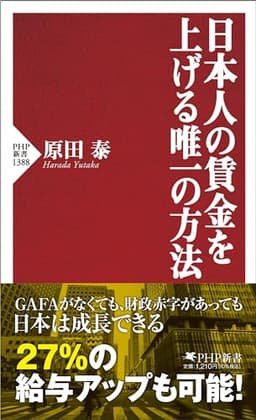
As Yasushi Harada argues in 『日本人の賃金を上げる唯一の方法』(The Only Way to Raise Japanese Wages)(外部サイト、新しいタブで開きます), the root cause of wage stagnation is low labor productivity. Beyond nominal Shuntō hikes, the next policy challenge is a transition to sustained real-wage growth powered by productivity gains.
Related Columns
- Why Don't Wages Rise Despite 'Labor Shortages'?(このサイトの記事) (Part 1: The structure of a labor market where supply-demand principles fail)
- Why a 5%+ Shuntō Raise Doesn't Feel Like a Raise(このサイトの記事) (Nominal hikes vs. real-wage decline)
- 30 Years of Stagnant Pay — The Structural Story(このサイトの記事) (Retained earnings, non-regularization, and weakened unions)
- Which Industries Gained and Lost Over 30 Years of Wages(このサイトの記事) (Industry-level wage divergence)
Related Guides
References
2026 Shuntō First-Round Tally Results — Japanese Trade Union Confederation (Rengō) (2026). JILPT
Monthly Labour Survey Full-Year 2025 — Real Wages Negative for Fourth Consecutive Year — Ministry of Health, Labour and Welfare (2026). Nikkei
Price Pass-Through Survey (July 2025) — Teikoku Databank (2025). Teikoku Databank
FY2025 Labor-Shortage Bankruptcy Trends — Tokyo Shoko Research (2026). Tokyo Shoko Research
Statistics cited in this article
- 1JILPT 2026 Shuntō Flash Report(March 2026) Open source
- 2Ministry of Health, Labour and Welfare — Monthly Labour Survey(Full-year 2025) Open source
- 3JILPT BLT April 2026(2025) Open source
- 4nippon.com(March 2026) Open source
- 5Nissay Asset Management(2026) Open source
- 6Dai-ichi Life Research Institute — Shuntō Analysis(2026) Open source
- 7Japan Chamber of Commerce and Industry(2025) Open source
- 8Teikoku Databank — Price Pass-Through Survey(July 2025) Open source
- 9Tokyo Shoko Research(FY2025) Open source
- 10Kyujin Box Journal(2026) Open source
- 11Teikoku Databank(January 2026) Open source
- 12Recruit Works Institute(2013–2023) Open source
- 13MHLW, announcement of the FY2025 regional minimum wage recommendations(2025) Open source
- 14MHLW White Paper on the Labour Economy(2021–2022) Open source
- 15MHLW, Analysis of the Labour Economy 2023, Part II Chapter 1(2023) Open source
- 16Tokyo Shoko Research(2025) Open source
- 17JILPT BLT May 2026(2026) Open source