
The Wound of 'Attachment' Pervading Japanese Society — The Structural Problem Produced by Patriarchy, Nuclear Familization, and Intergenerational Transmission
219,170 cases of child abuse, 128,000 cases of domestic violence, 354,000 school refusals, 1.46 million social recluses — these statistics are not independent problems. They share a common root: the structural failure of attachment formation. This article examines the mechanisms of emotional suppression under the patriarchal household system, the isolation of childrearing driven by nuclear familization, and the intergenerational transmission of trauma.

TL;DR
- Child abuse, school refusal, and social reclusion share a common root in the structural failure of attachment formation
- Meiji patriarchy's emotional suppression and postwar nuclear familization have structurally reproduced attachment disorders for decades
- Intergenerational transmission operates through behavioral, epigenetic, and sociostructural pathways — this is a social structure problem, not an individual one
What Is Happening
Explores how seemingly unrelated social problems share a common root in attachment dysfunction.
Online harassment of strangers, men deliberately bumping into women on train platforms, people directing anger at strollers and nursing covers in public spaces, social media posts demanding that snoring hospital patients "move to a private room" — phenomena that appear unrelated share, from a psychological perspective, a single common structure.
A dysfunction of self-other boundaries (boundaries).
Substituting "I am uncomfortable" for "this is a social nuisance," and demanding that others change. Perceiving someone else receiving consideration as "a loss for me." Underlying this pattern of response may be a problem with attachment — the relational bond that should form in early childhood.
Social Manifestations of Attachment Breakdown — Statistical Convergence
219K
32 consecutive years of increase
128K
Near all-time high
354K
10 years consecutive increase
1.46M
>2% of population
Common Structural Source
Attachment formation failure × society-wide emotion dysregulation
Child abuse consultations have increased continuously for 32 years, reaching 219,170 cases in fiscal 2022. Domestic violence consultations reached approximately 128,000 in fiscal 2023 (). School refusal hit a record high of 354,000 students in fiscal 2024. Social reclusion is estimated at 1.46 million people (). These statistics are frequently discussed as separate social problems. Yet when their structures are disaggregated, all of them can be seen as branching from a common source: the failure of attachment formation and emotional dysregulation.
Background & Context
Examines historical and cultural factors contributing to Japan's attachment-related social issues.
What Is Attachment Disorder? DSM-5 Definitions and Attachment Styles
Attachment refers to the emotional bond formed between infants and their primary caregivers. The concept, proposed by , is not simply about "becoming fond of" someone; it forms the foundation of the — the schema through which human beings construct interpersonal relationships throughout their lives.
In DSM-5 (Diagnostic and Statistical Manual of Mental Disorders, Fifth Edition), attachment problems are classified into two diagnostic categories.
| Category | Characteristics |
|---|---|
| Reactive Attachment Disorder (RAD) | Emotional withdrawal and inhibition. Minimal sharing of emotions with attachment figures. Symptoms may ameliorate when the caregiving environment improves. |
| Disinhibited Social Engagement Disorder (DSED) | Indiscriminate attachment behavior toward strangers. Disregard for social boundaries. |
Both diagnoses require, as a prerequisite, a history of inappropriate caregiving (neglect, abuse, or frequent changes of primary caregiver). The prevalence of RAD in the general population is estimated at approximately 1.4% (based on a review by ). Rates rise sharply in institutional and foster care. A study assessing 147 children in foster care and 123 in residential care with a found RAD in under 1% and DSED in 18% of foster care children, and RAD in 7% and DSED in 10% of those in residential care. Counting caregiver-reported diagnoses instead, the figures reach 23% for foster care and 37% for residential care, against 0% in a community group of 98.
Even below the clinical threshold of a diagnosable "disorder," however, skewed attachment styles that affect interpersonal relationship patterns are present far more broadly. The four-category model of (1991) classifies adult attachment styles as follows.
| Category | Characteristics |
|---|---|
| Secure | Trust in both self and others. International average: 50–65% |
| Preoccupied (Anxious-Ambivalent) | Strong fear of abandonment; excessive dependence on others |
| Dismissing (Avoidant) | Avoidance of intimacy; preference for self-sufficiency |
| Fearful-Avoidant | Desire for intimacy combined with fear of it; the most unstable style |
Attachment Style: International Comparison
Based on infant Strange Situation studies
| Attachment Style | Intl. Avg. | Japan | W. Germany |
|---|---|---|---|
| Secure | 65% | 68% | 57% |
| Avoidant | 21% | ~5% | 35% |
| Resistant / Anxious | 14% | ~27% | 8% |
Note: Japan shows very low avoidant (~5%) but disproportionately high anxious-resistant (~27%)
Particularly noteworthy here is Japan's distinctive pattern. A meta-analysis by (1988) found that, while Japanese infants showed a secure attachment rate of 68% — close to the international average — avoidant attachment was extremely rare (approximately 5%), while anxious-resistant (ambivalent) attachment was exceptionally high at approximately 27%. This stands in sharp contrast to West Germany, which showed 35% avoidant attachment.
What does this cultural skew signify? It suggests a connection to relational patterns particular to Japanese society: "I want you to understand without being told," "please don't abandon me," "why don't you value me?"
The Problem of Co-Occurrence with Developmental Disorders
What further complicates the understanding of attachment disorders is the symptomatic overlap with developmental disorders (ASD and ADHD). Interpersonal difficulties, emotional dysregulation, and attentional impairments are common to attachment disorders, ASD, and ADHD alike.
The decisive difference lies in environmental responsiveness. Attachment disorders tend to improve when the caregiving environment improves (Smyke et al., Bucharest Early Intervention Project(外部サイト、新しいタブで開きます)), whereas ASD, being rooted in neurological foundations, shows limited improvement in response to environmental change.
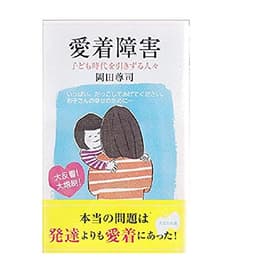
In Japanese clinical settings, however, this differential diagnosis is frequently insufficient. As psychiatrist notes in 『愛着障害: 子ども時代を引きずる人々』(Attachment Disorder: People Dragging the Burden of Childhood)(外部サイト、新しいタブで開きます) (Kobunsha Shinsho, 2011), misdiagnosis — in which attachment disorders are subsumed under ASD or ADHD — occurs with regularity. The concept of "Developmental Trauma Disorder (DTD)," proposed by around 2005, was a framework designed to address this problem, but its inclusion in DSM-5 was rejected. "Complex PTSD (C-PTSD)" in ICD-11 now functions as a de facto substitute.
More serious still is the vicious cycle between developmental disorders and attachment disorders.
Developmental disorder characteristics → Difficulty in being parented → Abuse/neglect → Formation of attachment disorder → Exacerbation of characteristics → Difficulty parenting in the next generation
Data from the Ministry of Education, Culture, Sports, Science and Technology show that the number of students in special-needs classes increased from approximately 63,000 in 2003 to 395,000 in 2024 — a 6.3-fold increase (). Even in mainstream classrooms, 8.8% of students are assessed as requiring "special educational support" (). While part of this increase reflects rising diagnostic rates, an increase in acquired developmental difficulties stemming from inappropriate caregiving environments cannot be ruled out entirely.
The Historical Structure: The Seeds Planted by the Household System
Why has the problem of attachment become so structurally entrenched in Japan? Its origins reach back to the household system (ie seido) institutionalized under the Meiji Civil Code of 1898.
Under the household system, the head of household (patriarch) held broad authority over marriage, adoption, and place of residence, and family relationships were defined not by affection but by role and obligation. Messages such as "men don't cry" and "don't be weak" were transmitted across generations, structurally suppressing emotional expression. Mothers were subordinated to the household while bearing sole responsibility for childcare; fathers were structurally excluded from childrearing.
The household system was legally abolished by the postwar Civil Code reform of 1947, but the psychological norms of "family shame," "social appearances," and prescriptions about how men and women should behave persisted throughout the Showa era. This psychological residue, as note, aligns with the mythology — actively promoted by the government during both the Meiji period and the postwar era — that "mothers are biologically more prepared for the strong responsibility of childrearing."
The structural effects of patriarchy on attachment formation operate at four levels.
| Category | Characteristics |
|---|---|
| Suppression of emotional expression | Fathers were expected to embody authority, functioning as a mechanism that reinforced avoidant attachment |
| Overburden on mothers | The full-time housewife model depleted mothers' emotional reserves, obstructing sensitive responsiveness in caregiving |
| Primacy of vertical relationships | Parent-child relationships defined by "role and duty" created environments in which emotional safe havens were difficult to form |
| Exclusion of men from childcare | The gendered division of "fathers work, mothers raise children" eliminated opportunities for father-child attachment formation |
Postwar nuclear familization further exacerbated this structure. Three-generation co-resident households declined from approximately 30% in 1960 to approximately 7% in 2020 (). The natural circuits of alloparenting (shared childcare) provided by grandparents and community networks were lost, advancing the isolation of mothers in childrearing.
Trends in child abuse consultations mirror these structural changes. From 1,101 cases in fiscal 1990 to approximately 199 times that figure over 32 years — an increase rate that cannot be explained by rising awareness alone. Examining the 2022 breakdown, psychological abuse constitutes 59.1% of cases — the largest category — indicating that invisible "emotional neglect" is more prevalent than visible physical violence.
Intergenerational Transmission: How Trauma Is Passed On
The mechanisms by which attachment problems are transmitted across generations are explained through three pathways.
Intergenerational Trauma Cycle
Inadequate caregiving
Patriarchy, isolated parenting, neglect
Attachment failure
Anxious / avoidant / disorganized formation
Emotion regulation difficulty
Blurred self-other boundaries
Adult relationship problems
DV, moral harassment, overcontrol
Reproduction in next generation
Parenting difficulty → child's attachment disorder
Epigenetic Transmission
Through DNA methylation patterns, HPA-axis stress response vulnerability may be biologically transmitted to the next generation
Kaufman & Zigler (1987): About 30% (±5%) of parents with abuse history go on to abuse their own children
First, behavioral transmission. A parent's attachment style exerts a strong influence on a child's attachment style. Research on the Adult Attachment Interview (AAI) by & (1990) demonstrated that when parents carry unresolved trauma or loss, they unconsciously exhibit "frightening or fear-inducing" behaviors in interactions with infants, forming disorganized (Type D) attachment. Research by (National Institute of Population and Social Security Research) indicates that even in caregiving environments without abuse, 15% of infants show Type D attachment, with the primary cause identified as unresolved trauma in the caregiver.
Second, biological transmission through mechanisms. Research on Holocaust survivors and their descendants has shown that the methylation patterns of the FKBP5 gene — involved in stress response — are associated across generations (). Stress exposure during pregnancy affects fetal HPA axis (stress response system) development via the placenta, and mitochondrial dysfunction in the brain may also be involved in intergenerational trauma transmission (, Communications Biology).
Third, sociostructural transmission. As long as patriarchal values are institutionally preserved, individual-level attachment repair within families is structurally obstructed. estimated that approximately 30% (±5%) of parents with histories of abuse go on to abuse their own children. The intergenerational transmission rate is not 100%, but it is significantly higher than the general population abuse rate.
Here a hypothesis emerges. The generation-skipping effect of intergenerational trauma is said to diminish from the third generation onward, counting from the postwar "adult children" generation. In 2026, that "third generation" is precisely at the age when they are becoming parents. The increases in abuse, school refusal, and social reclusion appearing in the statistics may reflect the intergenerational cascade reaching its peak.
Reading the Structure
Analyzes the systematic patterns underlying Japan's widespread social and psychological problems.
The Collapse of "Amae" and the Problem of Boundaries
"Amae" no Kōzō(外部サイト、新しいタブで開きます) (The Anatomy of Dependence), written in 1971 by psychiatrist , is a classic work that analyzes through psychoanalytic lenses the concept of amaeru — a term unique to Japanese. According to Doi, the essence of amae is "acting in a dependent manner toward another while understanding that the other holds goodwill." It is a psychological dynamic that "denies the existential reality of the separation between self and other, seeking to transcend the pain of separation."
In connection with Bowlby's attachment theory, amae functions as an extension of secure dependency, operating as part of normal development — provided that the certainty of a secure base is guaranteed.
The problem arises when the secure base is uncertain — that is, when attachment becomes destabilized. Because the psychology of amae presupposes an undifferentiated self-other relationship, the absence of a secure base manifests as one-sided demands for dependence, violation of others' autonomy, and the avoidance of verbal articulation in favor of "I want you to understand without being told."
Self-Other Boundary Dysfunction Patterns
Healthy Amae (with secure base)
- Mutual consideration and trust
- Verbalized dependency
- Respect for autonomy
Pathological transformation (no secure base)
- Demanding others "read my mind"
- Invasion of others' autonomy
- "My discomfort = society's problem"
The social phenomena noted at the outset can be reread through this framework.
- "The snoring is a nuisance; move to a private room" → A boundary violation in which one's own discomfort is resolved by demanding behavioral change from another
- "Strollers are in the way" / "Nursing covers are unpleasant" → A sense of — feeling that one is at a disadvantage when others receive consideration
- Online attacks and pile-ons → Displaced aggression produced by the disinhibiting effect of anonymity combined with attachment anxiety
Research supports this connection. Insecure attachment (anxious or avoidant) is significantly and positively associated with problematic and dependent use of social media (). Individuals with anxious attachment exhibit higher levels of (fear of missing out) and heightened sensitivity to exclusion, increasing the risk of aggressive online behavior. The pathway of → relative deprivation → → aggressive behavior () is the very psychological mechanism of "someone is benefiting, therefore I am losing out."
Distinguishing Attachment Problems from the Need for Approval
One conflation requires clarification here. Aggressive behavior on social media and excessive self-promotion are frequently dismissed as a "strong need for approval," but attachment problems and the need for approval belong to entirely different conceptual levels.
In , the need for esteem (Esteem Needs) occupies the fourth level as a normal psychological need. Attachment, by contrast, concerns the third level — love and belonging — and further, the second level — safety needs — that underlies it. As himself wrote in Motivation and Personality(外部サイト、新しいタブで開きます) (1954): "The most common basis of maladjustment and psychopathology is the thwarting of the love needs." Attachment problems thus occupy a more fundamental level.
What is critical is the direction of causality. Attachment anxiety, by undermining a stable Internal Working Model, pathologically increases dependence on external sources of validation. In other words, an excessive need for approval is not the cause; it may be appearing as a symptom of attachment anxiety.
Misreading this distinction leads to the superficial prescription of "exercise more self-control over your need for approval." What is structurally required is the (re)construction of a secure base for attachment.
"Emotional Abuse as Japan's Infrastructure" — The Overall Structure
Integrating the foregoing analysis, a structural hypothesis emerges.
The Meiji patriarchal system laid the cultural foundation for the suppression of emotional expression; postwar nuclear familization eliminated alloparenting; and the "fathers work, mothers raise children" model of the high-growth era normalized the isolation of mothers in childrearing. The convergence of these three structural shifts has caused Japanese society to reproduce, over decades, an environment in which attachment formation is structurally impeded.
This structure is being transmitted intergenerationally through both behavioral and epigenetic pathways. If the approximately 30% intergenerational transmission risk among parents with histories of abuse () accumulates over multiple generations, the consequences are incalculable.
That the rate of reported workplace power harassment in Japan stands at 32.5% (; still 31.4% in the 2020 survey) can be read as the inevitable outcome of a patriarchal vertical authority structure — the transposition of the ie-system parent-child hierarchy into the workplace. The psychological control of subordinates by superiors, and the violation of their boundaries, is nothing other than insecure attachment styles and ambiguous self-other boundaries being re-enacted within organizations.
The expression "emotional abuse as Japan's infrastructure" is, from the perspective of structural analysis, not an exaggeration. The behavioral pattern of invoking self-reliance rhetoric to demand endurance from the vulnerable while averting one's gaze from fundamental problem-solving itself functions as a defense mechanism by which individuals without a secure base maintain a "provisional stability" within society.
Directions for Recovery — Individual and Social
Can attachment problems be "healed"? To speak candidly, it is not easy. Even psychiatrists and welfare professionals acknowledge the difficulty. Nevertheless, the accumulation of evidence-based interventions continues to advance steadily.
At the individual level, attachment-focused psychotherapies — attachment therapy, EMDR, and schema therapy — have demonstrated effectiveness. Research applying Young et al.'s schema therapy to Japanese contexts () identifies a distinctive pattern of the "punitive parent mode" in collectivist societies and argues for the necessity of culturally adapted therapeutic approaches.
At the social level, three directions are discernible.
| Category | Characteristics |
|---|---|
| Structural resolution of isolated childrearing | Expansion of postnatal care facilities, substantive implementation of comprehensive family support centers (Child and Family Support Centers), and community-based alloparenting networks |
| Institutionalization of early intervention | Attachment screening at infant health checkups, dissemination of parent training, and trauma care for caregivers |
| Social embedding of emotional literacy | Systematic introduction of Social and Emotional Learning (SEL) in school education. The development of emotional regulation skills can function as an alternative secure base for children who lacked a genuine one |
Yet the most fundamental challenge is to resist the individualization trap — reducing this problem to "personal character" or "poor parenting." Attachment disorder is a structural product generated by social structures, and addressing it requires structural approaches.
The numbers reflect the structure. 219,000 child abuse consultations, 354,000 school refusals, 1.46 million social recluses. Simply lamenting that these numbers "are rising" changes nothing. The question being posed is how to reorganize the social structures that have impeded attachment formation over decades.
- The Structure of the Youth Mental Health Crisis — 340,000 School Refusals, and Japan's Worst Suicide Rate in the G7(このサイトの記事)
- The "Depth" of Child Poverty — What Relative Poverty Rates Cannot Tell Us(このサイトの記事)
- Two Years Since the Act on Loneliness and Isolation — What Has a Law Only Eight Countries Have Changed?(このサイトの記事)
- NPO Organizational Assessment Guide — Practical Methods for Organizational Diagnosis(このサイトの記事)
References
Review of the Current Knowledge of Reactive Attachment Disorder — Zeanah, C. H. et al. (2022). PMC (NCBI)
Placement in Foster Care Enhances Quality of Attachment Among Young Institutionalized Children — Smyke, Zeanah, Fox, Nelson, & Guthrie (2010). Child Development, 81(1), 212-223 (Bucharest Early Intervention Project)
Validation of the Reactive Attachment Disorder and Disinhibited Social Engagement Disorder Assessment (RADA): A DSM-5 Semistructured Interview — Archambault, Cyr, Minnis, Lehmann, & Monette (2025). Assessment, 32(6), 839-858
Parental bonding in retrospect and adult attachment style: A comparative study between Spanish, Italian and Japanese cultures — Taguchi, M. et al. (2022). PMC (NCBI)
Cross-cultural patterns of attachment: A meta-analysis of the Strange Situation — van IJzendoorn, M. H. & Kroonenberg, P. M. (1988). Child Development
Developmental Trauma Disorder: A Legacy of Attachment Trauma in Victimized Children — Milot, T. et al. (2021). PMC (NCBI)
Challenges to Changing the Culture of Parenting in Japan — Nakazawa, J. & Shwalb, D. W. (2020). PMC (NCBI)
児童虐待における世代間連鎖の問題と介入についての文献的研究 — 久保田まり (2010). National Institute of Population and Social Security Research (国立社会保障・人口問題研究所)
Intergenerational transmission of trauma effects: putative role of epigenetic mechanisms — Yehuda, R. & Lehrner, A. (2018). World Psychiatry
令和4年度 児童虐待相談対応件数(速報値) — こども家庭庁 (2023). Children and Families Agency (こども家庭庁)
Effect of relative deprivation on aggressive behavior: The mediating role of hostile attribution bias — Zhang, H. et al. (2023). PMC (NCBI)
Addiction to Social Media and Attachment Styles: A Systematic Review — D'Arienzo, M. C. et al. (2019). International Journal of Mental Health and Addiction (Springer)
Attachment Styles Among Young Adults: A Test of a Four-Category Model — Bartholomew, K. & Horowitz, L. M. (1991). Journal of Personality and Social Psychology
Do abused children become abusive parents? — Kaufman, J. & Zigler, E. (1987). American Journal of Orthopsychiatry, 57(2), 186-192
Intergenerational trauma transmission is associated with brain metabotranscriptome remodeling and mitochondrial dysfunction — Picard, M. & McEwen, B. S. (2021). Communications Biology
愛着障害: 子ども時代を引きずる人々 ved Traumatic Experiences Are Related to Infant Disorganized Attachment Status — Main, M. & Hesse, E. (1990). In M. T. Greenberg et al. (Eds.), Attachment in the Preschool Years. University of Chicago Press
Schema Therapy in Collectivist Societies — Shimizu, E. et al. (2024). Psychology International (MDPI)
Motivation and Personality — Masl (2021). Ministry of Health, Labour and Welfare (厚生労働省)
Reference Books

Statistics cited in this article
- 1Children and Families Agency, Child Abuse Consultation Cases(FY2022) Open source
- 2MEXT Survey on Problem Behavior and School Non-Attendance FY2024(2024) Open source
- 3Archambault et al., Assessment 32(6): 839-858(2025) Open source
- 4MHLW, Survey on Workplace Harassment(FY2016) Open source
Questions to Reflect On
- What role do boundary issues play in your own community or workplace interactions, and where have you observed them most clearly?
- In what ways might your early attachment experiences continue to shape the patterns you see in your current relationships?
- Consider the emotional patterns passed down through generations in your family—what forms of expression or suppression have you noticed being transmitted?
Key Terms in This Article
- FOMO (Fear of Missing Out)
- The anxiety or fear that one is missing out on rewarding experiences others are having. A concept increasingly studied in social psychology with the rise of social media, shown to correlate positively with anxious attachment.
- Epigenetics
- Changes in gene expression that occur without alterations to the DNA sequence. Environmental stress can rewrite gene switches through mechanisms such as DNA methylation.
- Maslow's Hierarchy of Needs
- A motivational model proposed by Abraham H. Maslow, arranging five levels of need (physiological, safety, love/belonging, esteem, self-actualization) hierarchically. Attachment problems concern the safety (Layer 2) and love/belonging (Layer 3) levels — more fundamental than the esteem needs (Layer 4) often conflated with them.
- Upward Social Comparison
- The psychological process of comparing oneself to others who are perceived as superior or more fortunate. Frequently occurs on social media and can lead to relative deprivation and lowered self-evaluation.
- Relative Deprivation
- The subjective sense of injustice that one is not receiving what one deserves. Arising from comparison with others, it can form the psychological basis for hostility and aggressive behavior.
- Hostile Attribution Bias
- A cognitive bias toward interpreting others' ambiguous actions as hostile. Associated with insecure attachment styles and relative deprivation, making aggressive responses more likely.
- Internal Working Model
- A mental representation of self and others formed through early attachment experiences. Functions as a lifelong template for interpersonal expectations, emotion regulation, and stress responses; secure versus insecure models produce markedly different relational patterns.
Related Content

Suicide Is a 'Preventable Death' — Structural Approaches from Platform Doors, Generative AI, and Genetic Research
Japan recorded 20,320 suicides in 2024. Platform doors at train stations reduced railway suicides by 76–92%, while generative AI has begun functioning as a de facto 24/7 counselor. Meanwhile, Akira Tachibana's hypothesis that 'Japanese people are genetically prone to anxiety' has been undermined by Border et al. (2019). This article examines the structural message that 'suicide is preventable' from three intersecting axes.

The Structure of Japan's Youth Mental Health Crisis — 340,000 School Refusals, Worst Youth Suicide Rate in the G7
School refusals among elementary and junior high students have surpassed 340,000, setting consecutive records. Japan's suicide rate for those aged 15-34 is the highest in the G7. This analysis examines the structural factors across schools, families, and society, presenting the full picture of a youth mental health crisis too often dismissed as an 'individual problem.'

Acoustic Boundaries — The Structure of 'My Sound Is Freedom, Your Sound Is a Nuisance'
Noise from neighbors accounts for 43.6% of all resident disputes in condominiums, and cases in which noise conflicts have escalated to violent crimes recur from 1974 through 2021. The problem of noise cannot be resolved with a simple 'live and let live' attitude. What does the finding that a desire for loud exhaust systems is predicted by psychopathy suggest? This article examines the 'right to quiet' through the psychology of self-other boundaries.

The Anatomy of 'Connection Fatigue' — How Platform Design Produces Mental Exhaustion
51% of Gen Z report SNS fatigue. All major platforms except TikTok see declining usage rates. From infinite scroll, intermittent rewards, and FOMO psychology to EU DSA and Australia's age restriction law — reading the structure of SNS fatigue.
Previous
The Structure Behind 38% Food Self-Sufficiency — Rethinking Food Security in an Age of Globalization
Next
Vocational Training in the Generative AI Era — Can Institutional Design Keep Up with Technology?
Get new columns by email
1-2 social structure analysis columns per week. Free to subscribe.
Join ISVD's activities?
Sign up to receive the latest research and activity reports. Feel free to reach out about collaboration or project participation.
Support ISVD’s research and activities
Support ISVD’s research and publications with JPY5,000 per year. There is no automatic renewal.