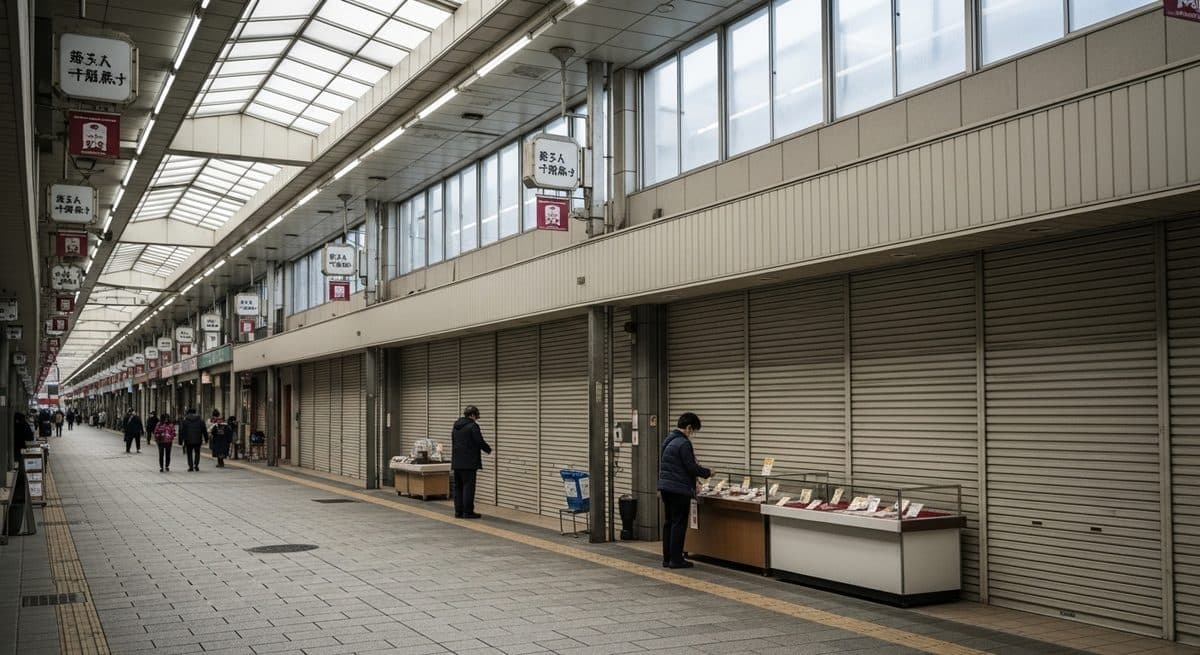
Acoustic Boundaries — The Structure of 'My Sound Is Freedom, Your Sound Is a Nuisance'
Noise from neighbors accounts for 43.6% of all resident disputes in condominiums, and cases in which noise conflicts have escalated to violent crimes recur from 1974 through 2021. The problem of noise cannot be resolved with a simple 'live and let live' attitude. What does the finding that a desire for loud exhaust systems is predicted by psychopathy suggest? This article examines the 'right to quiet' through the psychology of self-other boundaries.
TL;DR
- Noise disputes account for 43.6% of resident conflicts, with a structural asymmetry where the noise producer bears zero cost while the recipient bears 100%
- Research showing that the desire for loud exhaust systems is predicted by psychopathy and sadism suggests that some noise problems involve the motive of inflicting distress, not self-display
- While Europe legally protects the 'right to quiet,' Japan's residential noise falls outside noise regulation law, entrenching a structure where victims bear the costs
What Is Happening
Noise disputes dominate residential conflicts, with structural asymmetry between noise producers and victims.
Footsteps resonating from the floor above in a condominium, the roar of modified vehicles late at night, sound leaking from earphones on a train — disputes over "noise" are among the most familiar interpersonal frictions in Japanese society.
According to the Ministry of Land, Infrastructure, Transport and Tourism's Comprehensive Condominium Survey for fiscal 2023, "residential noise" accounts for 43.6% of all disputes over manners among residents — overwhelmingly the most common category.
43.6%
Residential noise ranks #1 in disputes
Among resident manner disputes — MLIT FY2023 Survey
529
Participants in the loud exhaust study
Western University, Schermer, 2023
~29%
Model explanatory power
Predicting loud exhaust desire via psychopathy & sadism (Schermer, 2023)
This problem has a structural asymmetry that is easily overlooked.
Structural Asymmetry of Sound
Sound Emitter
- Active (intentional/unconscious)
- Gains pleasure/utility
- Cost: 0
- No perpetrator awareness
- "My freedom"
Sound Receiver
- Passive (no choice)
- Invaded
- Cost: 100%
- Victim awareness
- "My rights violated"
This asymmetry is a textbook case of 'negative externality'. Without cost internalization mechanisms, harm accumulates indefinitely.
The cost to the person producing the noise is zero. The cost to the recipient is 100%. This is the fundamental reason why noise problems cannot be resolved with a "live and let live" attitude. The producing party does not perceive themselves as a perpetrator; only the receiving party accumulates harm. This asymmetry is a textbook case of what economics calls a "negative externality" — unless resolved through social mechanisms, harm continues to expand.
And this structure is not merely a matter of manners. Cases in which noise disputes have transformed into violence have occurred in every era; in 2021, a homicide reportedly originating in a residential noise dispute was reported in Daito City, Osaka Prefecture (widely covered by Japanese media at the time).
Background & Context
Examination of the social and psychological factors contributing to noise-related interpersonal conflicts.
Loud Exhaust Systems and Psychopathy: Why Do People Want to Make Loud Noise?
In 2023, Dr. Julie Aitken Schermer of Western University in Canada conducted a study of 529 individuals and arrived at a striking finding. The desire for modified exhaust systems is predicted by "being male" and "high scores on psychopathy and sadism." The model's explanatory power is approximately 29%.
Notably, narcissism was not a significant predictor. This suggests that the desire for loud exhaust is motivated not by a wish for self-display, but by the intention to cause distress to others.
This research also connects to the issue of acoustic territorial claims. Just as sound is used for territorial assertion in the animal kingdom, a loud exhaust functions as a non-verbal declaration: "I am here; I dominate this space." Its essence is a unilateral intrusion into others' acoustic environments.
Misophonia and Sensory Sensitivity: "Just Tolerate It" Is Medically Incorrect
The danger of dismissing noise sensitivity as an "overreaction" is made clear by research on misophonia (selective sound sensitivity syndrome).
Furthermore, many individuals with developmental disorders (ASD) experience sensory sensitivity (listed as a diagnostic criterion in DSM-5), with auditory hypersensitivity being the most common difficulty. Co-occurrence of misophonia has also been reported in ADHD.
Telling someone with sensory sensitivity to "just tolerate it" is structurally equivalent to telling a wheelchair user to "take the stairs." Social design that does not premise sensory diversity will inevitably exclude specific individuals from public spaces.
When Noise Transforms into Violence: Victims Pushed to the Brink
The most serious dimension of noise disputes is that the risk of escalation to violence increases the longer the problem continues.
Piano Noise Homicide — Hiratsuka City, Kanagawa
Utsunomiya Shotgun Incident
Daito City, Osaka — Residential Noise Homicide
In the 1974 piano noise incident in Hiratsuka City, Kanagawa Prefecture (widely covered in Japanese news media at the time), a man who had long endured piano noise from an upstairs neighbor killed three people including the neighbor's wife and daughter. In a 2002 case in Utsunomiya City, a shotgun was reportedly fired in connection with a futon-beating noise dispute that had persisted for approximately twenty years. A homicide connected to a residential noise dispute was also widely reported in Daito City, Osaka, in 2021.
When the victim becomes the perpetrator
These cases make two structural problems visible. First, noise victims are pushed to the point where they themselves become perpetrators. Stress accumulated over years by victims who possess no means of resolution erupts in violent outbursts. Second, the structure in which the mere act of complaining can itself trigger retaliation. "If I say something, the relationship will be destroyed." "They might react angrily." — Consequently, victims resort to indirect means such as anonymous notes, complaints through management companies, or reports to the police, or they internalize the problem with the thought that "if I just endure it, it will be fine."
This structure shares a common foundation with the "boundary problem" discussed in the article on attachment disorders(このサイトの記事). When appropriate means of boundary-setting — legal regulation and mediation systems — are absent, problems become confined within the individual's interior and eventually erupt in destructive forms.
Reading the Structure
Analysis of power dynamics and psychological boundaries in noise perception and tolerance.
A Society Where Victims Are the Defenders
"Victim Must Defend" Structure
None of these change the perpetrator's behavior
What's needed: source-level countermeasures & cost internalization — designing incentives for emitters
Contemporary noise countermeasures — soundproofing construction, earphones, moving out, civil litigation — are all structures in which the victim bears the cost. No incentives are designed to encourage behavioral change on the part of those responsible for the noise.
As R. Murray Schafer warned in The Tuning of the World (1977), modern society suffers from "an excess of acoustic information" and "a declining ability to listen to the details of sound." Individual defense through technology (noise-canceling earphones, etc.) may be effective in the short term, but kills the incentive to improve the acoustic environment of society as a whole. As each person retreats into their own acoustic space, the motivation to "solve noise problems socially" disappears.
Does a "Right to Quiet" Exist?
In the Lopez Ostra v. Spain ruling of 1994, the European Court of Human Rights held for the first time that freedom from environmental pollution (foul odors, smoke) falls within the scope of Article 8 of the European Convention on Human Rights (the right to respect for private life). This ruling was subsequently extended to noise issues, and in Hatton v. United Kingdom (2003), it was recognized that nighttime aircraft noise could constitute a violation of Article 8 rights. The EU Environmental Noise Directive (2002) names "Quiet Areas" — spaces where residents can recover from noise exposure — as an object of policy. Action plans for agglomerations of more than 250,000 inhabitants "shall also aim to protect quiet areas against an increase in noise". How they are protected is left to each country: the Directive states that "the measures within the plans are at the discretion of the competent authorities," and Member States set both the boundaries of a quiet area and the threshold that defines it. What separates this from Japan is not the level of protection but the fact that quiet is named as something plans must address.
| EU (Europe) | Japan | |
|---|---|---|
| Right from noise | Freedom from noise recognized as a human right under Article 8 of the European Convention on Human Rights (Lopez Ostra ruling 1994, Hatton ruling 2003) | 'Right to peaceful existence' (heion seikatsuken) derived from Article 13 of the Constitution recognized in case law, but legal enforceability remains limited |
| Regulation of residential noise | EU Environmental Noise Directive (2002/49/EC) mandates noise assessment and management; member states must develop action plans | Japan's Noise Regulation Act covers factories, construction, and roads. Residential noise in condominiums falls outside scope; administrative enforcement is not available |
| Protection of quiet areas | The EU Directive defines 'quiet areas' and requires action plans in agglomerations over 250,000 to aim to protect them from increases in noise. Boundaries, thresholds and the measures themselves are left to each country and its competent authorities | No statutory quiet area system. Quiet regulations in parks and residential areas remain voluntary or at the local ordinance level |
| Legal recourse for victims | Complaints can be filed with the European Court of Human Rights. State failures to address noise have been recognized as human rights violations | Civil litigation for damages is the primary remedy. Compensation has been awarded in aircraft noise cases; residential noise claims are difficult to prove |
| Cost burden structure | Source-side regulation and environmental standards push costs toward the noise producer | Soundproofing, relocation, and earphones — costs are structurally borne by victims, with no incentives for perpetrators to change behavior |
Japan's right to a peaceful life
In Japan, the "right to peaceful existence" (heion seikatsuken), derived from Article 13 of the Constitution (pursuit of happiness), has been recognized in case law as a personality right. Compensation has been awarded in aircraft noise lawsuits. However, residential noise falls outside the scope of the Noise Regulation Act, making it difficult for administrative authorities to intervene with binding force.
Layered on top of this is the collapse of a "live and let live" culture. In the past, mutual understanding within communities functioned as an implicit mediating mechanism for noise disputes. However, in anonymous urban societies, the empathic imagination that allows one to see "this person, too, is living the same kind of life I am" operates with difficulty, and others' noise is perceived as "pure intrusion." The dissolution of community has pushed noise problems toward a stage where legal and institutional resolution is unavoidable.
Reframing quiet as the capacity to listen
Schafer reframed "quiet" not merely as "the absence of sound" but as "the condition for recovering the ability to listen." The essence of the noise problem is not erasing someone's sound, but how to design a society in which all people can actively choose their own acoustic environment. What is required for this purpose is a shift from a structure in which "victims defend themselves" to a structure in which "costs are internalized by the source" — not a technological solution, but a problem of social design.
- Is Noise "Invisible Violence"? — Health Risks Warned by the WHO and Japan's Regulatory Vacuum(このサイトの記事)
- The Wound of "Attachment" Pervading Japanese Society — The Structural Problem Produced by Patriarchy, Nuclear Familization, and Intergenerational Transmission(このサイトの記事)
- The Complaint Vacuum Phenomenon — Why "Reporting Changes Nothing" Is Rational(このサイトの記事)
- How Much Do People with Sensory Hypersensitivity Suffer Outdoors — A Gap Not Found in Prior Research(このサイトの記事)
- Why Loud Motorcycles and Modified Vehicles Are Not Caught — A Structural Analysis of Noise Regulation(このサイトの記事)
References
令和5年度マンション総合調査 — 国土交通省 (2024). Ministry of Land, Infrastructure, Transport and Tourism (国土交通省)
A desire for a loud car with a modified muffler is predicted by being a man and higher scores on psychopathy and sadism — Schermer, J. A. (2023). Current Issues in Personality Psychology
The Brain Basis for Misophonia — Kumar, S. et al. (2017). Current Biology
The Tuning of the World — Schafer, R. Murray (1977). McClelland and Stewart
Lopez Ostra v. Spain — European Court of Human Rights (1994). ECHR
Hatton and Others v. the United Kingdom — European Court of Human Rights (Grand Chamber) (2003). ECHR
Directive 2002/49/EC of the European Parliament and of the Council relating to the assessment and management of environmental noise — European Parliament and Council of the European Union (2002). Official Journal of the European Communities
令和5年度 騒音規制法等施行状況調査の結果について — 環境省 (2024). Ministry of the Environment (環境省)
Recommended Reading

Statistics cited in this article
- 1Ministry of Land, Infrastructure, Transport and Tourism — Comprehensive Condominium Survey FY2023(2024) Open source
- 2Schermer, J. A. (2023) Current Issues in Personality Psychology(2023) Open source
- 3Directive 2002/49/EC, Article 8(1)(b)(2002) Open source