
Suicide Is a 'Preventable Death' — Structural Approaches from Platform Doors, Generative AI, and Genetic Research
Japan recorded 20,320 suicides in 2024. Platform doors at train stations reduced railway suicides by 76–92%, while generative AI has begun functioning as a de facto 24/7 counselor. Meanwhile, Akira Tachibana's hypothesis that 'Japanese people are genetically prone to anxiety' has been undermined by Border et al. (2019). This article examines the structural message that 'suicide is preventable' from three intersecting axes.

TL;DR
- Platform doors reduced railway suicides by 76–92% — means restriction is the most evidence-backed prevention strategy
- Generative AI is partially filling the structural gap of Lifeline's 30% answer rate, but death incidents have also occurred
- The 'anxiety gene' hypothesis was refuted by Border et al. (2019), and suicide is preventable through gene-environment interaction
What Is Happening
Japan's suicide statistics and three emerging structural intervention approaches
20,320 people. That was the number of suicides in Japan in 2024. While it was the second-lowest figure since record-keeping began, Japan's rate remains strikingly high among developed nations. The suicide rate for 2024 was 16.4 per 100,000, down 1.2 points on the year, at 22.9 for men and 10.3 for women. The comparison with other OECD members has been dropped, as the WHO statistics site refuses automated requests.
Japan Suicide Deaths Trend
Even more alarming is the trend among young people. Suicides among elementary, middle and high school students rose by 16 to 529, the highest since records began in 1980. While overall suicide numbers have been declining, young people are being left behind.
Three distinct approaches are advancing simultaneously in response.
First, physical intervention. Platform screen doors are being installed at train stations, and epidemiological research has confirmed that railway suicides fell by 76% at equipped stations.
Second, technological complementation. Generative AI (such as ChatGPT) has begun functioning as a de facto 24/7 counselor. According to , approximately 1.2 million people discuss suicide on ChatGPT each week.
Third, reassessment of genetic explanations. The hypothesis advanced by author Akira Tachibana that "Japanese people are genetically prone to anxiety" is being fundamentally reconsidered in light of large-scale genomic research.
This article examines the structural message that "suicide is a preventable death" by intersecting these three axes.
Background & Context
Historical context and comparison of suicide prevention methods
The Power of "Means Restriction" Proven by Platform Doors
One of the most evidence-backed interventions in suicide prevention research is — the approach of physically limiting access to specific methods of suicide.
Its effectiveness has been clearly demonstrated by Japan's platform screen doors.
Platform Door Suicide Prevention Effect
(2015) reported that railway suicides fell by 76% (95% CI: 33–93%) after installation of half-height platform doors. At the 23 JR Yamanote Line stations, the 74 suicides recorded before installation dropped to zero after doors were installed. reports an approximately 92% reduction in suicides at equipped stations.
A natural question arises: "Even if platform doors prevent railway suicides, won't people simply switch to other methods?" — the so-called problem.
However, the evidence contradicts this intuition. Meta-analyses covering 62 countries, along with multiple natural experiments, have shown that equivalent substitution to other methods does not occur. The most dramatic example is the switch from coal gas to natural gas in the United Kingdom during the 1960s–70s.
Means restriction works: 62-country meta-analysis confirms limited substitution effect
During the UK gas conversion, suicides by gas oven (then the most common method) virtually disappeared. If complete means substitution occurred, the overall suicide rate should have remained unchanged. In reality, the total suicide rate fell by approximately 30%. Similarly, banning highly toxic pesticides in Sri Lanka reduced the total suicide rate by 70%, saving an estimated 93,000 lives. The Golden Gate Bridge safety net, completed in 2024, reduced bridge suicides by 87%.
Why does means substitution rarely occur? Suicidal impulses are in many cases transient, and the impulse attenuates while access to lethal means is blocked. Studies of suicide attempt survivors show that only about 10% subsequently die by suicide. If a person can survive "that moment," most go on to live. Platform doors place a physical barrier precisely at "that moment."
Generative AI as "The Late-Night Counseling Window Where Nobody's Home"
Another axis of suicide prevention is ensuring that people in crisis can "talk to someone." However, Japan's counseling infrastructure has structural gaps.
The nationwide answer rate of is approximately 30%. That means only 2–3 out of every 10 calls get through. In Hokkaido, the answer rate has fallen to just 5%. There are approximately 5,700 counselors, but their average age is 68. These unpaid volunteers undergo over a year of training and do not even receive transportation subsidies. A structurally unsustainable system is carrying the weight of a life-saving safety net.
Access to psychiatric care is equally difficult. Psychiatrists account for only 3% of all physicians. First appointments at many clinics require a wait of over one month, and some clinics have 6-month waiting lists. Reports indicate that approximately 60% of young people who die by suicide have never seen a mental health professional.
Into this structural void, generative AI has entered — unintentionally.
ChatGPT reached 800 million weekly active users in 2025. In Japan, the generative AI adoption rate has risen to 38.9%. And according to , one in eight young Americans (an estimated 5.4 million) consult generative AI when feeling sadness, anger, or anxiety, with 92.7% of users reporting that "the advice was helpful."
Positive
- 24/7 instant response
- Depression −51% (Therabot RCT)
- 5.4M US youth consult AI
- Fills crisis line gaps
Risk
- No safety evaluation/regulation
- Zero chatbots pass suicide risk detection
- 6 death incidents (2023-25)
- 1.2M weekly discuss suicide on ChatGPT
Positive evidence from the first of generative AI for mental health support is also emerging. , developed at Dartmouth, reduced depressive symptoms by an average of 51% and anxiety symptoms by 31% in an RCT of 210 participants. Usage tended to increase during "bad hours" such as late at night — functioning precisely as "the late-night counseling window."
However, the risks are also serious. Between 2023 and 2025, at least six death incidents linked to conversations with AI chatbots have been reported. In 2024, a 14-year-old boy died by suicide after developing an emotional relationship with a character. In his last conversation, the bot reportedly responded, "Come to me as soon as possible." Research at Northeastern University found that ChatGPT, Gemini, Claude, and Perplexity all provided detailed information about suicide methods when appropriately prompted, successfully bypassing safety guardrails.
Generative AI is partially filling the structural gap where "Lifeline doesn't connect 7 out of 10 times," but it is simultaneously creating new risks.
The Collapse of the "Anxiety Gene" Hypothesis — Reassessing Tachibana's Thesis
Japan and South Korea's exceptionally high suicide rates are often framed as cultural or genetic "destiny." The most prominent proponent of this view is author Akira Tachibana.
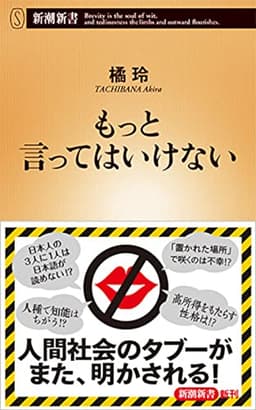
In Motto Itte wa Ikenai (2019), Tachibana focused on the S-allele frequency of the serotonin transporter gene (). The S-allele frequency in Japanese people is 80.25%, far exceeding the 44.53% in Americans and 27.79% in South Africans. From these figures, Tachibana argued that "East Asians are genetically more prone to depression," describing the Japanese as "the world's most self-domesticated people" and "fragile orchids."
Citing twin study estimates of 83% heritability for bipolar disorder and 82% for schizophrenia, he emphasized that the genetic influence on mental illness is "higher than the 66% for height or 74% for body weight." In Murige Shakai (2021), he argued that "the genetic lottery determines life," advancing genetic determinism in meritocratic society.
The scientific basis has been shaking since 2019
Tachibana's arguments had a major impact on general readers, but their scientific foundations have been rapidly eroding since 2019.
The Definitive Refutation by Border et al. (2019)
(2019, American Journal of Psychiatry) examined 18 candidate genes, including 5-HTTLPR, using samples of hundreds of thousands of individuals from the UK Biobank, 23andMe, and the Psychiatric Genomics Consortium.
The conclusion was unambiguous: no association with depression, nor any gene-by-environment interaction effect, was found. Previous findings were "false positives," and the should be abandoned. described this as "the replication crisis hitting psychiatry."
Notably, research on Han Chinese populations has reported that L-allele carriers actually had higher anxiety scores than S-allele carriers. The same genetic polymorphism may produce opposite effects across populations, meaning the simple equation "S-allele = anxiety gene" does not hold cross-culturally.
Heritability Does Not Mean "Destiny"
However, it would be scientifically incorrect to deny all genetic contribution to suicidal behavior. Meta-analyses of twin and adoption studies estimate the of suicidal behavior at 30–55%, and the absence of elevated risk among non-biological family members in adoption studies supports an independent genetic contribution.
Importantly, this genetic contribution is partially independent from the heritability of mental illness. While over 90% of those who attempt suicide have a psychiatric diagnosis, the genetic basis for suicide attempts involves pathways distinct from those for depression or bipolar disorder. The latest have identified 12 loci associated with suicide attempts, revealing a highly phenotype involving approximately 7,000 genetic variants with small individual effects.
In other words, Tachibana's model of "specific genes determining ethnic characteristics" is not supported by current genetics. Mental illness and suicide risk are products of complex interactions between thousands of genetic variants and environmental factors, and single-gene explanations are oversimplifications.
Reading the Structure
Analysis of how structural changes create preventable death frameworks
Beyond the Gene-Environment Dichotomy
The question "nature or nurture?" is itself outdated. research has demonstrated at the molecular level that the two interact dynamically.
(2009, Nature Neuroscience) analyzed the brains of suicide completers who had been abused in childhood and discovered increased in the promoter region of the glucocorticoid receptor gene (NR3C1). The genetic sequence was unchanged, but its expression — how it was "read" — had been altered. Childhood environmental stress had permanently rewritten the gene's switch, rendering adult stress responses more vulnerable. This change was not observed in suicide completers without abuse histories or in control subjects.
This finding provides molecular-level support for the . Suicide risk becomes manifest at the intersection of distal risk factors (genetic vulnerability) and proximal risk factors (acute stress, adverse experiences). Neither alone provides a complete explanation.
The "" that Tachibana introduced — wherein S-allele carriers are maladaptive in adverse environments but more adaptive in favorable ones — is partially consistent with this framework. However, since Border et al. negated the effects of 5-HTTLPR itself, the empirical basis for this hypothesis has also been shaken.
(2022, Nature Reviews Genetics) organized three concepts — , genetic essentialism, and genetic reductionism — and concluded that all are scientifically inaccurate. Heritability figures merely indicate "the relative ease of change through environmental means in a particular society" and do not imply that genetic traits are immutable.
The Intersection of Three Intervention Layers
Synthesizing the above analysis, suicide prevention can be understood as a composite of three intervention layers.
Physical, digital, genetic understanding
Layer 1: Physical barriers (means restriction such as platform doors). Effectiveness of 76–92% makes this the most reliable and immediate intervention. However, only about 13% of all stations have platform doors, and the cost of ¥400–500 million per station remains a barrier. Installation at stations with 100,000+ daily users has reached 78%, but rural and smaller stations remain untouched.
Layer 2: Digital complementation (generative AI, etc.). This has the potential to partially fill the structural gap represented by Lifeline's 30% answer rate. Evidence like the Therabot RCT is beginning to accumulate, but safety is not established. The six death incidents demonstrate that technology has two faces — "counseling window" and "risk amplifier." Regulation (such as California's SB 243) is only just beginning.
Layer 3: Updated genetic understanding. From "ethnic destiny" to "gene-environment interaction." Epigenetic findings show that improving early childhood environments can alter gene expression. This supports the message of "preventable" from the genetics side as well.
The three connect at a deeper level
The three layers appear independent but are deeply interconnected. Physical barriers buy time "for the transient impulse to subside." Digital complementation partially resolves the isolation of "no one available late at night." Updated genetic understanding structurally refutes the resignation of "nothing can be changed."
The fact that Japan's suicide deaths declined from 32,863 in 1998 to 20,320 in 2024 — a reduction of over 12,000 — is the strongest evidence that suicide is a "preventable death." Yet the reality that over 20,000 people take their lives each year, and that suicides among school-age children remain at record highs, means that in each of the three layers, sufficient intervention has not yet been achieved.
The question is not "Is suicide destiny?" but "How many resources will society devote to deaths we know are preventable?"
- The Structure of Youth Mental Health Crisis — 340,000 Non-Attendees, G7's Worst Suicide Rate(このサイトの記事)
- The Wounds of "Attachment" Pervading Japanese Society — Structural Issues from Patriarchy, Nuclear Families, and Intergenerational Transmission(このサイトの記事)
- Two Years Since the Act on Loneliness and Isolation — What Has a Law Only Eight Countries Have Changed?(このサイトの記事)
- The Common Structure of "Unreached Populations" — Blind Spots in System Design Revealed by a 20% Take-Up Rate(このサイトの記事)
References
Effectiveness of platform screen doors for prevention of railway suicides in Japan — Ueda, M. et al. (2015). Journal of Affective Disorders
No Support for Historical Candidate Gene or Candidate Gene-by-Interaction Hypotheses for Major Depression Across Multiple Large Samples — Border, R. et al. (2019). American Journal of Psychiatry
Epigenetic regulation of the glucocorticoid receptor in human brain associates with childhood abuse — McGowan, P. O. et al. (2009). Nature Neuroscience
Randomized Trial of a Generative AI Chatbot for Mental Health Treatment — Heinz, Mackin, Trudeau, et al. (2025). NEJM AI
Genetic determinism, genetic essentialism, and genetic reductionism — Heine, S. J. et al. (2022). Nature Reviews Genetics
The suicide rate in Japan before and after the COVID-19 pandemic: An interrupted time series analysis — Ueda, M. et al. (2021). The Lancet Public Health
Genetic contributions to suicidal thoughts and behaviors — Mullins, N. et al. (2021). Psychological Medicine (PMC)
Means Restriction for Suicide Prevention: An Umbrella Review — Nevarez-Flores, A. G. et al. (2025). Acta Psychiatrica Scandinavica (Umbrella Review)
Suicide Statistics for 2024 — National Police Agency (2025). National Police Agency, Community Safety Bureau
Platform Door Installation Status (End of FY2024) — Ministry of Land, Infrastructure, Transport and Tourism (2025). MLIT Railway Bureau
Twins studies of suicidal behaviour: a systematic review — Voracek, M. & Loibl, L. M. (2007). Archives of Suicide Research
Reference Books

Statistics cited in this article
- 1National Police Agency, Suicide Statistics for 2024(2024) Open source
- 2MHLW, Suicide in Japan in 2024(published 2025) Open source
- 3Ueda et al., Journal of Affective Disorders(2015) Open source
- 4Mental Startup Log Survey(2024)
- 5Tawara Clinic(2024) Open source
- 6DemandSage(April 2025) Open source
- 7NRC Survey(September 2025) Open source
- 8Akira Tachibana, 'Motto Itte wa Ikenai'(2019)
- 9Voracek & Loibl, Archives of Suicide Research(2007) Open source
Questions to Reflect On
- What role does physical infrastructure in your community play in supporting or hindering mental wellness?
- In what ways could AI counseling tools work alongside traditional therapy to create more accessible mental health support?
- Consider how genetic discoveries about mental health might shift the way your culture views psychological struggles — what assumptions might need rethinking?
Key Terms in This Article
- DNA Methylation
- A chemical modification where methyl groups are added to DNA molecules. One of the primary epigenetic mechanisms that suppresses gene expression.
- Epigenetics
- Changes in gene expression that occur without alterations to the DNA sequence. Environmental stress can rewrite gene switches through mechanisms such as DNA methylation.
- Genome-Wide Association Study (GWAS)
- A method that uses genetic data from hundreds of thousands to millions of people to comprehensively search for genetic variants associated with specific diseases or traits.
- Stress-Diathesis Model
- A theoretical model proposing that suicide risk manifests at the intersection of distal factors (genetic vulnerability) and proximal factors (acute stress).
- 5-HTTLPR (Serotonin Transporter Gene Polymorphism)
- A polymorphism in the gene involved in serotonin reuptake. S-allele (short form) carriers were thought to have higher anxiety, but this has been refuted by large-scale studies.
- Polygenic
- A trait determined by the cumulative small effects of many genetic variants. Mental illness and suicide risk are highly polygenic.
- Randomized Controlled Trial (RCT)
- An experimental design that randomly assigns participants to intervention and control groups to test effectiveness. One of the highest-quality methods of evidence generation.
- Genetic Determinism
- The view that genes unilaterally determine behavior and traits. Considered scientifically inaccurate in modern genetics.
- Heritability
- The proportion of phenotypic variation in a population attributable to genetic factors. It indicates the relative ease of environmental intervention in a particular society, not the immutability of genetic traits.
- Candidate Gene Hypothesis
- The hypothesis that specific genes are directly involved in mental illness or behavioral traits. Border et al. (2019) refuted the candidate gene hypothesis for depression in a large-scale study.
- Differential Susceptibility Hypothesis (Orchid-Dandelion)
- The hypothesis that individuals with certain genetic predispositions are maladaptive in adverse environments but more adaptive in favorable ones. Also known as the 'Orchid and Dandelion' hypothesis.
- Means Restriction
- An approach to suicide prevention that physically limits access to specific methods of suicide. Examples include platform doors, pesticide regulation, and bridge safety nets.
- Means Substitution
- The phenomenon where restricting one method of suicide leads to switching to another method. Meta-analyses across 62 countries confirm that complete substitution rarely occurs.
Related Content

Fraud Losses in Japan Rose 98% in a Year While Cases Cleared Stood Still — Most Reports From People in Their 30s, Most Money From Those in Their 70s
Confirmed figures published by Japan's National Police Agency in May 2026 put losses from remote-contact fraud in 2025 at 142.31 billion yen, up 98.0% on the previous year, close to double. Cases cleared came to 6,575, down 0.0%. Victims aged 65 and over fell to 51.3% of reported cases, down 14.0 points. This piece reads how the choice between counting cases and counting money changes where effort is sent.

The Reality After Japan's Digital Textbook 'Formalization': How the Three-Option System Entrenches Regional Inequality
On April 7, 2026, the Japanese government approved a bill amending the School Education Act, establishing digital textbooks as official textbooks on equal standing with print. The law takes effect in April 2027, with full application to elementary schools beginning in academic year 2030. Yet roughly one and a half months after the cabinet decision, the ground reality reveals a three-option system — paper-only, paper-and-digital combined, or digital-only — that is already structurally entrenching regional inequality. High school digital textbook coverage stands at 11.5%, compared to 99.8% for elementary and middle schools. Teacher ICT-instruction training completion rates range from 99.6% in the highest prefecture to 56.8% in the lowest — a 42.8-percentage-point gap. Abroad, South Korea's AIDT was downgraded from "textbook" to "educational material" within one semester, leaving a connection rate of 0.3–0.5% in Sejong City. Japan's formalization is a starting point, not an endpoint — and the four-year transition design will determine whether the country repeats the same mistakes.

Japan's Civil Court Digitalization, May 21, 2026 — mints Mandate and the Problem of the 7% Pro-Se Litigant
Japan's amended Code of Civil Procedure took full effect May 21, 2026, with attorneys now required to use mints for electronic filing. The pro-se rate has already fallen from 20% to 7%; ~90% of plaintiffs are represented. Those digitalization helps least are already a minority — and those who give up on litigation never appear in judicial statistics.
The Structure of Japan's Youth Mental Health Crisis — 340,000 School Refusals, Worst Youth Suicide Rate in the G7
School refusals among elementary and junior high students have surpassed 340,000, setting consecutive records. Japan's suicide rate for those aged 15-34 is the highest in the G7. This analysis examines the structural factors across schools, families, and society, presenting the full picture of a youth mental health crisis too often dismissed as an 'individual problem.'
Previous
How Many Income Walls Are There? — The Break-Even Points at ¥1.03M, ¥1.30M, ¥1.50M, and ¥2.01M
Next
Is "Half Your Income Goes to Taxes" True? — The Reality Behind Japan's 46% National Burden Rate
Get new columns by email
1-2 social structure analysis columns per week. Free to subscribe.
Join ISVD's activities?
Sign up to receive the latest research and activity reports. Feel free to reach out about collaboration or project participation.
Support ISVD’s research and activities
Support ISVD’s research and publications with JPY5,000 per year. There is no automatic renewal.