Can 'Kankeijinko' Solve the Sustainability Problem of Student Community Work?
Japan's relational population framework offers a structural response to the 4-year turnover cycle in student organizations and sustainability pathways.
TL;DR
- The kankeijinko framework reframes the sustainability challenge of student organizations with 4-year turnover cycles
- Declining volunteer rates and pandemic-era loss of entry points into civic engagement have created a structural generational gap
- Intermediary support organizations can sustain community ties through succession infrastructure, stable interfaces, knowledge sharing, and graduated engagement
What Is Happening
Student organizations face sustainability challenges due to four-year membership turnover cycles.
Student organizations in Japan face a paradox. They bring energy, fresh perspectives, and labor to local communities—then dissolve as members graduate. Every four years, institutional memory resets. Relationships built with residents and local governments evaporate.
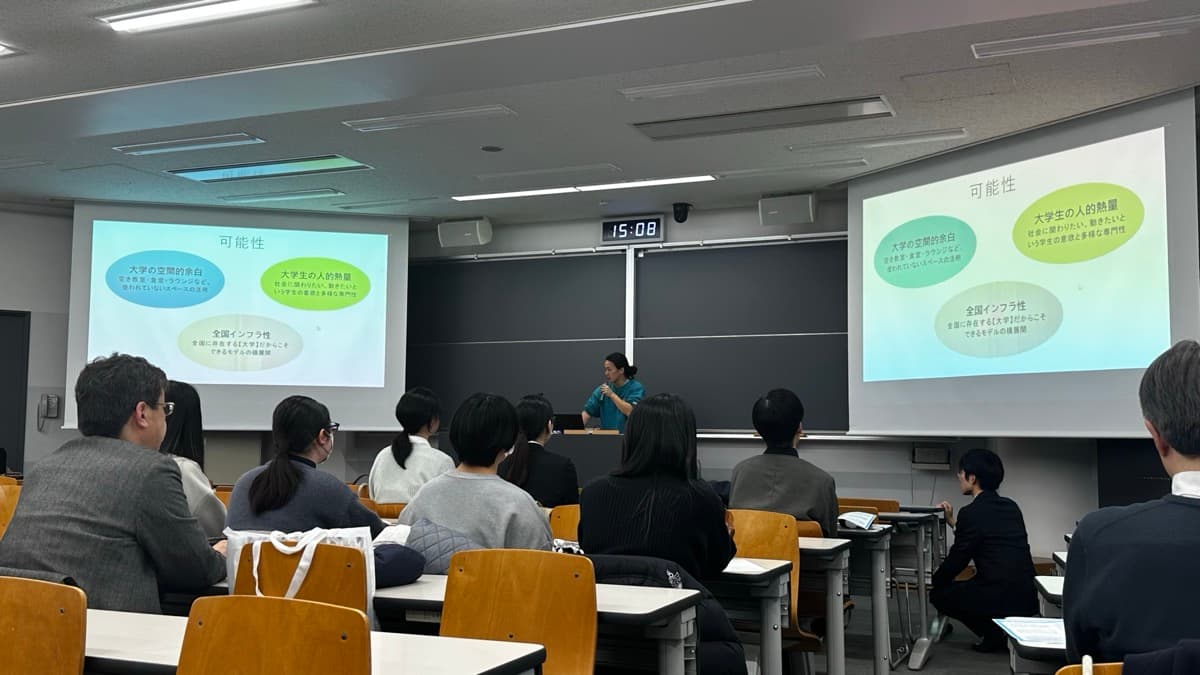
In March 2026, sixteen student organizations gathered at a reporting event hosted by the Bunkyo Ward Council of Social Welfare (event report here(このサイトの記事)). Their fields ranged from children's cafeterias to elderly care, multicultural coexistence to disaster preparedness. Yet a single structural question cut across every presentation: how do you sustain community work when your entire membership turns over in four years?
A concept gaining traction in Japanese policy circles may reframe this problem. Kankeijinko—literally "relational population"—refers to people who are neither permanent residents nor passing tourists, but who maintain ongoing, multifaceted ties with a specific community. According to the Ministry of Land, Infrastructure, Transport and Tourism's 2023 survey, approximately 22.63 million people aged 18 and over—roughly 22% of the adult population—engage with communities outside their place of residence in some form.
Background & Context
Historical context and policy framework of Japan's relational population concept.
The Structural Decline of Volunteering
The environment surrounding student community participation has shifted considerably. Japan's Ministry of Internal Affairs and Communications' Survey on Time Use and Leisure Activities shows volunteer participation rates fell by 7–8 percentage points between 2016 and 2021—from 25.0% to 18.2% for men and 26.9% to 17.5% for women. The COVID-19 pandemic was the primary driver. Among 25–29-year-olds, the participation rate dropped to just 10.1%, the lowest across all age groups.
More concerning is the collapse among younger cohorts. The 10–14 age group experienced the steepest decline, as school events and community activities—the traditional on-ramps to civic engagement—were suspended during the pandemic years. This is not merely a quantitative dip. A generation with fewer entry points into community life is now entering adulthood.
Beyond One-Off Volunteering
The kankeijinko framework draws a sharp line between episodic volunteering and sustained relational engagement. One-off volunteers respond to crises; they arrive, help, and leave. Communities perceive them as "people who came to help." Kankeijinko, by contrast, involves repeated engagement, mutual exchange, and recognition by the community as "one of ours."
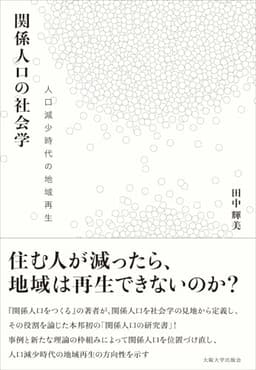
Sociologist Terumi Tanaka, in The Sociology of Kankeijinko (2021), argues that non-residents retain a distinctive "outsider's perspective"—the ability to rediscover a community's strengths and propose solutions free from internal politics. Paradoxically, this outsider quality diminishes if a person actually moves in. For students who never intended to settle permanently, their transience is an asset, not a liability.
The Noto Peninsula earthquake of January 2024 illustrates the limits of episodic engagement. Over 142,000 volunteers participated within eight months of the disaster—exceeding the pace of the 2016 Kumamoto earthquake response. Yet more than a year later, severe volunteer shortages persisted. Aggregate volume of one-time participation could not substitute for a sustained base of committed individuals.
A Spectrum of Student Engagement
Case studies from Toyo University reveal how student organizations are positioning themselves along a spectrum of community engagement.
Gaku-Bora (est. 2004) has sustained operations for over twenty years, spanning the Chuetsu earthquake, the Great East Japan Earthquake, and the Noto Peninsula earthquake. Its longevity rests on two pillars: formal recognition as an official university club and the infrastructure provided by the university's volunteer support office.
Aoi Bibusu ("Blue Bibs," est. November 2024, 40 members) explicitly aims to maintain ties with the Noto region beyond the recovery phase. This represents a conscious attempt to transition from exchange population to kankeijinko—a generational shift in how student groups define their mission.
Komorebi, a five-member team from the Faculty of Information Networking, developed a smartphone app called Meguri to connect people with the disaster-affected region digitally. This extends the concept of kankeijinko beyond physical visits into the digital domain.
These three cases—institutional longevity, intentional relational commitment, and digital connection—suggest that the modalities of student engagement are diversifying.
| Feature | One-Time Volunteering | Kankeijinko-Type Engagement |
|---|---|---|
| Timeframe | One-off or few times | Ongoing and recurring |
| Relationship | One-directional (helper/helped) | Bidirectional (co-creation) |
| Community view | "Someone who came to help" | "One of our people" |
| Motivation | Reaction to disaster/need | Attachment and ownership |
| Post-graduation | Severed | Continues in new forms |
Diversification of engagement forms — Toyo University cases
Sustainability through institutional infrastructure
Intentional shift toward kankeijinko
Digital-mediated relationship maintenance
Reading the Structure
Analysis of how kankeijinko framework addresses organizational continuity issues.
From Sustaining Organizations to Sustaining Relationships
The fundamental constraint of student organizations is that their membership turns over completely every four years. If knowledge transfer, relationship history, and tacit understanding fail to carry across generations, activities hollow out. One student leader at the reporting event described the arc as "building, running, and watching it collapse—all in eighteen months."
Accepting this constraint honestly requires a shift in framing. The goal should not be sustaining any particular organization. It should be sustaining the mechanisms that connect students to communities. If those mechanisms persist, new organizations can plug into existing relational infrastructure rather than starting from zero.
The fact that sixteen groups convened in Bunkyo Ward hints at this logic. Multiple organizations operating in the same geographic area may appear redundant. But redundancy breeds resilience: if one group dissolves, others can carry forward the community relationships. Redundancy, in this reading, is not waste—it is a structural feature that supports continuity.
Policy Shifts: The Furusato Resident Registration System
Japan's national government is moving to institutionalize kankeijinko. In 2025, the Ministry of Internal Affairs and Communications began developing a "furusato resident registration system"—a mechanism for people to formally register their ongoing ties with communities outside their legal address. The stated target: 10 million registrations within a decade.
The system has drawn criticism. The Tokyo Shimbun warned of "the danger of numbers becoming the goal." The Nikkei called for "cautious institutional design." GLOCOM, a research institute at International University of Japan, argued that visibility alone—merely counting relational ties—falls short of fostering genuine connection.
Counting relationships and cultivating them are fundamentally different activities. Whether this registration system becomes a bureaucratic exercise or a platform for deepening engagement will depend entirely on implementation design.
The Role of Intermediary Support Organizations
This is where intermediary support organizations—chukan shien soshiki—enter the picture. Since 2020, the Cabinet Office has funded "proposal-based model projects" through which NGOs and private entities facilitate matching between urban residents and regional communities.
Four functions: succession, liaison, sharing, pathway
Four functions are particularly relevant for sustaining student-community kankeijinko:
Succession infrastructure. Activity records, community contacts, and institutional knowledge must be preserved in forms that outlast any single generation of students. The goal is an organizational memory that transcends individual turnover.
Stable community interfaces. Municipal staff rotate positions every few years, creating the same discontinuity problem on the government side. An intermediary organization can serve as a persistent point of contact, buffering both student turnover and bureaucratic rotation.
Institutionalized knowledge sharing. Events like the Bunkyo Ward reporting session should not be one-off gatherings. Regular, structured forums for cross-organizational learning create a feedback loop that strengthens the entire ecosystem.
Graduated engagement pathways. The trajectory from internship to volunteer work to kankeijinko to post-graduation involvement should be designed intentionally. The "I KANRA" project at Toyo University—which grew from a two-week internship program in Kanra Town, Gunma Prefecture, into a sustained student initiative—offers a model worth replicating.
Where the Question Leads
Kankeijinko is not a silver bullet for the sustainability challenges facing student organizations. The concept itself remains contested, institutionalization is incomplete, and the four-year cycle is a hard structural constraint.
But the framework changes the question. Not "how do we keep this organization alive?" but "how do we sustain the systems that connect people to places?" That shift in perspective—from organizational survival to relational infrastructure—carries practical consequences that are anything but trivial.
The sixteen groups in Bunkyo Ward may have shown us where that shift begins.
Related Materials
- Tanaka, Terumi (2021). The Sociology of Kankeijinko: Regional Revitalization in an Era of Population Decline. Osaka University Press.
- Ministry of Internal Affairs and Communications: Kankeijinko Portal(外部サイト、新しいタブで開きます)
- Ministry of Land, Infrastructure, Transport and Tourism: Survey on Community Engagement (FY2023)(外部サイト、新しいタブで開きます)
- Statistics Bureau of Japan: Survey on Time Use and Leisure Activities (2021)(外部サイト、新しいタブで開きます)
- GLOCOM: "Beyond the Visualization of Kankeijinko"(外部サイト、新しいタブで開きます)
- Cabinet Office: Proposal-Based Model Projects for Intermediary Support Organizations(外部サイト、新しいタブで開きます)
- National Council of Social Welfare: Noto Peninsula Earthquake Volunteer Information(外部サイト、新しいタブで開きます)
Related Guides
- Stakeholder Map Guide for NPOs(このサイトの記事) — A practical framework for visualizing community relationships
- Collective Impact Design Guide(このサイトの記事) — Designing multi-organization collaboration for social impact
References
Kankeijinko Portal Site — Ministry of Internal Affairs and Communications (2024)
Annual Report on the Declining Birthrate and Measures Against It, FY2022 — Children and Families Agency (2023)
Student Community Activity Report — Bunkyo City Council of Social Welfare (2026)
Recommended Reading
Statistics cited in this article
- 1Ministry of Land, Infrastructure, Transport and Tourism — Survey on Community Engagement FY2023(2023) Open source
- 2Statistics Bureau of Japan — Survey on Time Use and Leisure Activities 2021, Table 2-1 (volunteer participation by sex)(2021) Open source