
¥1,500 Minimum Wage Target: 45% of SMEs Already Forced to Raise Pay, But Price Pass-Through Stalls at 50%
Against the government's ¥1,500 minimum-wage target, 45.1% of SMEs have already raised wages because of the minimum wage floor, and 35.0% report profit compression with no recourse. With the labor-cost pass-through rate stuck at 50%, this column analyzes where the cost of wage hikes goes and the structural problem embedded in minimum-wage policy as seen from the supply side.
TL;DR
- 45.1% of SMEs raised wages because of the minimum wage, yet 35.0% report profit compression with no concrete countermeasure
- The labor-cost pass-through rate is 50.0%, below the 55.0% for raw materials; half the cost of wage hikes is absorbed inside firms
- 74.2% of SMEs say the ¥1,500 target is "difficult" or "impossible"; 15.9% are considering closure; labor-cost-driven bankruptcies surged 77.2% YoY to 195 cases
What Is Happening
The FY2025 minimum wage hit ¥1,121, a record ¥66 hike. 45.1% of SMEs have been forced to raise wages, and 35.0% face profit compression
In October 2025, minimum wages across Japan were revised. The national weighted average reached ¥1,121, with the ¥66 increase setting a record since the guideline system began in 1978. For the first time, every prefecture exceeded ¥1,000, and Tokyo (the highest) reached ¥1,226.
Behind this hike lies the government's target of a "national average of ¥1,500 in the 2020s." The 2025 Basic Policy enshrines this figure explicitly and outlines a five-year intensive plan to "promote wage improvement at SMEs and micro-enterprises."
Yet a wide gulf separates the policy target and the reality firms face.
A survey by the Japan Chamber of Commerce and Industry and the Tokyo Chamber of Commerce and Industry (3,780 respondents) found that 45.1% of firms raised wages because employees' pay fell below the minimum wage. Up from 44.3% the previous year, this means nearly one in two firms is now directly forced to respond to the minimum-wage hike.
The problem is where those extra labor costs go. Of firms that faced rising personnel costs, 35.0% said they had "no concrete countermeasure and [are] absorbing the hit in profits." By contrast, only 31.0% said they "successfully passed the personnel-cost increase on to prices (product/service price hikes)."
Wage hikes are happening. But who is bearing the cost, and how? This column traces that structure.
On the pay side
- National weighted average
- 1,121 yen (a rise of 66 yen)
- The rise itself
- the largest since the guideline system began in 1978
- Firms raising pay because staff fell below the minimum
- 45.1% (44.3% the year before)
Where the cost went
- Passed on in prices
- 31.0%
- No specific response; squeezing earnings
- 35.0%
Every prefecture passed 1,000 yen for the first time, with Tokyo highest at 1,226 yen. Close to one firm in two faced a direct response to the increase.
Background & Context
¥1,500 target in 2025 Basic Policy; labor-cost pass-through stuck at ~50%; 74% of SMEs say ¥1,500 is "difficult or impossible"
The Mathematics of the ¥1,500 Target
Getting from ¥1,121 to ¥1,500 requires a 34.2% increase. To achieve that by FY2029, the remaining four to five revisions would each need to deliver roughly 6.1%. The FY2025 hike rate of 6.0% is essentially the ceiling, and sustaining that level for five straight years is the mathematical minimum condition.
¥1,121 → ¥1,500: A further 34.2% increase is needed, requiring ~6.1% annual hikes sustained for 5 years
Daiwa Research Institute calculates that achieving the Basic Policy target requires annual hikes of 7.3%, exceeding even FY2025's pace. Voices questioning the concreteness of the support measures have come from across the political spectrum.
The SME Reality in Numbers
Policy Target
Minimum wage ¥1,500 (by late 2020s)
Impact on SMEs
45.1% raised wages due to minimum wage / 76.6% feel the burden
Price Pass-Through Wall
Labor-cost pass-through: 50.0% / 35.0% cannot cope, profits squeezed
Outcome
195 labor-cost bankruptcies (+77.2% YoY) / 15.9% considering closure
Four Barriers to Pass-Through
1. Buyer-side bargaining power
2. Consumer price sensitivity
3. Competitive pressure from rivals
4. Labor costs harder to pass than materials
The impact of minimum-wage hikes varies sharply by firm size and region.
46.6% of rural firms raised wages because of the minimum wage, compared with 37.0% of urban firms: a 9.6-percentage-point gap. The severity of profit compression follows the same pattern: among small firms in rural areas (20 or fewer employees), 42.9% report profit compression, more than 10 points above the 32.6% for urban firms.
Prospects for meeting the ¥1,500 target are even grimmer. 74.2% of SMEs say the target is "impossible" or "difficult". Among small rural firms, 25.1% (one in four) say it is "impossible."
Industry-level burden differentials paint an even starker picture.
| Industry | Burden rate ("significant" + "some burden") | Closure consideration rate |
|---|---|---|
| Transportation | 90.2% | N/A |
| Accommodation and food service | 90.0% | 24.7% |
| Medical, welfare, and care | 85.9% | 30.3% |
| Retail | 85.5% | N/A |
The 30.3% closure-consideration rate in medical, welfare, and care (the highest of any sector) means providers of social infrastructure are on the front line of the minimum-wage hike. Nursing-care fees and medical fees are publicly set prices; the option of price pass-through is structurally constrained by regulation.
The Structural Wall Against Price Pass-Through
Why can SMEs not pass wage-hike costs on to prices? The "Price Negotiation Promotion Month" follow-up survey by the Small and Medium Enterprise Agency (conducted September 2025) illuminates part of the structure.
The overall pass-through rate stands at 53.5%. Breaking it down by cost type: raw materials reach 55.0%, while labor costs reach only 50.0%. Though labor-cost pass-through crossing 50% for the first time is an improvement, it means half the cost increase never reaches selling prices.
Four structural factors block pass-through.
First, the asymmetric power of the client side. Within subcontracting chains, only 34.6% of clients proactively proposed price negotiations. When preserving the business relationship takes priority, raising prices is not easy for the subcontractor.
Second, price elasticity in consumer markets. In food service and retail, a price hike can directly translate into customer attrition. The belief that "raising prices drives customers away" is especially strong among small retailers and restaurants.
Third, competitive pressure from industry peers. If only one firm raises prices, it risks losing customers to rivals. Without a mechanism for an industry-wide simultaneous pass-through, an individual price hike can be commercial suicide.
Fourth, labor costs are structurally harder to pass on than raw-material costs. Raw-material cost increases are understood as market-price fluctuations; labor-cost increases tend to be viewed as "a firm's internal affairs," making it harder to secure understanding from clients and consumers.
Bankruptcy as Reality
The predicament of SMEs caught between wage hikes and price pass-through appears in bankruptcy statistics too.
According to Teikoku Databank, labor-shortage bankruptcies in FY2025 reached 441 cases, up 26% from 350 the previous year and exceeding 400 on an annual basis for the first time. Three consecutive years of record highs.
By industry, construction led at 112 cases (25.4% of the total), followed by road freight transport (55), elderly-welfare businesses (22), and restaurants (21). All are labor-intensive sectors taking a direct hit from labor shortages and wage-hike pressure.
Tokyo Shoko Research goes further. Of FY2025's 442 labor-shortage bankruptcies, cases where soaring labor costs were the primary driver surged to 195 (up 77.2% YoY). This suggests that roughly 44% of labor-shortage bankruptcies resulted not from an inability to hire staff, but from the arithmetic breaking down after wages were raised.
The Regional Disparity
The minimum wage is not uniform nationwide. The gap between the highest (Tokyo, ¥1,226) and the lowest (Kochi, Miyazaki, and Okinawa, ¥1,023) stands at ¥203. Calculated over 2,000 annual working hours, that translates into an annual income difference of approximately ¥406,000.
In the FY2025 revision, the guideline increase for Rank C prefectures (rural areas) at ¥64 exceeded Rank A (major urban areas) at ¥63 for the first time, and 39 prefectures raised wages above the guideline. The gap is narrowing, but the structural contradiction (that rural firms have the least capacity to fund wage hikes) remains unresolved.
The Japan Federation of Bar Associations issued statements in both 2025 and 2026 calling for correction of regional disparities and requesting consideration of a nationwide uniform minimum wage. A vicious cycle has been identified: regional gaps accelerate the outflow of young people to cities, further deepening labor-shortage bankruptcies in rural areas.
Reading the Structure
South Korea's rapid hike and OECD Kaitz index show pace of increases and support effectiveness are the decisive variables
What International Comparisons Reveal About Japan's Position
The Kaitz index (the ratio of the minimum wage to median wages) is the standard metric for international comparisons of minimum-wage levels. According to OECD data, Japan's Kaitz index is 47%, 10 percentage points below the OECD average of 57%, placing Japan in the bottom five among 30 countries.
If ¥1,500 is achieved, Japan's Kaitz index is estimated to rise to 60–65%, surpassing the OECD average. In other words, the ¥1,500 target carries genuine policy rationale: correcting a minimum wage that is internationally anomalously low. The problem lies in the design of the path to get there.
- Japan if 1,500 yen is reached (estimate)60-65%above the OECD average
- OECD average57%
- Japan now47%fifth from bottom of 30 countries
The Lesson South Korea's Rapid Hike Left Behind
South Korea offers a painful case study in the side effects of rapid minimum-wage increases.
Analysis in the JILPT Japanese Journal of Labour Studies shows that under the Moon Jae-in administration, the minimum wage was raised +16.4% in 2018 and +10.9% in 2019, roughly 30% over two years.
The result: 290,000 jobs disappeared across wholesale/retail, accommodation/food service, and facility management. The Korea Economic Research Institute estimated more than 470,000 jobs lost over four years. Micro-enterprises and small businesses were hit hardest; President Moon ultimately abandoned his pledge and publicly apologized.
Japan's ¥1,500 target envisions a gradual hike of roughly 6% per year, different from Korea's all-at-once approach. Yet sustaining more than 6% annually for five consecutive years creates a cumulative burden that could generate the same structural problems for Japanese SMEs. The lesson from South Korea is clear: the "pace" of increases and the "effectiveness of support measures" are the decisive variables.
Toward a System That Distributes the Cost of Wage Hikes Across Society
Raising the minimum wage is a necessary policy for improving the conditions of low-wage workers. Economic theory has shown that in monopsonistic labor markets, an appropriately calibrated minimum-wage increase can raise wages without reducing employment.
In Japan today, however, more than half the cost of wage hikes is absorbed as profit compression at SMEs, never reaching broader societal distribution. The concurrent decline in the labor share and the stagnation of pass-through rates signal that "a cost someone should bear is being unilaterally absorbed by structurally weaker firms."
Three pillars of support infrastructure are needed: strengthening the effectiveness of price pass-through support; aligning reimbursement structures in publicly priced sectors (nursing care, medicine) with wage increases; and providing substantive support for labor-saving investment. Without building these mechanisms that "enable wage hikes," raising the number alone risks repeating South Korea's mistake.
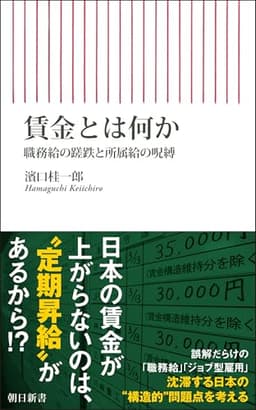
As Keiichiro Hamaguchi(外部サイト、新しいタブで開きます) argues in his 150-year history of Japan's wage system, Japanese wages have developed not as "the price of work" but as "the price of a person's attributes (age, tenure, affiliation)." Unless minimum-wage policy identifies precisely where it is intervening in that structure, the numbers will continue to rise while the underlying structure remains unchanged.
Related Columns
- Why a 5%+ Wage Hike Still Leaves Workers Poorer(このサイトの記事) (The gap between nominal hikes and take-home pay)
- Why Don't Wages Rise Despite "Labor Shortages"?(このサイトの記事) (The structure of a labor market where supply-demand principles fail)
- 30 Years of Stagnant Pay: The Structural Story(このサイトの記事) (Retained earnings, non-regularization, and weakened unions)
Related Guides
Reference Books
- 賃金とは何か (What Are Wages?)(外部サイト、新しいタブで開きます) (Keiichiro Hamaguchi, Asahi Shinsho, 2024)
- The Smart Way for SMEs to Handle Price Increases and Pricing Strategy(外部サイト、新しいタブで開きます) (Yuhei Nishida, Nippon Jitsugyo Publishing, 2023)
References
Survey on the Impact of the Minimum Wage on Small and Medium-Sized Enterprises — Japan Chamber of Commerce and Industry / Tokyo Chamber of Commerce and Industry (2025). JILPT Business Labour Trends, May 2026
Survey on the Impact of the Minimum Wage on SMEs (Published March 2025) — Japan Chamber of Commerce and Industry (2025). Japan Chamber of Commerce and Industry
Price Negotiation Promotion Month (September 2025) Follow-Up Survey — Ministry of Economy, Trade and Industry (2025). Ministry of Economy, Trade and Industry
Labor-Shortage Bankruptcy Trends Survey (FY2025) — Teikoku Databank (2026). Teikoku Databank
FY2025 'Labor-Shortage' Bankruptcies Hit Record 442 Cases — Tokyo Shoko Research (2026). Tokyo Shoko Research
Debates and Challenges Surrounding Minimum-Wage Increases in South Korea — JILPT Japanese Journal of Labour Studies (2024). Japanese Journal of Labour Studies, October 2024
Statistics cited in this article
- 1Ministry of Health, Labour and Welfare — FY2025 Regional Minimum Wage Answers(September 2025) Open source
- 2JILPT BLT May 2026 (JCCI/TCCI Survey)(February 2025 survey) Open source
- 3Japan Chamber of Commerce and Industry — Minimum Wage Impact Survey(March 2025) Open source
- 4Ministry of Economy, Trade and Industry — Price Negotiation Promotion Month Survey, September 2025(November 2025) Open source
- 5Teikoku Databank — Labor-Shortage Bankruptcies FY2025(April 2026) Open source
- 6Tokyo Shoko Research — Labor-Shortage Bankruptcies FY2025(April 2026) Open source
- 7OECD Employment Outlook 2025(2024) Open source
- 8JILPT Japanese Journal of Labour Studies, October 2024(2024) Open source
Questions to Reflect On
- To what extent do you think the prices of goods and services you use reflect the cost of wage hikes for the workers who produce them?
- Should the pace of minimum-wage increases match "the speed firms can absorb," or should "the level at which workers can live" take priority?
- Should the regional minimum-wage gap (up to ¥203) be narrowed, or maintained to reflect local economic conditions?
Key Terms in This Article
- Monopsony
- A labor market condition where the buyer (employer) holds dominant power, suppressing wages below competitive levels. Particularly visible in single-industry rural areas and occupations requiring specific qualifications.
- Labor Shortage Bankruptcy
- Business failures primarily caused by employee turnover, recruitment difficulties, or rising labor costs. According to Teikoku Databank, a record 441 cases were recorded in FY2025, with firms of fewer than 10 employees accounting for approximately 75%.
- Labor Share of Income
- The proportion of value added by corporations distributed as labor costs (wages, bonuses, employer social insurance contributions). A decline indicates growing corporate profits alongside stagnant worker compensation, helping explain the coexistence of rising corporate tax revenue and wage stagnation.
Related Content

5.26% Wage Hike, Fourth Straight Year of Negative Real Wages — How Japan's Triple Squeeze Works

Why Wages Don't Feel Higher Despite 5%+ Shunto Gains — The Structure Behind Four Consecutive Years of Negative Real Wages

The Gender Wage Gap in International Comparison – Three Institutional Designs and the 134-Country Child Penalty Atlas

Inside Japan's 22.1% Gender Wage Gap — The Structure That 'Equal Pay for Equal Work' Cannot Explain
Previous
Japan's Civil Court Digitalization, May 21, 2026 — mints Mandate and the Problem of the 7% Pro-Se Litigant
Next
The Reality After Japan's Digital Textbook 'Formalization': How the Three-Option System Entrenches Regional Inequality
Get new columns by email
1-2 social structure analysis columns per week. Free to subscribe.
Join ISVD's activities?
Sign up to receive the latest research and activity reports. Feel free to reach out about collaboration or project participation.