The 'Can't Earn a Living' Problem in Japan's Rural Migration Push — A Career-Design Vacuum in Regional Revitalization Policy
Japan's first decade of regional revitalization tracked migrant counts but failed to design income and career-continuity systems. From the FHL Masui case, this column reads the structural gap between rural assignments worth tens of thousands of yen per month and urban salary levels, the unmeasured income behind the 57.5% retention rate for the Local Vitalization Cooperator Squad, and the institutional vacuum surrounding the 22.63 million "related population."
TL;DR
- Per-capita prefectural income runs from ¥6.037 million in Tokyo to ¥2.249 million in Okinawa — a 2.68x gap — with high-wage industries structurally absent from rural regions
- The Local Vitalization Cooperator Squad shows a 57.5% retention rate, yet official statistics do not track post-term entrepreneurs' income or three-year business survival
- The "related population" stands at approximately 22.63 million (over 20% of adults), but no official statistic measures conversion to permanent residency
What Is Happening
Migration policy moved people, but the institutional connection to post-migration income and career paths is missing
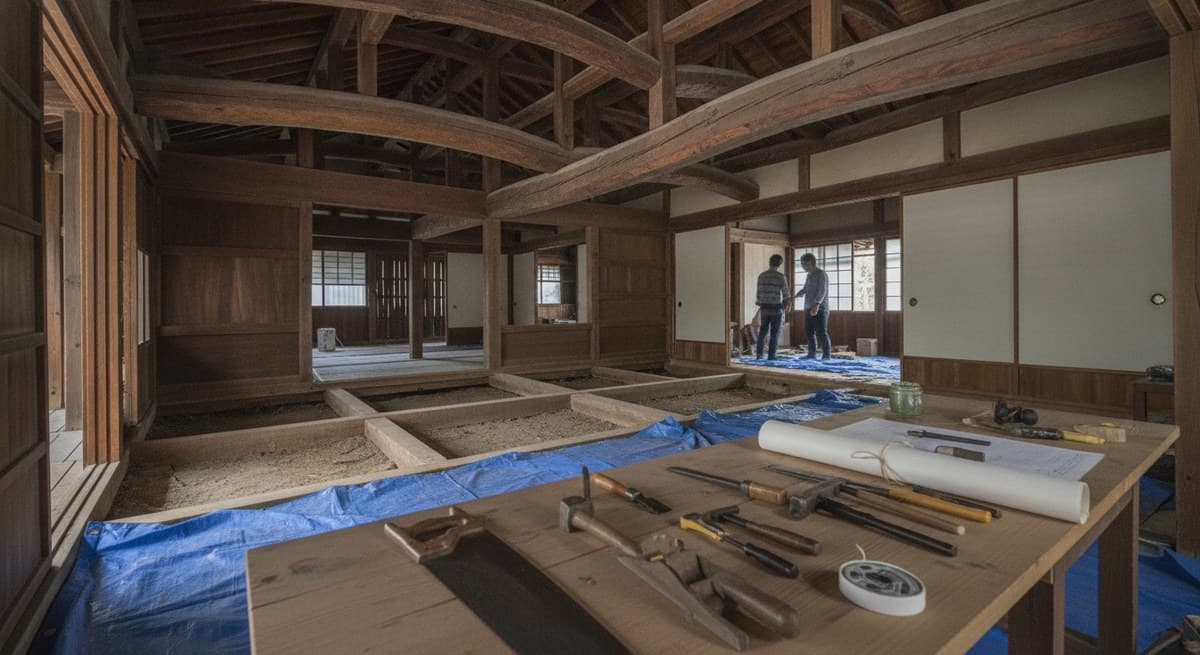
Begin with the words of a U-turn hardware engineer in Yaizu, Shizuoka. "Quitting an urban job to come back is really difficult. The realistic path is to keep the urban work and add regional work gradually." His pragmatic response is recorded in FIRST-HAND Local (March 2026)'s long-form report on the matching vacuum that prevents regional challenges from becoming viable businesses. Rural assignments are typically small contracts of around ten hours per month or worth tens of thousands of yen; income from a single regional employer falls short of household requirements. "Overwhelmingly, it's the contact points. There are very few places where people with problems and people who can solve them actually meet" — a single sentence that compresses the blind spot of migration policy.
Begin with the prefectural-level income structure underneath this individual case. Per-capita prefectural income runs from 6,037 thousand yen in Tokyo, the highest, to 2,249 thousand yen in Okinawa, the lowest — a gap of 2.68x.
FY2023 is the newest release, but only 42 of the 47 prefectures have published for it. FY2022 is the most recent year with all 47, so that is the year to use when ranking. Prefectural income is a macro indicator that includes corporate income and does not translate directly into take-home pay, but it has long served as the standard representation of regional capacity to produce earnings. Migrating to rural Japan to make a living thus sits adjacent to running structurally up an income staircase in reverse.
The same drop appears industry by industry. Among those employed for a full year, the highest average salary is ¥8.32 million in electricity, gas, heat supply and water, followed by ¥7.02 million in finance and insurance. The lowest is ¥2.79 million in accommodation and food services — a gap of 2.98x between top and bottom. The mix of leading industries in rural economies does not overlap with the high-wage industries concentrated in metropolitan areas. Reproducing an urban-level salary in a rural area becomes difficult at the industry-composition stage.
Source: National Tax Agency (2024) / MHLW Wage Census
Apply the numbers to household models. Moving from the ¥6.04 million prefectural-income range to the ¥2.25 million range carries an annual gap of approximately ¥3.79 million. Lower housing costs offset part of this, yet child-education expenses, support for extended family, and social-insurance contributions show small regional variance, leaving disposable income net-negative by no slim margin. Numbers sit underneath the heuristic that "rural life is cheaper" and cannot be explained by intuition alone.
Background & Context
Revitalization 1.0 (2014–) tracked migrant counts but left income design thin. The 2024 Dual-Region Act made livelihood a statutory pillar.
Regional Revitalization 1.0 Tracked Numbers, with Thin Institutional Linkage
Regional revitalization in Japan took its operational form in September 2014 with the establishment of the Headquarters for the Vitalization of Town, People, and Work, alongside the "896 municipalities at risk of disappearance" report compiled in Hiroya Masuda's edited volume Vanishing Local Areas. Across the first stage (2014–2019) and second stage (2020–2024), the center of policy evaluation rested on numerical indicators — relocation consultations, regional revitalization grant projects, and Local Vitalization Cooperator Squad headcount.
The June 2025 Basic Concept for Regional Revitalization 2.0 includes the 10-year summary. Continued net inflow into the Tokyo area is officially acknowledged in the supporting materials, and the central premise has shifted to "adaptation measures that allow the economy to grow and society to function even as population scales down." The notable line in the discussion documents is the self-assessment: "The policy was overweight on tracking migration counts and underweight on designing systems for post-migration career formation and income security." A decade in, the policy subject has begun to include "after migration."
The Local Vitalization Cooperator Squad: Invisible Income Behind the Retention Rate
The Ministry of Internal Affairs and Communications' Local Vitalization Cooperator Squad program is widely cited as a representative initiative for moving people into rural Japan. Of the 8,762 participants whose terms ended in the most recent five years, 57.5% (5,038) still live in the municipality where they served. Counting those who moved to a neighbouring municipality brings it to 70.3% (6,163). Read narrowly, the figures tell a success story of "70% staying in the region."
What official statistics fail to capture is what happens after. The 5,038 who stayed put break down into 45.6% (2,296) starting their own businesses, 34.8% (1,753) entering employment, and 11.6% (583) entering agriculture or forestry, but neither income levels for entrepreneurs nor three-year business survival rates appear in official figures. Prior research in the Journal of the Rural Planning Association notes that most entrepreneurs run small-scale cafes, lodgings, or agricultural-product processing operations, and that disclosure of income-level data is essentially nonexistent.
Entrepreneurship preparation support during the term was institutionalized only after 2017, and the design has not extended responsibility into post-term income continuity. Beneath the headline "57.5% retention," people remain counted as settlers without their income being visible.
The 22.63 Million Related Population and an Absent Conversion Layer
The "related population" concept was proposed by Tokumi Odagiri and colleagues in 2016 to formalize an intermediate layer between tourism and permanent residence. Approximately 22.63 million adults aged 18 and over (about 20% of adults) qualify as related population, breaking down into approximately 18.84 million visit-based and approximately 3.79 million non-visit. At this scale, the policy frontier rivals immigration policy in magnitude.
No official statistic measures conversion from this pool to permanent residency. The related population was granted a policy position as a "migration pool," yet the pathway from pool to actual migration is missing from the blueprint. The "Furusato Resident Registration" launched under Regional Revitalization 2.0 seeks to give legal status to the related population, but registration requirements, tax treatment, and cross-jurisdictional social-security rules are still being deferred even as the system begins to operate.
Current Estimate (MLIT Survey)
~22.63M
~22% of adults 18+
Government Target (FY2034)
Furusato Resident Registration
10M (actual persons)
Related Population (cumulative)
100M
Definition Gap
- ▸Broad 'related population' of 22.63M ≠ 10M registered residents
- ▸Even 'hobby/consumption' visitors (2–7 days/year) count
- ▸Does 'registration' create 'relationship,' or vice versa?
The Dual-Region Residence Promotion Act: Livelihood Enters the Statutory Pillars
The amended Wide-Area Regional Vitalization Foundation Improvement Act (Dual-Region Residence Promotion Act) entered into force on November 1, 2024, and contains a notable inflection point in the history of migration policy. The law establishes three support mechanisms (a municipal "dual-region residence promotion plan" system, a designation system for dual-region residence support corporations, and a special-use exception allowing coworking facilities in residential-only zones), and the interim report places "housing," "livelihood and work environment," and "community" as three central pillars.
"Livelihood and work environment" appears as a statutory pillar in migration-policy documentation for the first time. Concrete supports, however, lean toward hardware — coworking facility development, satellite-office attraction — while soft-side institutional design for income protection and side-job matching remains thin. Pioneering implementation projects show menus dominated by facility-construction items. "Earning a living" has entered the law's framework, but budget items that move it remain pointed at buildings.
Reading the Structure
A 2.68x Tokyo–Okinawa income gap, micro-assignments, and absent career-continuity reveal the career-design vacuum in migration policy.
The Intersection of Wages, Industries, Matching, and Institutions
Threading the preceding analysis together, the path to "moved but can't earn a living" becomes legible. First, on the wage-structure side, the structural absence of high-wage industries (IT, finance, telecommunications, electricity) outside metropolitan areas makes salary reproduction difficult at the industry-portfolio stage. Second, on the assignment-structure side, ten-hour-per-month micro-contracts from regional firms remain below household income targets even when aggregated across multiple clients. Third, on the matching-deficit side, no publicly developed platform connects regional challenges with metropolitan skill stocks. Fourth, on the institutional-design side, migration subsidies operate as one-time payments, and three-to-five-year career continuity has stood outside the scope of policy evaluation.
Where these four layers overlap, "moved but cannot earn a living" appears not as individual cases but as a structural phenomenon with reproducible probability by household type. The Masui pragmatic response of "keeping urban work and adding regional work gradually" is a tactic that compensates for at least three of the four layers (wages, assignments, matching) using metropolitan-side resources, and is best read as a response to structural pressure rather than individual ingenuity.
- 1. Wage structurehigh-wage industries (IT, finance, telecoms, power) are absent locallyreproducing an urban salary is hard at the level of the industrial mix
- 2. Contract structurelocal firms offer contracts of around ten hours a month↓ even a portfolio of several clients struggles to reach a monthly income target
- 3. No matching functionno publicly built platform connects local problems to urban skills
- 4. Thin policy designrelocation grants end as a one-off paymentcareer continuity three to five years on sits outside policy evaluation
Where these four overlap, individual cases become a structural phenomenon with a probability attached to each household type. Keeping urban work while gradually adding local work covers at least three of the four with urban resources.
International Comparison: Italian, Spanish, and American Models
International comparison organizes the policy choices into three configurations.
The first is the hardware-and-property model exemplified by the Italian "One-Euro Houses". Originating in Salemi, Sicily, in 2008 and expanding to over 70 municipalities, the program slashes property-acquisition costs and imposes a renovation requirement (1–3 years). Income-generation capacity, however, must be sourced separately, and many migrants depend on remote work, tourism (B&B operations), or post-retirement lifestyles. The hardware bias in Japan's Dual-Region Residence Promotion Act carries traces of an Italian-style design.
The second is the entrepreneur-matching model exemplified by Spain's Holapueblo and the "2030 Population Strategy (Plan 130)." A private-sector partnership of Redeia, IKEA, and AlmaNatura recruits entrepreneurs across 100 municipalities, structuring rural revitalization as a national strategy with 130 program items. Rural Spain's population declined 4.4% from 2014 to 2023 (against a 2.6% national increase), but Spain placed the axis for closing that gap on entrepreneur matching — a clear design contrast with Japan.
The third is the remote-worker recruitment model exemplified by Vermont's Worker Relocation Grant Program (since 2018, up to $10,000) and West Virginia's Ascend WV (since 2021, $12,000 plus benefits). The shared design premise is "bring in remote workers and let income remain sourced from the migration origin (urban employer)." This aligns structurally with the Masui model of "urban work plus gradual regional shift" in Japan; what differs decisively is that the policy side has explicitly packaged the only "personal solution" currently functioning into an institutional offering.
Policy Direction: From Number-Tracking to Income-Tracking
A design that treats "migrant count" and "post-migration income continuity" as separate indicators is precisely what current migration policy lacks. The 57.5% retention rate of the Local Vitalization Cooperator Squad is a meaningful figure, but without three- and five-year post-term income tracking embedded in official statistics, the state of "settled but unable to earn a living" continues to hide inside the retention rate.
A redirection of the Dual-Region Residence Promotion Act's "livelihood and work environment" pillar from coworking facilities to soft-side mechanisms (public-side side-job matching platforms, tax neutrality across dual residences, portability of social insurance across regions) is logically open. If legal status is to be granted to the Furusato Resident Registration, cross-border rules for taxation and social security must be designed in parallel; otherwise the system contracts to a registration function alone.
The year 2025 — when the Regional Revitalization 2.0 Basic Concept inscribed "post-migration income security" into the policy subject — represents a small entry point for rereading the structure. The framing that Hitoshi Kinoshita proposed in the 1.0 era — "from subsidy-driven to business-driven" — connects with room to spare to the 2.0 institutional design. The framework Terumi Tanaka developed for the related population as an "intermediate institution between tourism and permanent residence" provides the preparatory ground for redrawing the boundaries of the Furusato Resident Registration system.
What the Masui Model Demonstrates
The two-layer configuration that the Masui interviewee chose — "keeping urban work and gradually shifting work to the region" — is nothing other than an individual tactical response that fills the current institutional vacuum. Remote-work diffusion (since 2020) made this model technically feasible, and U.S. state-level recruitment policy made it institutionally explicit. The next step for Japanese policy design is to lift the Masui model out of the contingency of individual ingenuity by integrating taxation, social insurance, and matching functions so the configuration is presented as a standard option.
Recast with institutions as the subject, the individual testimony "quitting urban work to come back is really difficult" becomes: "Siloed design that separated migration promotion from income continuity left post-migration career formation dependent on individual graduated responses." The question is not migrants' resolve but the package configuration of migration policy.
Related Columns
- Structural Analysis of Local Government "Disappearance" — 744 Municipalities Confronting Population Decline and Fiscal Threshold(このサイトの記事)
- Structural Analysis of "10 Million Related Population" in Regional Revitalization 2.0(このサイトの記事) (target and means inversion in related-population policy)
- Cities Where Prices Rose, Cities Where They Didn't — The Structural Gap in Regional CPI(このサイトの記事)
- Local Government Workforce Collapse(このサイトの記事)
Reference Books
- Hiroya Masuda (ed.), 地方消滅 - 東京一極集中が招く人口急減 (中公新書) (Vanishing Local Areas — Population Crisis from Tokyo-Centric Concentration, Chuko Shinsho)(外部サイト、新しいタブで開きます), Chuokoron-Shinsha, 2014. The book-form version of the "896 municipalities at risk of disappearance" report that became the starting point for regional revitalization 1.0.
- Hitoshi Kinoshita, 地方創生大全 (Regional Revitalization Compendium)(外部サイト、新しいタブで開きます), Toyo Keizai Shinposha, 2016. A success-and-failure casebook from the regional revitalization 1.0 era, analyzing the traps of regional revitalization from a business-viability perspective.
- Terumi Tanaka, 関係人口の時代-「観光以上、定住未満」で地域とつながる (中公新書) (The Age of Related Population — Connecting with Regions Through More Than Tourism but Less Than Permanent Residence, Chuko Shinsho)(外部サイト、新しいタブで開きます), Chuokoron-Shinsha, 2025. The most current synthesis of the related-population concept, providing the conceptual ground for the Furusato Resident Registration system under Regional Revitalization 2.0.
References
Basic Concept for Regional Revitalization 2.0 — Cabinet Secretariat / Cabinet Office, Headquarters for the Creation of a New Regional Economy and Living Environment (2025). Cabinet Secretariat / Cabinet Office
Survey of Residence Status Following Local Vitalization Cooperator Squad — Ministry of Internal Affairs and Communications, Regional Self-Reliance Support Division (2025). Ministry of Internal Affairs and Communications
Survey on Regional Relationships — Related Population Estimate (FY2023) — Ministry of Land, Infrastructure, Transport and Tourism, National Spatial Planning Bureau (2025). Ministry of Land, Infrastructure, Transport and Tourism Press Release
Institutional Design for Promoting Dual-Region Residence — Ministry of Land, Infrastructure, Transport and Tourism (2024). Ministry of Land, Infrastructure, Transport and Tourism
Prefectural Economic Accounts — Cabinet Office, Economic and Social Research Institute (2023). Cabinet Office, Economic and Social Research Institute
FY2024 Survey on Private-Sector Salaries — National Tax Agency (2024). National Tax Agency
Current Status and Challenges of the Local Vitalization Cooperator Squad — Yoshiki Kuwabara (2022). Journal of the Rural Planning Association, Vol. 41 No. 3
The 'Can't Earn a Living' Problem Hidden Behind Migration Promotion — The Vacuum in Matching to Turn Regional Challenges into Business — FIRST-HAND Local Editorial Team (2026). FIRST-HAND Local
100 municipalities of rural Spain aim to repopulate and revitalise through Holapueblo — Redeia (2023). Redeia Press Release


Statistics cited in this article
- 1Cabinet Office, Economic and Social Research Institute, 'Prefectural Economic Accounts', Summary Table 7: per-capita prefectural income(FY2022) Open source
- 2National Tax Agency, 'FY2024 Survey on Private-Sector Salaries', average salary by industry(FY2024) Open source
- 3Cabinet Secretariat / Cabinet Office, Headquarters for the Creation of a New Regional Economy and Living Environment, 'Basic Concept for Regional Revitalization 2.0'(Cabinet decision, June 13, 2025) Open source
- 4Ministry of Internal Affairs and Communications, Regional Self-Reliance Support Division, 'FY2025 Survey of Residence Status Following Local Vitalization Cooperator Squad'(Published 24 April 2026 (covering the 8,762 whose terms ended in FY2020–FY2024)) Open source
- 5Same survey, 'Post-term destinations and livelihoods'(Published 24 April 2026) Open source
- 6Ministry of Land, Infrastructure, Transport and Tourism, 'Survey on Regional Relationships'(FY2023 survey, released June 27, 2025) Open source