
What Is Happening
Approximately 70% of U.S. military exclusive-use facilities in Japan are concentrated on 0.6% of the nation's land area. This figure is widely known. It appears in middle school textbooks. It is regularly reported on television news.
Yet for many Japanese living on the mainland, the Okinawa base issue does not exist as a "felt reality."
This is not simply a matter of geographic distance. It is qualitatively different from a Hokkaido resident being unable to "feel" Okinawa's heat. The "not knowing" in the base issue is structurally maintained — the conditions for remaining ignorant are built into social institutions.
In 2019, a prefectural referendum on the construction of a new base at Henoko (辺野古) yielded 72% opposition. Mainland media reported this. But the coverage faded within days, and the government continued construction. The will of the people, expressed through democratic procedure, was effectively disregarded. What is at issue here is not merely the government's stance. The fact that the majority of mainland voters did not receive this as "their own problem" — it is this structure of indifference that constitutes the proper object of agnotological analysis.
Background and Context
Nishiyama Hideshi's Agnotological Analysis
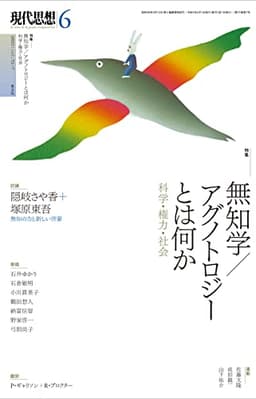
Nishiyama Hideshi (西山秀史, 2023) analyzed the Okinawa base issue from the perspective of agnotology in the June 2023 special issue of 『現代思想 2023年6月号 特集: 無知学』(Gendai Shisō)(外部サイト、新しいタブで開きます) (現代思想) on agnotology. The core of Nishiyama's argument is the assertion that the ignorance of mainland Japanese regarding Okinawa is not an accidental product but is structurally reproduced.
Nishiyama argued that this structural ignorance operates at three levels. First, the "peripheralization" of Okinawa in media coverage. Second, the reductive treatment of Okinawan history in educational curricula. Third, the trivialization of the issue through the "bases and economy" framing.
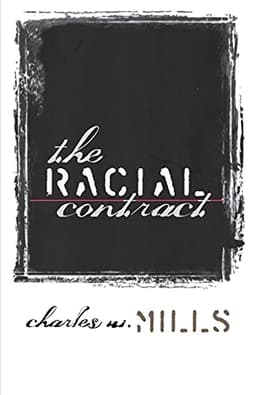
This analysis resonates with the structure of "white ignorance" as discussed by Mills (1997) in The Racial Contract(外部サイト、新しいタブで開きます). Mills argued that white-supremacist society reproduces structural "not knowing" — not consciously, but as a social system — to maintain its own privilege. The mainland's "not knowing" regarding the Okinawa issue can be read as the Japanese variation of this "white ignorance."
Fifty Years After Okinawa's Reversion and the Structure of Reporting
In 2022, fifty years after Okinawa's reversion to Japan in 1972, many media outlets ran special features. NHK broadcast documentaries; national newspapers devoted special pages. Yet as Tsuruta Souto and Tsukahara Togo (2025) observe in 『無知学への招待――〈知らないこと〉を問い直す』(Invitation to Agnotology)(外部サイト、新しいタブで開きます), "anniversary reporting" does not contribute to resolving structural ignorance.
Why? Because anniversary reporting is merely a temporary arousal of attention. At every milestone — fifty, sixty, seventy years — reporting volume temporarily increases, but this does not compensate for the absence of everyday coverage. There is even a danger that "we reported it at the anniversary" functions as an alibi for the daily absence of reporting.
The Problem with the "Base Economy" Framing
When the Okinawa base issue is covered by mainland media, the frame of "bases and the economy" is frequently employed. What percentage of Okinawa's economy does base-related income represent? How much economic benefit have returned base sites generated?
This framing has the effect of confining the problem within the framework of economic rationality. The base issue is a human rights issue, an issue of self-governance, and an issue of historical justice. Yet when squeezed into the "economy" frame, these dimensions recede into the background. The claim — factually inaccurate — that "Okinawa's economy could not survive without the bases" circulates and obstructs structural understanding of the problem.
What should be noted is that this framing is not necessarily intentional. Media consider that reporting on economic impact constitutes "objective," "balanced" coverage. Yet this "objectivity" contributes to the invisibilization of structural problems. As Proctor (2008) demonstrated, the production of ignorance does not necessarily require intent.
Reading the Structure
The Compound of Attention-Control and Epistemic-Exclusion
Mainland structural ignorance regarding the Okinawa issue is described in this lab's coding axes as a compound mechanism of attention-control and epistemic-exclusion, operating across four layers.
Layer 1: Structural Non-Reporting by Media
The Okinawa base issue is not "unreported." However, the manner of reporting contains structural bias.
The volume of Okinawa-related articles in national newspapers spikes when incidents or accidents involving U.S. military personnel occur and remains at low levels at other times. That is, Okinawa is reported as an "event" but is not covered as a structural problem in everyday reporting. This is the essence of attention-control — the selection of what to pay attention to implicitly includes the decision of what not to attend to.
Furthermore, the perspective of reporting is biased. National newspaper coverage of Okinawa is frequently written from the perspective of "Okinawa as seen from Tokyo." The context of the U.S.-Japan security alliance, the context of diplomatic relations, or the context of domestic politics. The everyday experiences of people living in Okinawa — noise, the risk of accidents, the seizure of land — are often processed as statistics or abstract descriptions.
Layer 2: Reduction of Okinawan History in Textbooks
Within educational curricula, Okinawan history is structurally reduced. The history of the Ryukyu Kingdom, the Ryukyu Disposition (琉球処分), the Battle of Okinawa (沖縄戦), and the period of U.S. military administration are present in textbooks, but they are positioned peripherally within the grand narrative of "Japanese history."
Particularly problematic is the treatment of the Battle of Okinawa. The Battle of Okinawa was the only large-scale ground battle on Japanese soil, with approximately 200,000 casualties including civilians. Yet textbook coverage is limited, and in 2007, a major controversy erupted over the revision of descriptions regarding military involvement in "group suicides" (集団自決, forced collective deaths).
This reduction in education shapes the cognitive foundation regarding Okinawa for younger generations. Problems not sufficiently learned in textbooks are incorporated into cognitive structures not as "unknown" but as "not needing to be known." This is an institutional form of epistemic-exclusion.
Layer 3: Economization of the Problem Through the "Base Economy" Frame
The "base economy" framing discussed above is an operation that reduces the multidimensionality of the problem to a single dimension.
Base-related income's share of Okinawa Prefecture's total prefectural income has declined from 15.5% at the time of reversion (1972) to 5.3% (fiscal 2019). Returned base sites — the area around Chatan's American Village, for example — have generated economic effects dozens of times greater than during the base era. These facts negate the claim that "the economy cannot function without the bases."
However, the factual accuracy of the "base economy" frame is not the only issue. Discussing the problem within the economic framework itself invisibilizes the essential dimensions of human rights, self-governance, and historical justice. Even proving that "bases are economically negative" does not reach the core of the issue, for the base issue is not fundamentally an economic issue.
Layer 4: Legitimation Through "For Japan's National Security"
The most powerful mechanism of invisibilization is legitimation through the logic of national security. "The U.S.-Japan alliance is the foundation of Japan's national security, and the existence of bases is a necessary cost" — this logic positions Okinawa's burden as a sacrifice for the national interest.
This legitimation maintains structural ignorance because it deflects the focus from distributive justice. Even if bases are necessary for national security, why must 70% of the burden be concentrated on 0.6% of the land area? This question cannot be posed within the logic of national security.
Borrowing (Mills, 1997(外部サイト、新しいタブで開きます)) terminology, this is a form of epistemological contract — an implicit social agreement about "what is to be treated as unknown." Mainland voters "know" about the disproportionate burden on Okinawa, but under the banner of national security, they "treat that injustice as unknown."
The Problem of Intentionality
How is intentionality assessed in this case?
Media, the education system, politicians — none are intentionally seeking to "produce ignorance about Okinawa." Yet structural ignorance is, as a result, reproduced. In this lab's coding, this type of intentionality is classified as structural.
The characteristic of structural intentionality is that it is compatible with the good faith of individual actors. Reporters cover stories earnestly, teachers teach sincerely, politicians consider the national interest — yet the system as a whole reproduces ignorance. This structural property makes the problem difficult to remedy. Criticizing individuals does not change the structure.
The Paradox of "Knowing Yet Not Knowing"
The most fundamental problem this case poses for agnotological theory is the conceptualization of the state in which "knowledge circulates as information, but does not exist as felt reality."
(Proctor, 2008) three types — native ignorance, lost knowledge, strategically produced ignorance — all presuppose "the absence of knowledge." But mainland ignorance regarding the Okinawa issue is not an absence of knowledge. The figure "70% on 0.6%" is known. It is in textbooks. It appears on exams.
The problem is that this knowledge does not function as "living knowledge" that shapes behavior and judgment. In the terminology of cognitive science, it is held as declarative knowledge but does not function as procedural knowledge — knowledge that influences actual decision-making.
This lab tentatively calls this state of "knowing yet not knowing" epistemic inactivation (認識的不活性化). Knowledge exists, but the circuits through which that knowledge would produce cognitive, emotional, and behavioral consequences are severed. The study of structural ignorance must extend its scope not only to the "absence" of knowledge but also to the "inactivation" of knowledge.
Questions for This Lab
This case analysis raises the following questions:
- Under what conditions does epistemic inactivation occur, and what releases it? If a school trip to Okinawa temporarily produces "felt reality," why does that feeling not persist?
- Can the degree to which the logic of national security contributes to the maintenance of structural ignorance be empirically measured?
- How effective are changes to educational curricula in resolving structural ignorance? Or is education alone insufficient, requiring compounded changes across media, politics, and civil society?
- When compared with other cases of structural peripheralization — Fukushima, Minamata, the Ainu — what are the common mechanisms? Is the compound of attention-control and epistemic-exclusion observed in the same pattern across these cases?
These questions connect directly to the cross-cutting themes "Filter Structures" and "Epistemic Injustice."
Related Articles
- Research Framework of the Agnotology Lab — An Inductive Coding Framework(このサイトの記事)
- Why Unreported Issues Are Treated as 'Nonexistent' — Media Agenda-Setting and Invisibilization in Japan(このサイトの記事)
- Why Are the Voices of Persons with Disabilities Not Heard? — The Japanese Structure of Testimonial Injustice(このサイトの記事)
References
Agnotology: The Making and Unmaking of Ignorance — Proctor, R. N. & Schiebinger, L. (2008). Stanford University Press
Reference Books

Statistics cited in this article
- 1Okinawa Prefectural Government, The U.S. Military Bases in Okinawa(2020) Open source
