
One Year After Japan's Loneliness and Isolation Countermeasures Act: Why Only 0.6% of Municipalities Set Up Regional Councils
Japan's Loneliness and Isolation Countermeasures Act took effect in April 2024. One year on, only 32 of Japan's 1,741 municipalities (0.6%) have set up the regional councils that Article 19 of the Act requests. Why has the three-tier structure of national, regional platform, and local council stalled at the implementation layer? This piece reads the structural drivers behind the temperature gap among municipalities through a budget subsidy capped at 3 million yen per municipality, overlap with six existing welfare laws, and comparisons with the UK and South Korea.
TL;DR
- Article 19 regional councils have been set up by only 32 municipalities one year after enforcement (0.6% of 1,741 cities, towns and villages), exposing the limits of a "best-effort" legal obligation
- National budget for the regional public-private platform programme stands capped at 4 million yen per prefecture and 3 million yen per municipality when divided across all 1,741 local governments
- The Act overlaps in function with six existing systems (comprehensive support, livelihood support for needy persons, suicide prevention, youth support, adult guardianship, regional symbiosis), and requiring a separate council produces "council fatigue" in the field
What Is Happening
Only 32 of 1,741 municipalities (0.6%) set up regional councils one year in. The May 2025 Priority Plan revision acknowledged the stall.
Japan's took effect on 1 April 2024. More than one year later, only 32 local governments (21 prefectures and ordinance-designated cities plus 11 municipalities) have set up the "regional council on loneliness and isolation countermeasures" requested by Article 19 of the Act. Out of Japan's 1,741 cities, towns and villages, that is roughly 0.6%.
The regional public-private partnership platform shows a similar picture. As of 1 April 2025, at least one platform has been set up in 38 of Japan's 47 prefectures, but only a few dozen exist at the municipal level on a cumulative basis.
The aggregate loneliness measure has not moved either. In the Cabinet Office's annual , the proportion reporting "any loneliness" stood at 39.3% in both FY2023 and FY2024, while the "always lonely" share remained at 4.3%.
If we stop at the numbers, the one-year verdict is simply "not progressing." But the question this piece asks lies beyond that. Why 0.6%? Is it a problem of motivation, of budget, or is the policy design itself structurally hostile to implementation?
At the one-year mark, the government revised the on 27 May 2025. The revision added two new priority items: "diverse places of belonging for children and young people outside home and school," and "connection-building for single-person households." The shift from a quantitative metric centred on "number of councils established" to qualitative objectives like "places of belonging" and "relationships" is visible. The KPI framework supporting that shift, however, has not yet been published.
Background & Context
"Best-effort" status, ¥14M national budget (~¥8,000/municipality), and overlap with six welfare systems limit implementation.
"Best-Effort" Status and the Three-Tier Structure
The Act operates on a three-tier design.
The national layer consists of the chaired by the Prime Minister, plus a nationwide public-private partnership platform with roughly 400 participating organisations. The prefectural and municipal layer runs the "regional public-private partnership platform," which is supported as an administrative programme funded by subsidies; there is no statutory obligation to set one up. The case-handling layer is the regional council under Article 19 of the Act, a voluntary (best-effort) body that handles individual cases of loneliness and isolation.
These three layers have different legal status and different functions. Platforms are spaces for inter-organisational coordination and awareness-raising. Regional councils handle individual cases and impose a duty of confidentiality on members under Article 21 of the Act (penalty: up to one year of imprisonment or a fine of up to 500,000 yen). The two are meant to complement each other, but confusion between them surfaces in both government documents and field operations. The strong geographic skew of the 32 council adopters (21 prefectures and ordinance-designated cities versus only 11 municipalities) suggests that a "we already set up the platform, so the council is unnecessary" misreading may be widespread at the municipal level.
Functional Overlap with Existing Systems
The Act overlaps in function with a number of existing systems.
| Existing system | Target population | Lead ministry | Overlap with the Loneliness Act |
|---|---|---|---|
| -related programmes | People with health and social isolation needs | MHLW | Link workers, connection to community resources |
| Act on Self-Reliance Support for Needy Persons (2015) | Economically disadvantaged | MHLW | Consultation, places of belonging, in-person support |
| Basic Act on Suicide Countermeasures (2006) | People at suicide risk | MHLW | Consultation, gatekeeper training |
| Comprehensive Support Programme (2021–) | People falling between systems | MHLW | Integrated consultation, participation support, community building |
| Act on the Promotion of the Use of Adult Guardianship (2016) | People with reduced decision-making capacity | MHLW | Core institutions, citizen guardians |
| Children and Young People Development Support Promotion Act | Young people facing difficulties | Cabinet Office | Children-and-youth councils, consultation |
The overlap with the multi-layered support programme
The Comprehensive Support Programme in particular, implemented by roughly 400 municipalities in FY2024, overlaps substantially with the regional council in the functions of consultation, participation support and community building. Yet the new Act asks for a separate council to be set up. Field practitioners repeatedly describe this as "the same people sitting on multiple councils" and "council fatigue." Both expressions point to a missing layer of inter-system coordination.
A law meant to "convert vertical silos into horizontal connection" is being implemented through vertical channels. After one year, that contradiction is structurally visible.
Where Japan Sits Internationally
These eight are the only WHO member states with a national policy document that directly addresses loneliness. However, the existence of a law and its effectiveness are separate issues — the UK has struggled with quantitative evaluation even 8 years after establishment.
Of the 194 WHO member states, only eight have national-level loneliness and isolation policies, according to a 2025 scoping review by the . In legislative form, Japan leads the world with a comprehensive act. The picture changes once we look at budget.
Japan's national promotion budget runs at roughly 210 million yen in the initial appropriation. By contrast, the City of Seoul's commits 451.3 billion won (nearly 327 million US dollars in CNN's wording) over five years — roughly 48.2 billion yen, or 9.6 billion yen a year. On a per-capita basis, Seoul spends about 102 yen per resident; Japan as a whole spends about 1.7 yen per resident. The order of magnitude is different.
The United Kingdom leads in a different sense. It set up the world's first in 2018, and yet, eight years on, evaluating that policy quantitatively remains difficult. What is notable is the March 2025 launch of the 's "Loneliness Policy Action Group," funded by the Astra Foundation. It is a third-sector intermediary explicitly designed to maintain loneliness policy across government changes. Japan has no equivalent. Policy continuity depends on the Cabinet Office retaining the portfolio and on political prioritisation being maintained.
Reading the Structure
The ¥8,000 budget cap and no third-sector intermediary (cf. UK Jo Cox Foundation) expose structural drivers of the municipal gap.
Budget Allocation of 8,000 Yen Per Municipality
Read structurally, the numbers tell a different story.
The national subsidy for building and equipping a regional platform is capped at 4,000 thousand yen per prefecture and 3,000 thousand yen per municipality (6,000 thousand yen where several municipalities act as one area). Paying 3 million yen to all 1,741 municipalities would take 5.2 billion yen; the initial appropriation is less than a twentieth of that (this multiplication is ours). The actual operational logic is to subsidise a few dozen model entities each year and rely on horizontal diffusion. The caps reveal a quieter fact: the design never assumed nationwide rollout.
The problem is that the metric for horizontal diffusion has narrowed to "number of councils established." Incentives are strong for raising that count; the mechanisms to evaluate activity quality or effectiveness remain undeveloped. The WHO's 2025 report flagged the "lack of standardised, cross-cultural, life-course-sensitive measurement tools" as an international gap. In Japan, this measurement difficulty intensifies dependence on the simple "number of councils" metric and risks formalising policy evaluation. as a stated principle has not freed the operational layer from the inversion of "what we can measure ends up at the centre of policy."
Structural Drivers of the Temperature Gap
Siloed welfare systems and the limits of "best effort" cross-cutting legislation
Often treated as an "elderly issue" but youth loneliness is also severe
Loneliness and isolation are qualitatively different in urban vs. rural areas
The temperature gap among municipalities is not about motivation. Three structural drivers are at work.
First, the presence or absence of existing resources. The roughly 400 municipalities running the Comprehensive Support Programme can repurpose their existing integrated consultation infrastructure into a regional council. Municipalities without it must build from zero. Staffing, budget, and inter-agency coordination all become incremental burdens.
Second, the department in charge. If the welfare department holds the portfolio, the council tends to centre on the elderly. If a citizen-collaboration department holds it, the council leans toward an NPO-collaboration, awareness-raising orientation. If it is run as a mayor-led project, cross-departmental operation becomes possible, but the risk shifts to political turnover. The same word "established" hides qualitative differences.
Third, the thickness of the local NPO sector. Urban areas can draw council members from 200+ local NPOs. In depopulated municipalities, only a handful of local NPOs (sometimes zero) exist. When the law asks "set up a council," the very pool of potential members is physically constrained.
None of these three drivers can be resolved by individual municipal effort in the short term. The limits of the "best-effort" framing originate here.
What the Priority Plan Revision Reveals
The 27 May 2025 revision of the Priority Plan signals a shift from a quantitative target centred on "number of councils" toward qualitative objectives like "places of belonging" and "relationships." The two newly added priority items, diverse places of belonging for children and young people outside home and school and connection-building for single-person households, are both domains that are difficult to measure.
The pivot itself is directionally right. But until the KPI framework is redesigned and published, "number of councils" and "places of belonging / relationships" coexist as competing evaluation axes, and the field absorbs the resulting confusion. The Priority Plan is , but the redesigned KPIs are not yet public.
Internationally, the UK's Jo Cox Foundation shows that a third-sector intermediary can support both qualitative evaluation and continuity across political turnover. Japan has no analogue. The "backbone organisation" that theory describes is exactly what needs to be cultivated for the loneliness and isolation domain in the second year of the Act and beyond.
The implications for the NPO sector are not small either. Sitting on a regional council means accepting a duty of confidentiality and a shared responsibility for individual cases. Token participation does not work. But unsustainable burdens do not last. Designing participation that avoids council fatigue, while building institutional connections with the existing Comprehensive Support Programme, is the work that municipalities and NPOs need to propose together.
0.6 percent is what the design produced
The 0.6% of the first year is the structural consequence of "best-effort" status and the budget allocation it implies. What can change that consequence in the second year and beyond is a three-sided movement: municipalities taking the lead in inter-system coordination, the NPO sector bringing methods for qualitative evaluation, and the central government stepping out of "number-of-councils" dependence.
Related Columns
- One Year Since Japan's Loneliness Countermeasures Act — Can We Quantify 'Connection'?(このサイトの記事)
- Two Years Since the Act on Loneliness and Isolation — What Has a Law Only Eight Countries Have Changed?(このサイトの記事)
- Japan's Welfare Take-Up Rate — The Safety Net That Doesn't Reach(このサイトの記事)
References
Loneliness and Isolation Countermeasures Act (Act No. 45 of 2023) — Cabinet Office (2023). e-Gov Statute Search
Priority Plan on Loneliness and Isolation Countermeasures (revised 27 May 2025) — Loneliness and Isolation Countermeasures Headquarters (2025). Cabinet Office
Regional Public-Private Partnership Platforms for Loneliness and Isolation — Cabinet Office, Loneliness and Isolation Countermeasures Office (2025). Cabinet Office
FY2025 Programme Review Sheet (Loneliness and Isolation Countermeasures Promotion Expenses) — Cabinet Office (2025). Cabinet Office
Survey on the Realities of Loneliness and Isolation (conducted FY2024) — Cabinet Office, Loneliness and Isolation Countermeasures Office (2024). Cabinet Office
From loneliness to social connection: charting a path to healthier societies — WHO Commission on Social Connection (2025). World Health Organization
The Jo Cox Foundation launches Policy Group to drive change on loneliness — The Jo Cox Foundation (2025). Jo Cox Foundation
Tackling Loneliness — House of Commons Library (2024). UK Parliament
Seoul Without Loneliness (Official Policy Archive) — Seoul Metropolitan Government (2024). english.seoul.go.kr
A loneliness epidemic is spreading worldwide. Seoul is spending millions to stop it — Wong, Tessa and Seo, Yoonjung (2024). CNN
Recommended Books
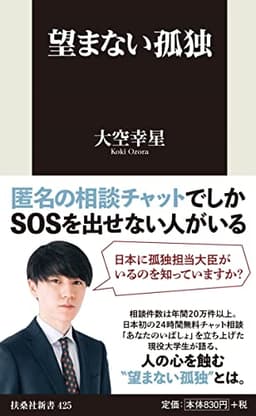
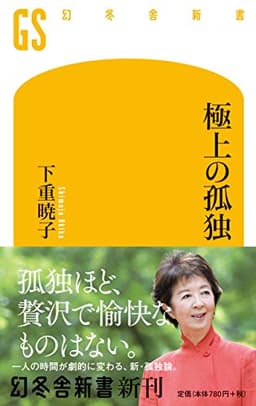
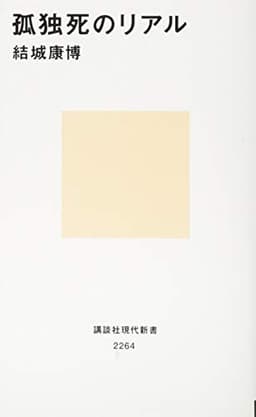
Statistics cited in this article
- 1Cabinet Office, Loneliness and Isolation Countermeasures Office, on the regional public-private platform(FY2024) Open source
- 2Cabinet Office, Loneliness and Isolation Countermeasures Office(1 April 2025) Open source
- 3Cabinet Office, Survey on the Realities of Loneliness and Isolation(FY2024) Open source
- 4Cabinet Office, FY2025 Programme Review Sheet on Loneliness and Isolation Countermeasures(FY2025) Open source
- 5CNN, 'A loneliness epidemic is spreading worldwide. Seoul is spending millions to stop it'(24 October 2024) Open source
Questions to Reflect On
- Has the municipality where you live set up a regional council? If not, can you imagine the structural reasons behind it?
- Does framing the obligation as "best-effort" really sit well with decentralisation, or does it function as a device that legitimises delayed implementation?
- If a new law must coexist with overlapping systems, what design would avoid generating council fatigue in the field?
Key Terms in This Article
- Evidence-Based Policy Making
- An approach to policy making and evaluation based on objective evidence such as statistical data and research findings.
- Collective Impact
- A framework where multiple sectors (government, business, NPOs, etc.) collaborate under a shared agenda to address social issues.
- Social Prescribing
- A practice where healthcare providers 'prescribe' participation in community activities and social resources rather than medication. Institutionalized in the UK NHS with link workers connecting patients to community resources. Gaining international attention as a loneliness countermeasure.
Related Content

One Year Since Japan's Loneliness Countermeasures Act — Can We Quantify 'Connection'?
Japan's Loneliness and Isolation Countermeasures Act took effect in April 2024. One year on, 39.3% of respondents in the national survey still report feelings of loneliness — unchanged. The WHO estimated loneliness-related deaths at 100 per hour (871,000 annually) in June 2025 and called for a global Social Connection Index. The law exists. But how do we measure 'connection,' and how do we evaluate policy effectiveness? Japan — and the world — have yet to answer this fundamental question.

Japan's Late-Elderly Medical Premium Cap Raised from ¥800K to ¥850K (FY2026): Pinpoint Increase on the Top 1.2% and Its Spillover to Middle and Lower Incomes
On December 12, 2025, the Health Insurance Subcommittee of Japan's Social Security Council approved a plan to raise the annual premium cap for the late-elderly medical care system from ¥800K to ¥850K starting FY2026, with a new ¥21K Child-Care Support Levy portion added separately from April 2026, bringing the combined cap to ¥871K. The increase targets enrollees with annual pension-plus-salary income of ¥11.5M or more — approximately 1.2% of all enrollees. Headlines read "premiums rise for the 75-plus generation," but the institutional logic is different: a pinpoint cap increase on the top 1.2% slows premium growth for the remaining 98.8%. A model case at ¥4M annual income shows FY2026 premiums of about ¥297K (+4.2% year-over-year). This article unpacks the MHLW design, the meaning of "1.2% of enrollees," the new ¥21K Child-Care Support Levy, and the often-conflated distinction between intra-generational ability-based redistribution and inter-generational benefit structure.
Financial Income in Insurance Premiums by FY2028 — Fixing the Anomaly Where Filing a Tax Return Raises Your Premium
Basic Policy 2025 targets FY2028 for reflecting financial income in insurance premium calculations. The current anomaly: the same dividend income counts toward premiums if you file a tax return, but not if withholding is the final settlement. NISA is excluded, but the tension with "invest more" policy is real.

Do You Know the 'Conditions' for Free University Tuition? — Income Limits, Multi-Child Requirements, and International Comparison
Japan introduced tuition-free university education for multi-child households in April 2025. But only 12.7% of all households qualify. With household education burden at 51% (2nd highest in OECD) and education spending at 3.9% of GDP, the gap between the label 'tuition-free' and reality reveals a structural problem in Japanese higher education.
Previous
Japan's April 2026 Welfare Reform: What Changed, and What Didn't
Next
Bound by the Phone: The Structure That Distorts Nursing Labor Quality and Time Allocation
Get new columns by email
1-2 social structure analysis columns per week. Free to subscribe.
Join ISVD's activities?
Sign up to receive the latest research and activity reports. Feel free to reach out about collaboration or project participation.
Support ISVD’s research and activities
Support ISVD’s research and publications with JPY5,000 per year. There is no automatic renewal.